


Bronze and Marble Tazzas
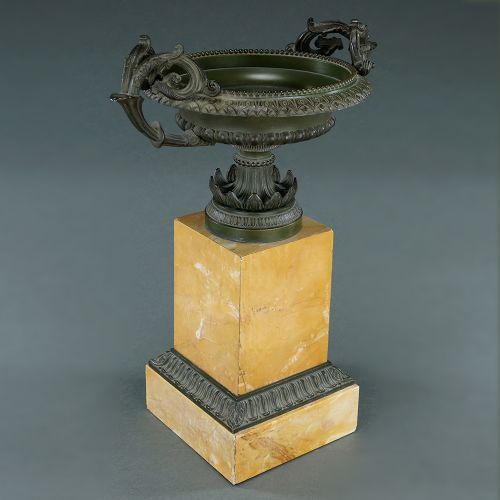
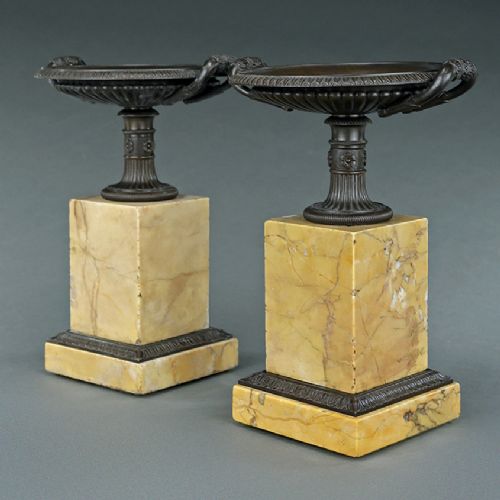
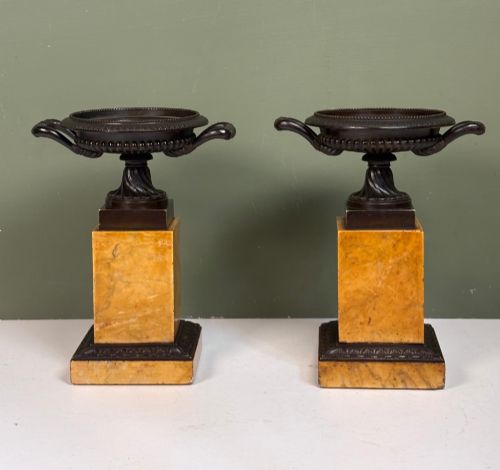
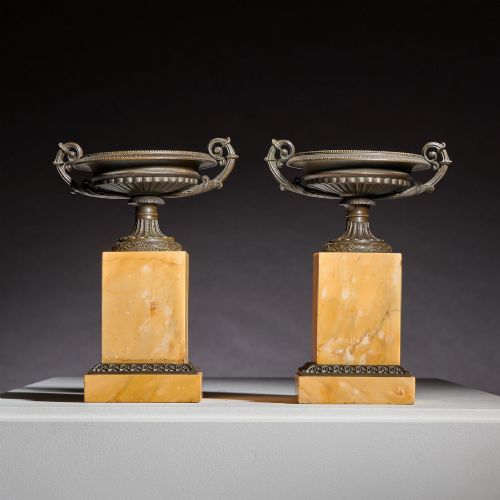
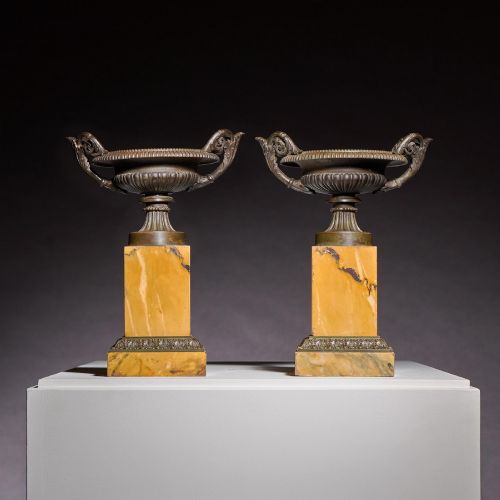
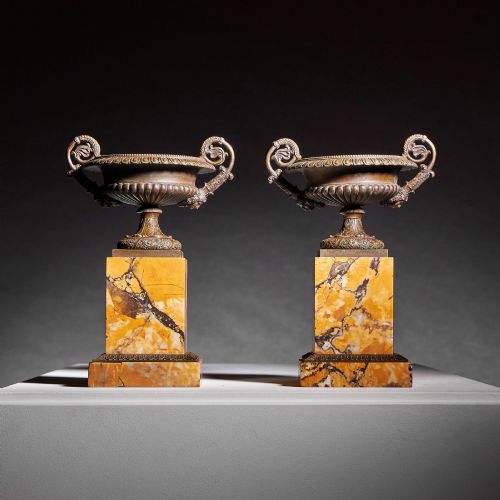
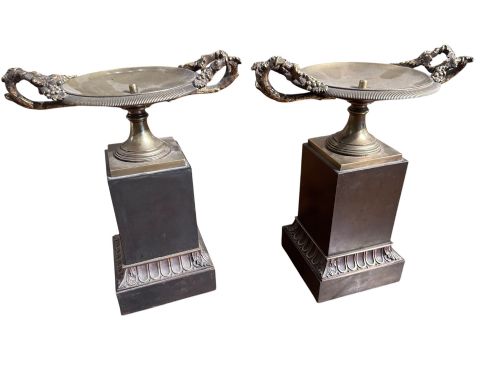
These bronze and marble tazzas are classic classical ornamental vessels, combining patinated metal with rich stone to bring monumental proportion to any room.
Bronze and Marble Tazzas
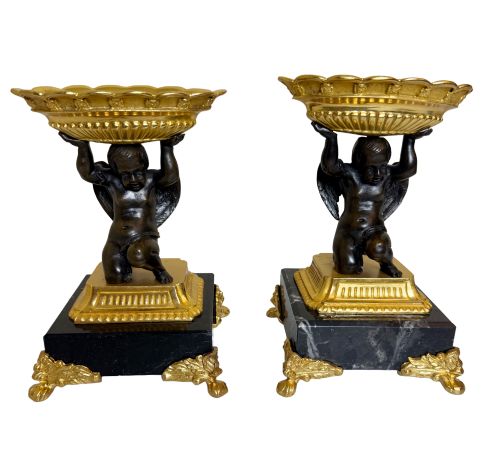
Bronze and marble tazzas are shallow footed vessels designed for display rather than service, drawing heavily on classical antiquity and the Grand Tour tradition. Buyers searching for bronze and marble tazzas will find nineteenth-century examples dominate the offerings, predominantly as pairs formed of patinated or gilt bronze mounted upon coloured marble bases.
The decorative vocabulary leans heavily into French Empire, Neoclassical, and Regency idioms, often taking the form of classical souvenir vessels after the antique. These pieces range from library tazzas to large centrepiece bowls and lidded cups mounted on square or circular plinths.
Many survivors hail from French workshops or Italian Grand Tour makers, capturing the nineteenth-century fascination with classical archaeology. The combination of dark patinated metal against vibrant stones like Siena, black, red, and giallo antico marble defines the visual weight of these objects.
How they were made
The manufacture of these tazzas combined metalfounding with stonemasonry, utilising cast bronze alongside turned and polished marble bases. Artisans employed patination and fire-gilding, known as ormolu, to create contrasting metallic textures upon the bowls and handles.
Marble plinths and columns were hand-turned on lathes and finished with fine abrasives to reveal the natural veining of Siena, rouge griotte, or black varieties. Individual components were then joined mechanically using threaded rods or pins, uniting the heavy stone foot securely with the metal vessel above.
Grand Tour travellers routinely squeezed heavy Italian marble bases into horse-drawn carriages alongside their dirty laundry.
What varies in quality
Quality in these tazzas rests upon the crispness of the bronze casting and the selection of the marble base. Superior examples display sharply chiselled enrichment to the metal surfaces and dense, finely figured stone without extensive filler or repair.
The weight and proportion dictate the overall presence of the object, with better pieces exhibiting balanced classical proportions and sophisticated patination. Lesser examples rely on simpler cast elements and plain black marble rather than richly figured decorative stones.
Ferdinand Preiss
The Bronze and Marble Tazzas Glossary
- Tazza
- A shallow bowl mounted on a stem and foot, used historically for display or serving. In nineteenth-century decorative arts, it functions purely as an ornamental centrepiece.
- Grand Tour
- A cultural journey undertaken by wealthy young Europeans through France and Italy to study classical antiquities. Souvenirs purchased along the way included miniature bronzes and marble architectural models.
- Ormolu
- Finely ground high-carat gold applied to a bronze base using a mercury amalgamation technique. The method produces a rich, durable golden surface seen on many classical revival mounts.
- Siena Marble
- A yellow ornamental marble quarried in Italy, featuring dark grey or purple veining. It was highly favoured during the Neoclassical period for pedestals and decorative objects.
- Giallo Antico
- An antique yellow marble prized by the ancient Romans and later rediscovered by nineteenth-century stonemasons. Its deep yellow tone often includes white spots and darker veins.
Bronze and Marble Tazzas: Frequently Asked Questions
What were bronze and marble tazzas used for?
These vessels served primarily as decorative ornaments on mantlepieces, sideboards, and libraries during the nineteenth century. They reflected the owner's classical education and taste for antiquities.
Unlike utilitarian tableware, they were designed strictly for visual display, often purchased as souvenirs of European travel or produced for wealthy domestic interiors.
How do you style tazzas in a modern room?
A pair of tazzas works well placed symmetrically on a long console table, sideboard, or mantelpiece to anchor a room with architectural weight. Their classical proportions complement both traditional and contemporary interiors.
Avoid overcrowding them with other objects so the interplay between the bronze metalwork and the coloured marble base remains visible.
How can you tell an early nineteenth-century tazza apart?
Early nineteenth-century examples, particularly from the Regency or French Empire periods, typically feature heavier cast bronze components with hand-chased detailing. The marble bases often employ specific classical stones like Siena or giallo antico.
Later Victorian productions sometimes substituted simpler black marble or employed mechanised casting methods with softer surface definition.
Are these tazzas always sold in pairs?
While many survive as matched pairs intended for symmetrical display on furniture, single examples also appear in collections. Pairs were originally manufactured to adorn either end of a mantelpiece or sideboard.
Individual pieces often function effectively as standalone centrepiece bowls on smaller tables.