


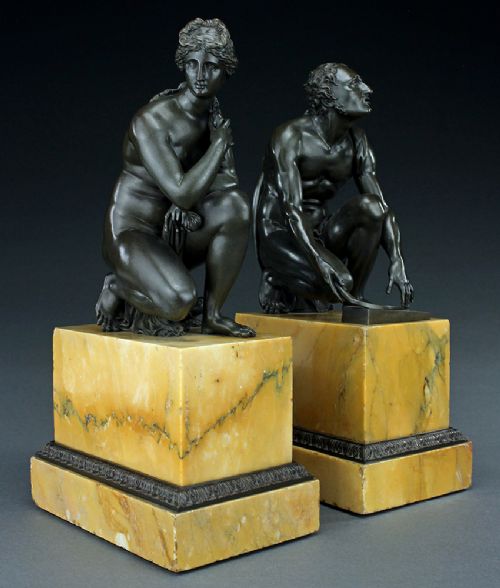


Yellow Siena Marble
Yellow siena marble pieces bring rich, ochre-toned Italian stone into nineteenth-century interiors through grand tour objects and decorative metal mounts.
Yellow Siena Marble
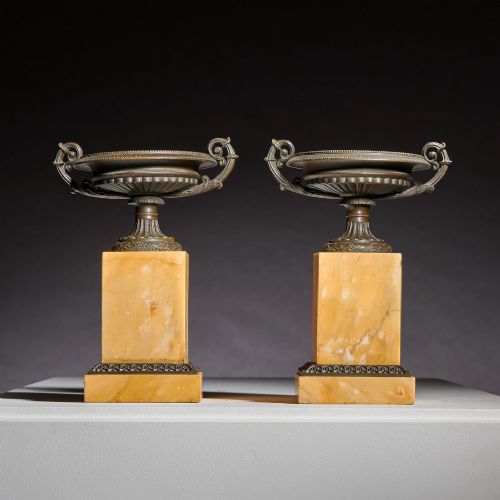
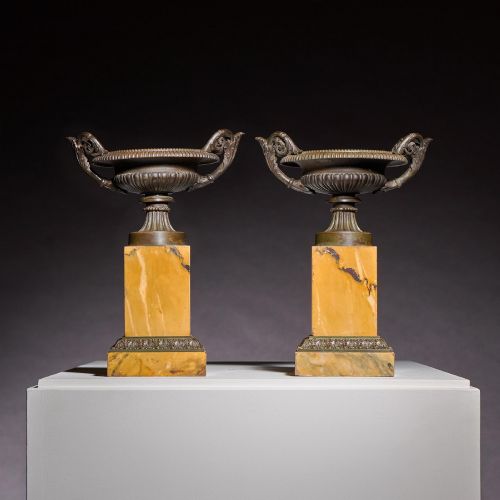
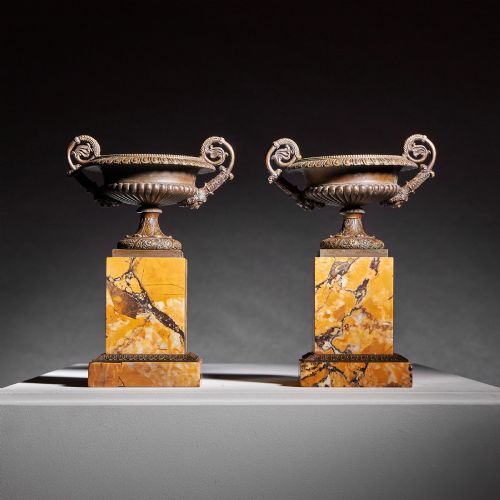
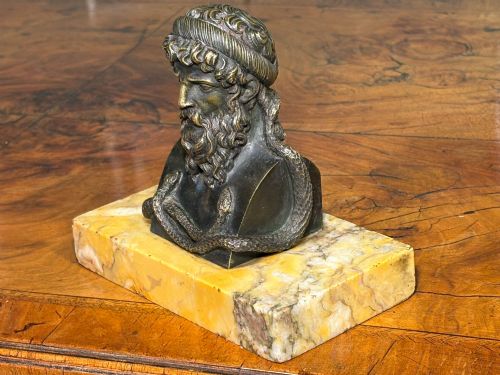
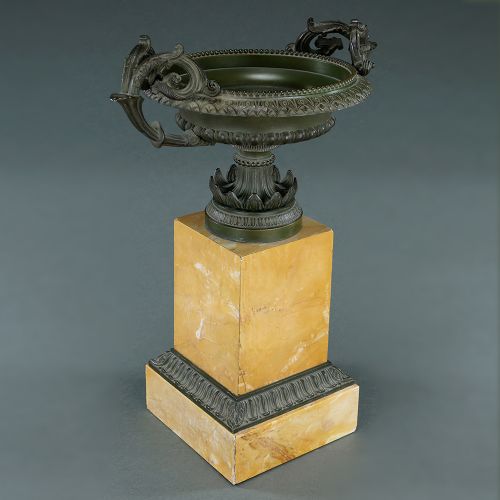
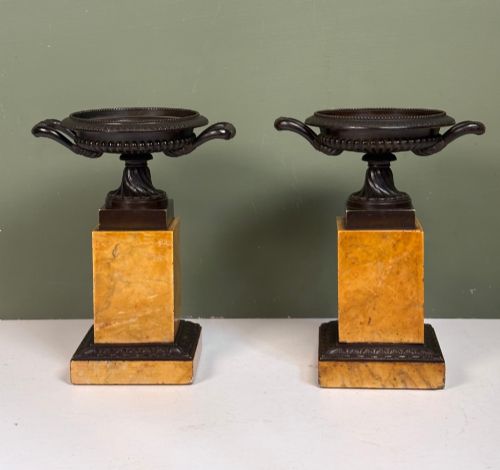
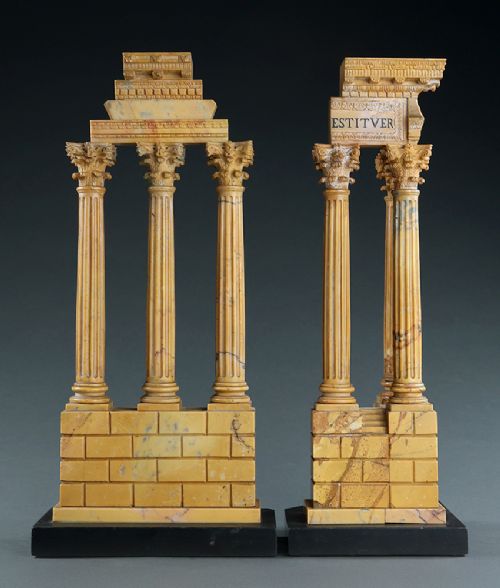
Yellow siena marble items comprise nineteenth-century decorative vessels, tazzas, vases, and architectural models originating largely from French workshops and Grand Tour travels. Buyers exploring yellow siena marble will frequently encounter pairs of bronze-mounted tazzas, classical temple models, and sculptural table pieces.
The objects span periods such as the Regency, Charles X, and Napoleon III eras, alongside neoclassical and empire revival styles. Many pieces combine the distinctive mottled yellow stone with contrasting black marble, bronze, or ormolu mounts.
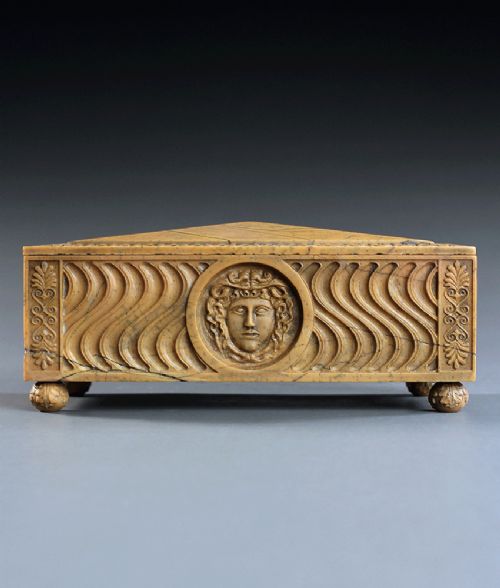
Beyond vessels and clocks, the selection includes architectural forms like sarcophagus caskets and forum temples, as well as furniture such as centre tables featuring oak and giltwood elements alongside the marble.
How they were made
Maker construction relies heavily on turning and carving the quarried Italian marble, often leaving polished surfaces to display the natural veining of the stone. Artisans frequently combined the yellow marble with cast bronze, brass, or ormolu mounts to frame the stonework.
Furniture and larger objects integrate auxiliary materials like oak and giltwood, uniting timber frames with heavy marble slabs and bases. Bronze figures and decorative elements were cast separately before being fixed to the stone supports.
Yellow Siena Marble Retail Price Guide 2026
Typical asking prices for yellow siena marble among the pieces listed under this phrase on Sellingantiques today, from the lower quarter to the upper quarter. They describe what is for sale here now, not the wider market.
Listings combine yellow siena marble with bronze, ormolu, brass, black marble, oak, and giltwood across nineteenth-century styles.
What varies in quality
Quality in these pieces depends upon the crispness of the bronze or ormolu casting and the depth of colour in the marble veining. Finer examples display intricate chasing on the metal mounts and harmonious proportions between the stone bases and upper bronze figures.
The complexity of the object also separates standard items from exceptional ones, moving from simple turned bases to architectural models of forum temples or multi-part clock garnitures.
The Yellow Siena Marble Glossary
- Tazza
- A shallow saucer-shaped vessel mounted on a stem and foot, frequently utilised for display in nineteenth-century decorative schemes.
- Ormolu
- Gilt bronze mounted onto decorative objects and clocks, created through a mercury gilding process during the nineteenth century.
- Grand Tour
- A cultural journey undertaken by wealthy Europeans through France and Italy, acquiring items such as marble architectural models and bronzes.
- Garniture
- A set of matching decorative ornaments, typically comprising a clock and flanking vases or candelabra placed on a mantelpiece.
Yellow Siena Marble: Frequently Asked Questions
What is yellow siena marble?
Yellow siena marble is a distinctive decorative stone quarried in Tuscany, known for its deep yellow ground and dark, dramatic veining.
Craftsmen across nineteenth-century Europe utilised this dense stone for classical architectural models, tazza bases, and decorative table objects.
How were these pieces used?
Nineteenth-century households displayed these items on tables, pedestals, and mantelpieces as symbols of classical learning and refined taste.
Objects like tazzas and urns served purely decorative purposes, while garnitures framed domestic clocks in formal reception rooms.
How do I date a piece?
Dating relies upon stylistic markers from periods such as the Regency, Charles X, and Napoleon III eras seen across the listings.
Matching the neoclassical or empire revival motifs of the bronze mounts with the primary stone forms helps narrow the decade of production.
How do I care for marble?
Yellow siena marble requires gentle dusting with a dry cloth to protect the polished surface and integrated bronze or ormolu mounts.
Avoid using harsh chemical cleaners or abrasive materials that might scratch the soft stone or dull the surrounding metalwork.