
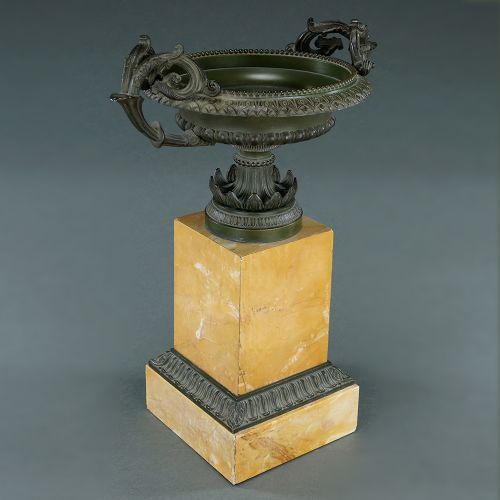
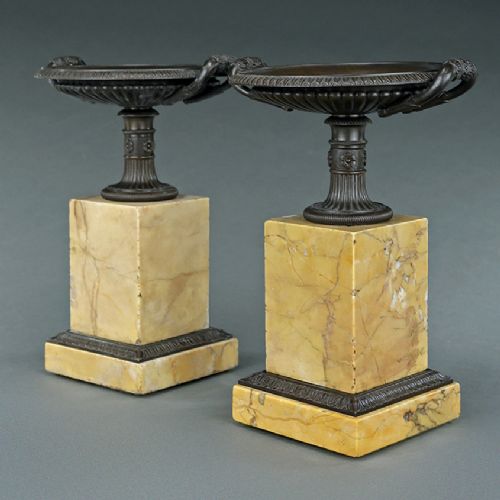
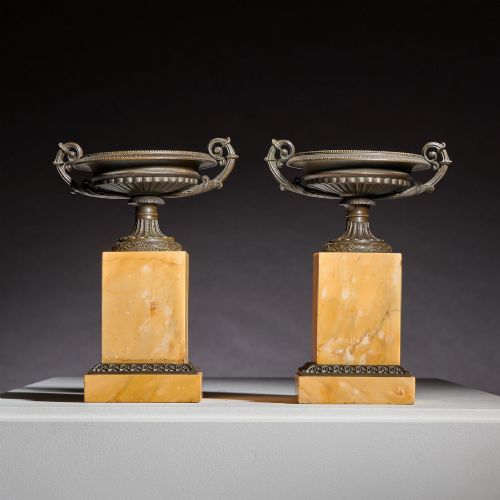
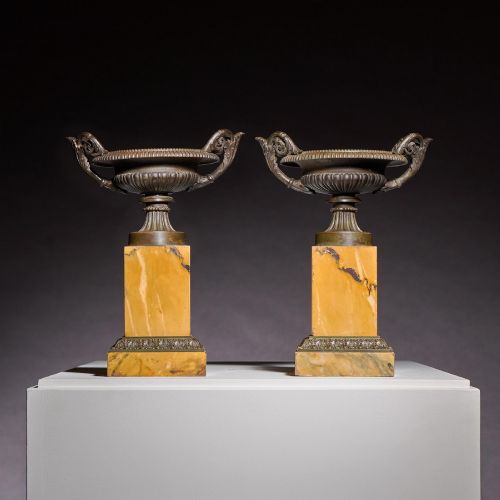
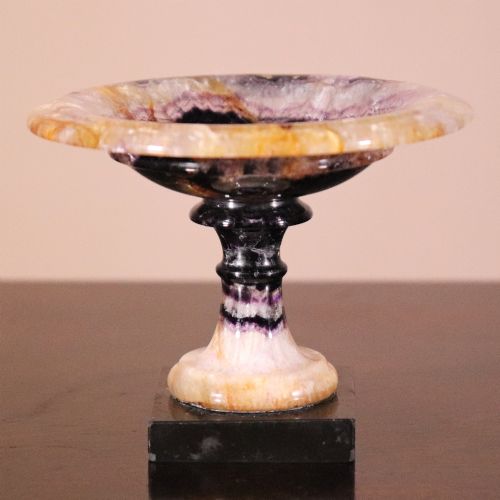


Classical Marble Pedestal Bowl
A classical marble pedestal bowl brings the solemn dignity of ancient architecture straight onto your dining table or console.
Classical Marble Pedestal Bowl
When searching for a classical marble pedestal bowl, you are looking at ornamental vessels and tazzas modelled on antique prototypes. These pieces reflect the neoclassical taste that swept through Europe during the eighteenth and nineteenth centuries.
The versions you are most likely to meet on this page hail from the nineteenth century, particularly originating from France and Italy as Grand Tour souvenirs. They take the form of tazzas, pedestal bowls, and occasional font shapes resting upon raised bases.
Makers of the period drew heavily on classical antiquity to shape these decorative objects, often combining shallow circular dishes with robust pedestals. Their primary purpose was visual display, bringing a sense of classical gravity into domestic interiors.
How they were made
Carving stone required immense skill, utilising dense mineral blocks such as Sienna marble, Antico Rosso, and black marble alongside decorative additions like Blue John and fluorite. Masons shaped these hard materials on lathes or by hand to achieve smooth, shallow bowl profiles.
Many examples incorporate cast bronze or gilded ormolu mounts, combining metalwork with carved stone elements. Artisans secured these components together carefully to create contrasting textures between the polished mineral surfaces and the dark patinated metal.
Materials recorded across the selection include bronze, ormolu, Sienna marble, Antico Rosso, and fluorite mineral known as Blue John.
What varies in quality
The distinction between standard examples and exceptional works lies in the choice and figuring of the stone itself. Richly coloured varieties such as Sienna marble or mineral-veined Blue John command greater visual weight than plain black or white stone.
Casting precision in the bronze or ormolu mounts also separates ordinary pieces from finer ones. Crisp chasing on metal details and harmonious proportions between the pedestal and the bowl elevate the overall presence of the object.
The Classical Marble Pedestal Bowl Glossary
- Tazza
- A shallow bowl or cup mounted on a stem and foot, commonly used for ornamental display in neoclassical interiors. It derives its form from ancient drinking vessels.
- Grand Tour
- A traditional trip of Europe undertaken by upper-class young European men of means in the eighteenth and nineteenth centuries. Souvenirs collected on these travels frequently included carved marble and bronze antiquities.
- Ormolu
- Gilded bronze, where a finely ground gold-mercury amalgam is applied to a bronze base. This technique creates a rich golden surface finish on decorative mounts.
Classical Marble Pedestal Bowl: Frequently Asked Questions
What is a classical marble pedestal bowl?
It is an ornamental vessel raised on a stand, carved from stone to echo ancient Greek and Roman designs. These pieces served as decorative centrepieces during the neoclassical revival.
They draw inspiration from archaeological discoveries of the period, translating monumental architecture into portable domestic art.
Where did these pieces originate?
The majority originate from workshops in Italy and France active during the nineteenth century. Many were produced specifically for travellers touring historical sites.
Italian craftsmen carved local marbles into souvenirs, while French bronze-smiths often added gilt mounts to complete the composition.
How do I style a marble tazza?
These vessels suit placement on heavy wooden sideboards, marble mantelpieces, or central entrance hall tables. Their sculptural profile works well as a standalone focal point.
Because the stone surfaces are delicate, keep them away from damp environments and abrasive household chemicals.
How do I date a nineteenth-century piece?
Dating relies on examining the mineral types, the tool marks left by the stonecutter, and the casting style of any bronze elements. Neoclassical objects from this era display specific manufacturing traits tied to nineteenth-century revival tastes.
Comparing the patination of the bronze and the weathering of the marble helps confirm the period.