
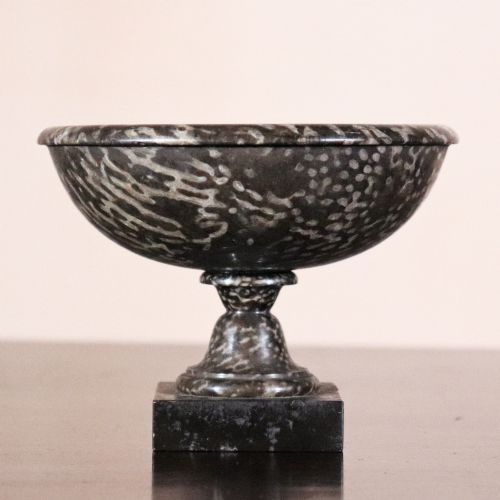


Grand Tour Marble Bowl
A grand tour marble bowl is a neoclassical souvenir of classical antiquity, prized for bringing the polished mineral colours of Italy into a nineteenth-century interior.
Grand Tour Marble Bowl
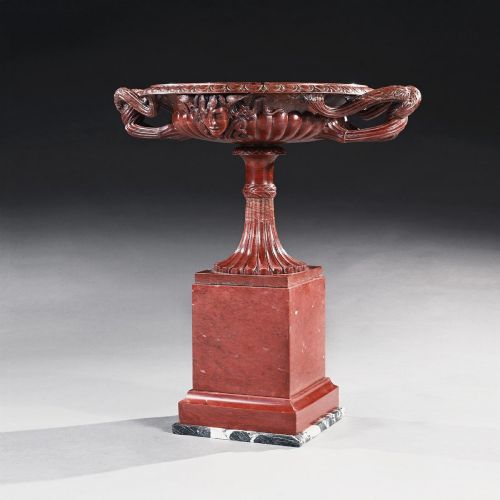
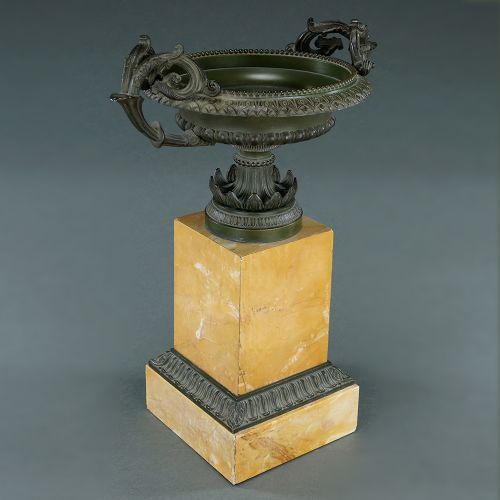
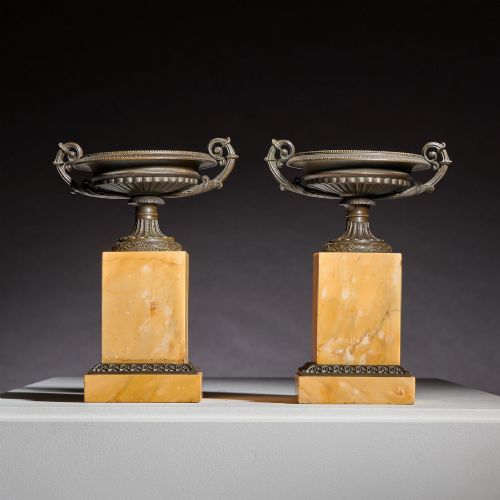
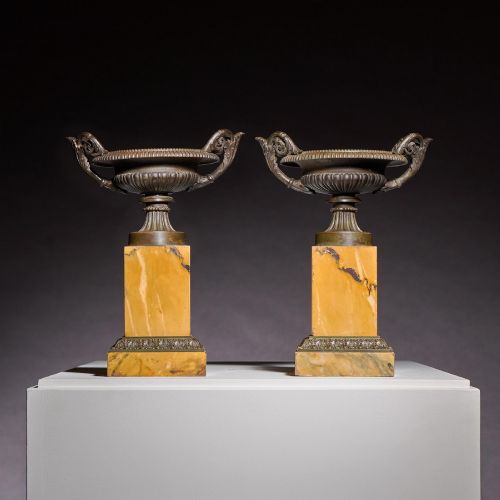
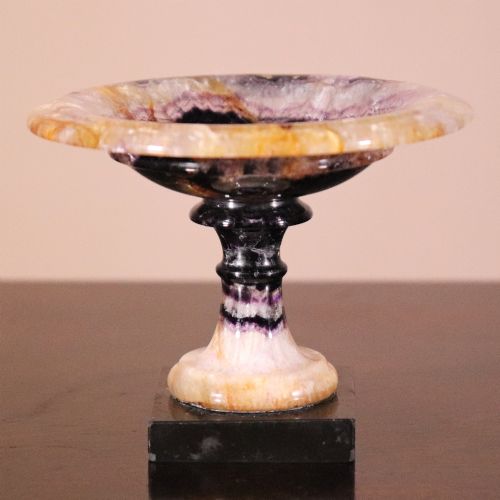
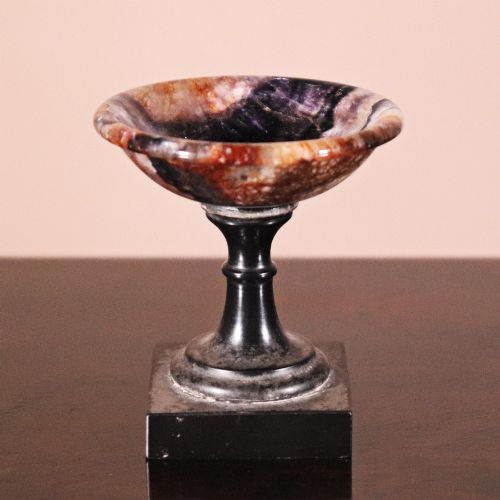
A grand tour marble bowl takes the form of a classical tazza, urn, or pedestal vessel fashioned during the nineteenth century. These ornamental objects served as souvenirs of European travel, shaped after ancient archaeological discoveries and classical architecture.
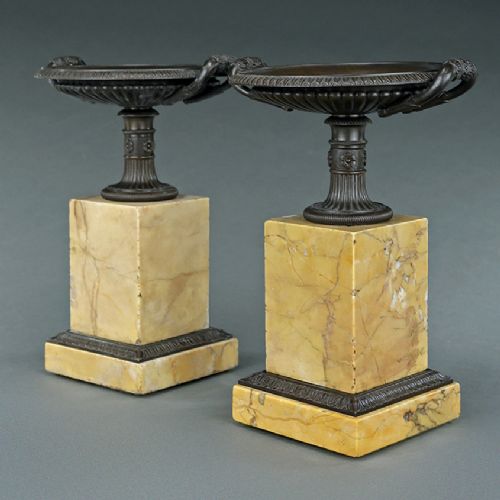
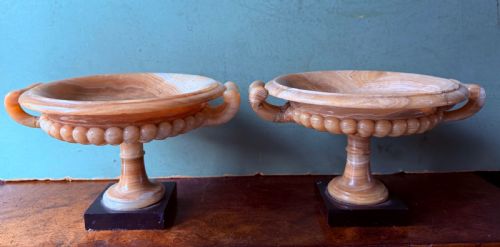
The pieces seen on this page span the eighteenth and nineteenth centuries, with the majority originating from the nineteenth century in French and Italian workshops. They appear as single vessels, graduated pairs, or mounted objects upon square and block bases.
How they were made
Carved marble forms the primary body of these vessels, utilising distinctive varieties such as sienna, rosso antico, black marble, and Ashford coral. These are frequently paired with cast bronze, ormolu, and silvered metal mounts.
Specialised lapidary techniques allowed craftsmen to turn and carve dense stones into thin, elegant profiles, often incorporating finely detailed classical bronze handles, feet, and collars.
Grand tourists often packed heavy marble tazzas into horse-drawn carriages, trusting fragile fluorite and stone bowls to survive bumpy Alpine roads.
What varies in quality
Quality rests upon the selection and figuration of the mineral, the precision of the turning, and the crispness of the bronze casting. Highly figured stones and substantial scale separate monumental architectural pieces from smaller souvenir examples.
The integration between the stone bowl and its metal mounts reveals the maker's hand, where tight joints and well-chiseled bronze details indicate superior workshop production.
Benedetto Boschetti
The Grand Tour Marble Bowl Glossary
- Tazza
- A shallow bowl or cup mounted upon a stem and foot, originating from classical forms. These pieces often serve as decorative centerpieces.
- Grand Tour
- A cultural journey undertaken by European elites through France and Italy to study classical antiquities. Souvenirs purchased along the route included carved stone vessels.
- Rosso Antico
- A deep red marble prized in antiquity and revived during the neoclassical period. Its rich colour mimics ancient Egyptian and Roman stones.
- Sienna Marble
- A yellow ornamental marble featuring dark purple or brown veining, quarried in Italy. It provides strong contrast when paired with dark bronze mounts.
Grand Tour Marble Bowl: Frequently Asked Questions
What is a grand tour marble bowl?
It is a decorative vessel carved from classical stones during the eighteenth or nineteenth century. Travellers collected them as mementos of their journeys across Italy and France.
These pieces typically take the form of tazzas or pedestal bowls, echoing the architecture and antiquities discovered during archaeological excavations of the period.
How were these bowls used historically?
They functioned primarily as ornamental display objects within libraries, drawing rooms, and cabinets of curiosity. Their purpose was to display an appreciation for classical history and refined taste.
Due to the delicate nature of carved stone and mounted bronze, they served as visual centrepieces rather than utilitarian vessels for daily use.
What materials are commonly found?
The bodies utilise various ornamental stones, including sienna, rosso antico, black marble, malachite, and fluorite known as Blue John. These are often combined with cast bronze or ormolu mounts.
Coloured mineral varieties provide the striking palette characteristic of neoclassical decorative arts, mimicking the ancient materials valued by Roman builders.
How do you style a marble tazza at home?
Place a tazza on a library table, mantlepiece, or side cabinet where its mineral colours and classical silhouette can be appreciated from multiple angles. Pairs look balanced when flanking a mirror or architectural feature.
Keep the surrounding surface uncluttered to let the veining of the marble and the detail of any bronze mounts remain the focal point of the arrangement.