


Marble Centrepiece Bowl
These marble centrepiece bowl pieces bring classical form and heavy stone to a table, offering substance and proportion that define a room.
Marble Centrepiece Bowl
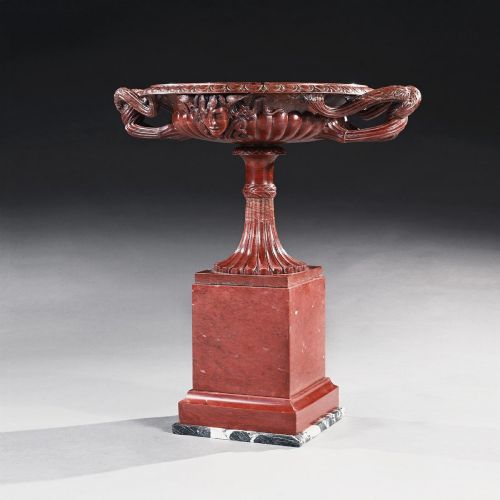
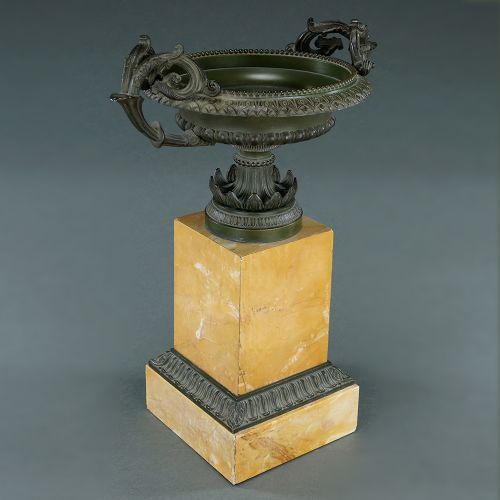
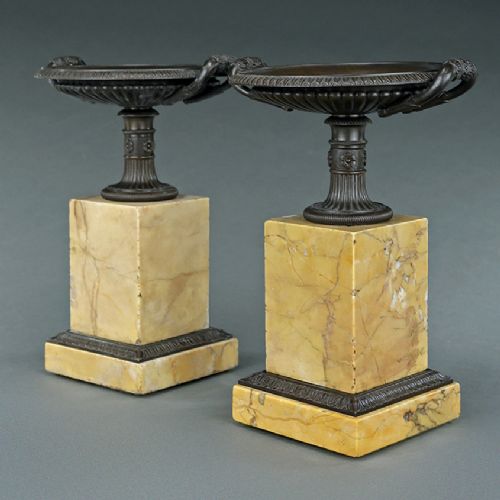
A marble centrepiece bowl typically takes the form of a shallow tazza or pedestal vessel, often drawing upon classical antiquity for its silhouette. You will most frequently encounter nineteenth-century examples styled in the Grand Tour or Neoclassical manner, standing firmly on round bases.
The objects serve primarily as decorative table pieces or stands, reflecting European tastes for classical archaeology and architectural ornament. Makers combined carved stone with cast metal mounts to create structured focal points for dining tables and sideboards.
Formations range from modest domestic tazze to monumental urns and pedestal bowls designed to anchor large spaces. The heavy stone bodies give these centrepieces a permanent architectural presence wherever they sit.
Factors that distinguish quality
The grade of the marble and the complexity of its natural veining dictate the visual weight of the piece from the outset. Artisans selected richer red, black, or variegated stones for more ambitious commissions, leaving plain white marbles for simpler utilitarian forms.
Metalwork refinement separates standard production from exceptional studio output, particularly in the sharpness of chased bronze mounts and ormolu details. A crisp, deep casting on the handles and base shows the hand of a skilled workshop rather than a routine foundry.
Listings feature items spanning the eighteenth century through to the early twentieth century, utilising rosso antico marble, alabaster, and patinated bronze.
Benedetto Boschetti·Ferdinand Preiss
The Marble Centrepiece Bowl Glossary
- Tazza
- A shallow bowl or cup mounted on a stem and foot, commonly used for display or as a centrepiece. The form descends directly from ancient Greek and Roman drinking vessels.
- Grand Tour
- A cultural journey undertaken by wealthy young Europeans in the eighteenth and nineteenth centuries to study classical art. Souvenirs bought on these travels included small bronze and marble vessels.
- Rosso Antico
- A deep red antique marble prized by classical sculptors and later nineteenth-century revivalists for its rich colour. It appears frequently in high-status Italian decorative objects.
- Ormolu
- Finely ground high-carat gold applied to a bronze base through a mercury amalgamation process, or simply bright gilt bronze. This finish prevents tarnishing and adds a warm golden glow to metal mounts.
- Campana Urn
- A bell-shaped vessel with a flaring rim and a tapered body set on a pedestal foot. The shape derives from ancient pottery and bronze discoveries in Italy.
Marble Centrepiece Bowl: Frequently Asked Questions
What is a marble centrepiece bowl?
A marble centrepiece bowl is a decorative vessel raised on a stem or foot, designed to sit in the middle of a table or sideboard. These pieces combine carved stone with metal mounts to create a formal display object.
Most examples seen today date from the nineteenth century and reflect classical design influences such as the Grand Tour. They function primarily as ornamental centrepieces rather than tableware for food.
How do I care for marble and bronze?
Dust the marble and bronze regularly with a soft, dry cloth to prevent dirt from settling into the stone pores or metal crevices. Avoid using water, acidic cleaners, or household detergents, which can etch the marble or strip patination from the bronze.
Keep these heavy pieces on stable, level surfaces where they will not be bumped or knocked. If the stone requires cleaning, consult a professional restorer to avoid permanent staining.
How do I identify a Grand Tour piece?
Grand Tour pieces typically date from the nineteenth century and reproduce famous classical antiquities seen in Italian museums and archaeological sites. They utilise materials like rosso antico marble, malachite, and patinated bronze.
Look for souvenir markers such as finely turned stone bases and bronze castings that emulate ancient architectural fragments. These items were made specifically for travellers returning from Italy.
Are these bowls suitable for daily use?
These pieces are intended for decorative display rather than heavy domestic service. The porous nature of marble and alabaster means they can absorb liquids and stain easily.
Utilise them to hold dried fruit, decorative balls, or simply leave them empty to appreciate the stone and metalwork. Placing heavy or wet items inside risks damaging the interior surface.