


Neoclassical Marble Urn Bowl
A neoclassical marble urn bowl brings the gravity of antiquity straight into a room, offering the sculpted presence of classical Rome on a mantelpiece.
Neoclassical Marble Urn Bowl
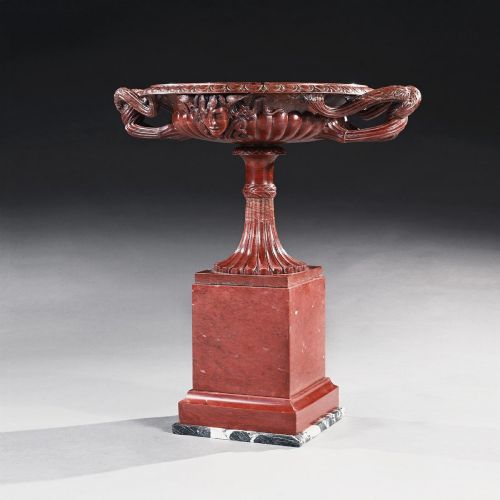
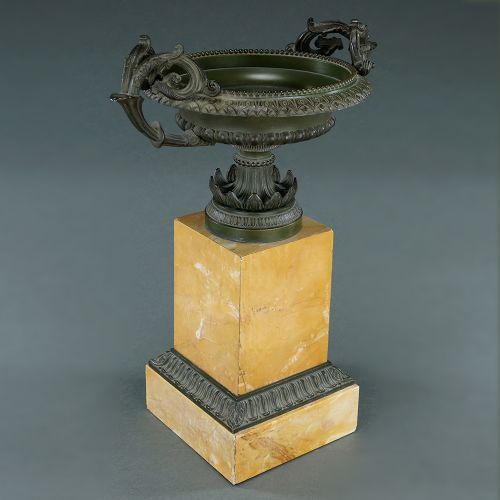
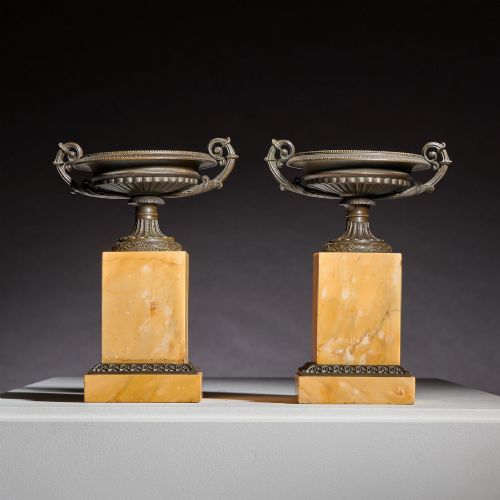
A neoclassical marble urn bowl takes the shape of classical tazze, pedestal vessels, and lidded cups inspired by archaeological discoveries made during the Grand Tour. These pieces emerge primarily from the eighteenth and nineteenth centuries, created in Italy and France as souvenirs or ornamental displays for European collectors.
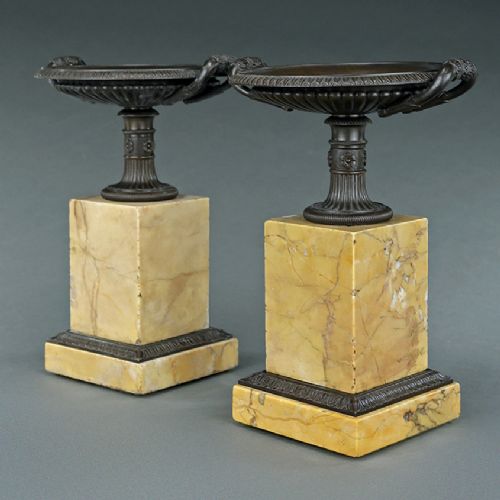
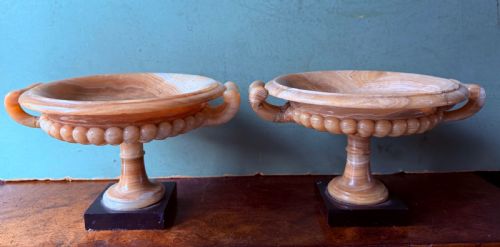
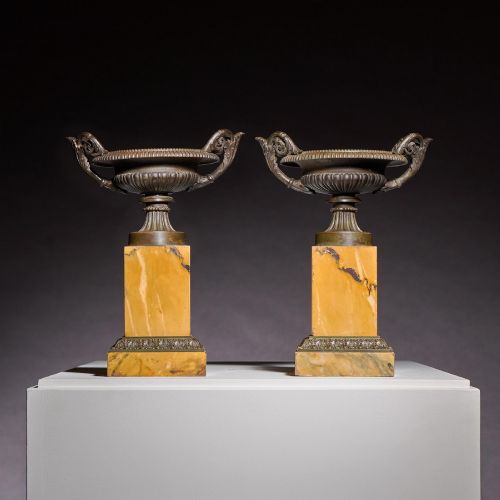
The most common form encountered on this page is the tazza, often mounted on a contrasting marble or black block base and paired for symmetry. Sculpted from various decorative stones, these vessels range from modest tabletop souvenirs to monumental architectural proportions.
Materials and construction
The construction relies on hard stones like Siena marble, Rosso Antico, and alabaster, shaped on a lathe or carved by hand to capture ancient Roman prototypes. Artisans combined these variegated marbles with cast bronze and fire-gilt ormolu mounts to define the classical rims, handles, and bases.
Surface finish depends on rigorous polishing to reveal the natural figure of the stone, contrasting the smooth stone body with the dark patination of classical bronze castings.
Nineteenth-century travellers frequently carried heavy stone bowls across Europe in luggage, trusting horse-drawn carriages over rough mountain passes.
Judging the work
Quality rests upon the selection of the marble itself, where highly figured and richly coloured mineral veins elevate a carved vessel far above plain grey stone. The precision of the bronze chasing and the sharpness of the classical relief details further separate workshop standards.
Proportion and scale dictate the visual weight of the piece, with superior examples demonstrating a harmonious balance between the marble bowl and its supporting pedestal or ormolu mounts.
Benedetto Boschetti
The Neoclassical Marble Urn Bowl Glossary
- Tazza
- A shallow bowl or cup mounted on a stem and foot, often used for display in classical interiors. The plural form is tazze.
- Grand Tour
- A traditional trip through Europe undertaken by upper-class young men in the eighteenth and nineteenth centuries to study classical art and acquire souvenirs. These objects formed the core of many British country house collections.
- Ormolu
- Gilt bronze produced by applying a finely ground gold-mercury amalgam to a bronze object and heating it to drive off the mercury. This technique creates a durable golden finish common on French decorative objects.
- Rosso Antico
- A deep red antique marble prized by Roman sculptors and later revived by Italian workshops for Grand Tour antiquities. Its dark crimson tone carries distinct white and black inclusions.
- Siena Marble
- A vibrant yellow Italian marble featuring deep purple and grey veining, frequently utilised by nineteenth-century workshops for decorative urns and tazze.
Neoclassical Marble Urn Bowl: Frequently Asked Questions
What is a tazza?
A tazza is a shallow decorative vessel raised on a central pedestal or foot, designed specifically for display on a table or cabinet. These pieces imitate ancient drinking vessels and sacrificial dishes recovered during archaeological excavations.
In nineteenth-century interiors, they served purely ornamental functions as part of a classicising decorative scheme. Their form allows the varied grain of the marble and the detail of the bronze mounts to be seen from every angle.
What is Grand Tour marble?
Grand Tour marble refers to carved stone souvenirs produced in Italy during the eighteenth and nineteenth centuries for travellers exploring classical sites. Workshops in Rome and Florence turned these pieces on lathes and carved them by hand to satisfy foreign demand.
These items were fashioned to look like ancient Roman artefacts recovered from ruins. Collectors today value them for their direct connection to nineteenth-century travel and classical revival taste.
How do I style a marble urn bowl?
These pieces command attention on a substantial mantelpiece, console table, or bookcase where their architectural silhouette can stand clear. Pairs look best arranged symmetrically to anchor a room with classical balance.
Keep surrounding objects understated to let the natural mineral colours of the marble and the bronze patination dominate. Avoid placing them in direct sunlight or areas subject to heavy vibration, as antique stone and mounted bronze require stable conditions.
How can I tell the age of a marble tazza?
Dating relies on examining the mineral types used, the method of turning and carving the stone, and the patination of the associated bronze or ormolu. Nineteenth-century examples often employ specific Italian marbles like Siena or Rosso Antico shaped to mirror ancient excavated forms.
The tool marks left inside the bowl, the composition of the bronze alloy, and the wear on the base provide further clues to workshop origin and period. Comparing the proportions to documented pieces helps separate nineteenth-century interpretations from later reproductions.