
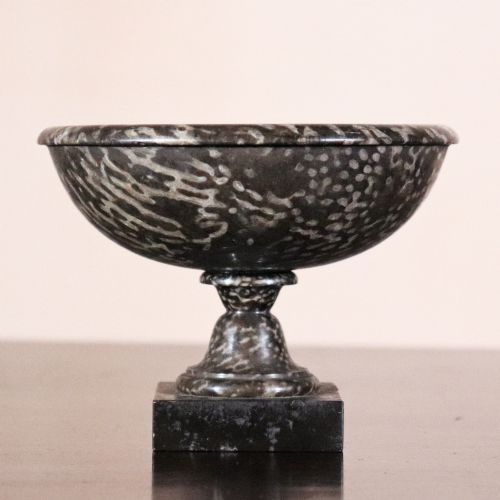


Marble Tazza Bowl
These marble tazza bowl examples bring classical proportion and mineral depth into a room, offering the distinct sculptural weight collectors seek.
Marble Tazza Bowl
Nineteenth century examples dominate the current listings, alongside eighteenth century specimens and occasional art deco works. French and Italian workshops produced the majority of these ornamental bowls as grand tour souvenirs and cabinet pieces.
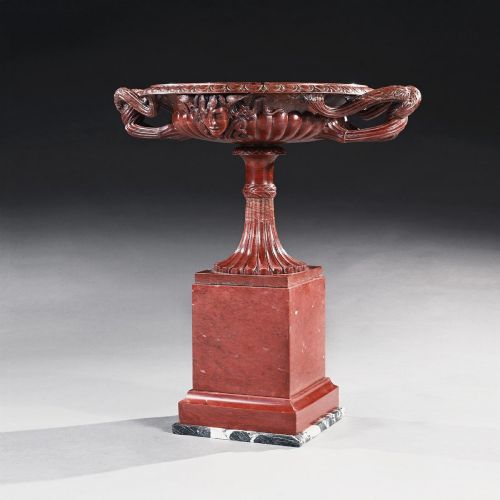
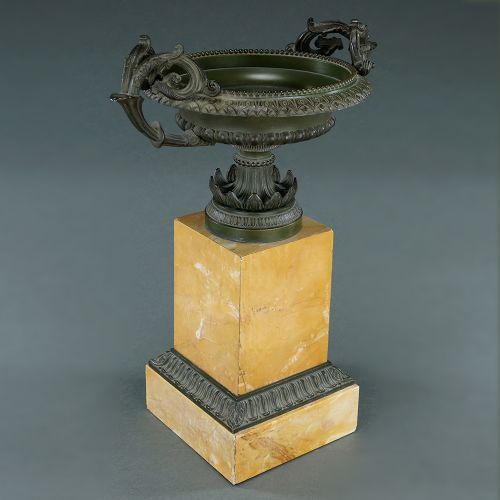
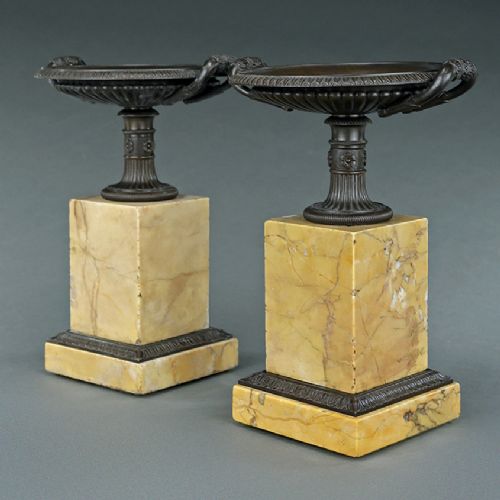
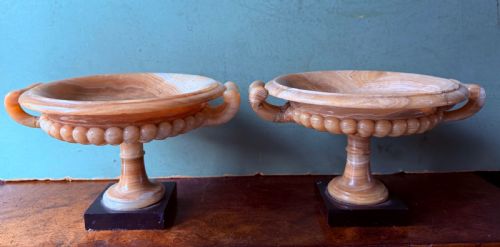
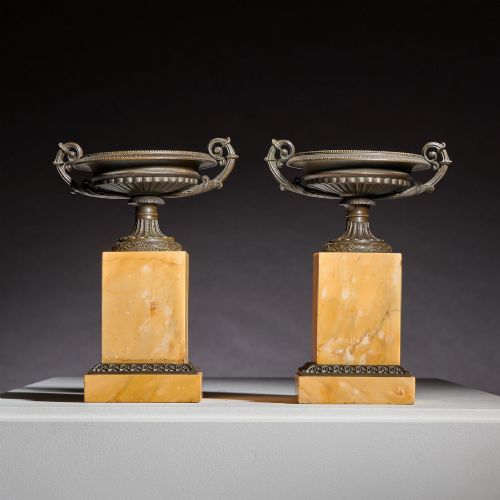
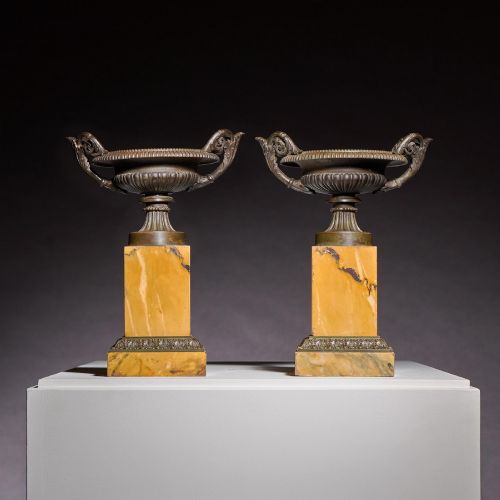
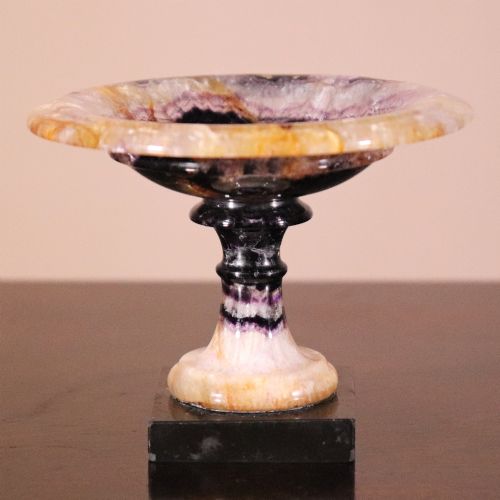
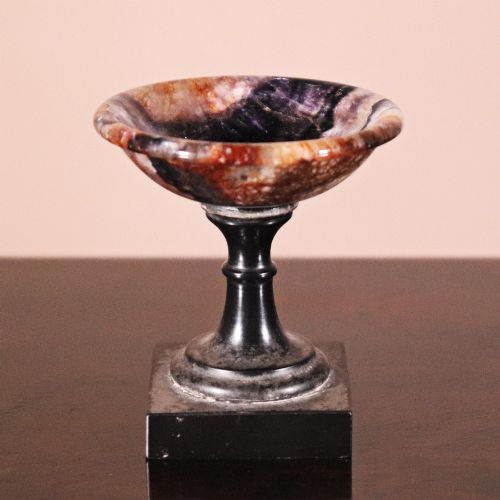
The material vocabulary spans across black marble, siena marble, rosso antico marble, and blue john, frequently combined with bronze mounts. These variations create distinct profiles from low shallow dishes to deep pedestal cups.
How they were made
Craftsmen shaped dense stones on lathes and by hand, exploiting the natural veining and varied tones of mineral blocks. Skilled lapidaries turned banded fluorite, known as blue john, and richly coloured marbles into balanced circular dishes.
Foundries cast bronze and ormolu mounts to support and embellish the stone bowls, utilising fire gilding and patination. Artisans then joined the metallic bases and handles to the carved stone receptacles with pins and adhesives.
Listings feature eighteenth and nineteenth century periods alongside twentieth century art deco works, incorporating marble, bronze, ormolu, and malachite.
What varies in quality
The calibre of a piece rests upon the crispness of the stone carving and the choice of mineral specimen. Highly figured marbles and flawless crystalline minerals command attention through their natural patterns.
Mount quality separates standard decorative items from superior works, particularly in chased ormolu and detailed bronze casting. The harmony between the proportions of the stone bowl and its supporting stem dictates overall elegance.
Benedetto Boschetti·Ferdinand Preiss
The Marble Tazza Bowl Glossary
- Tazza
- A shallow bowl mounted upon a stem and foot, used historically for display or serving. The plural form is tazze.
- Grand Tour
- A cultural journey undertaken by wealthy Europeans in the eighteenth and nineteenth centuries, acquiring souvenirs like these carved marble vessels. These objects reflect classical antiquity.
- Ormolu
- Gilt bronze mounts applied to furniture and decorative objects, created through an amalgam of mercury and gold. This technique imparts a rich golden sheen.
- Rosso Antico
- A deep red antique marble utilised by classical sculptors and later revived by Italian workshops. It provides a striking contrast to bronze mounts.
Marble Tazza Bowl: Frequently Asked Questions
What is a marble tazza bowl used for?
These pedestal vessels served primarily as decorative ornaments on sideboards, mantelpieces, and library tables during the nineteenth century. Travellers brought them home as tangible evidence of classical education and distant journeys.
Today, they function as striking focal points in interior schemes, holding small collections or standing alone as sculptural elements. Their classic silhouettes suit both traditional and modern display settings.
How do I identify a grand tour piece?
Grand tour items often feature specific regional stones such as siena marble, rosso antico, or alabastro egiziano. They typically date from the nineteenth century and replicate ancient classical artefacts seen in Italian museums and ruins.
Look for meticulous hand-carving and patinated bronze bases that mimic archaeological finds. The integration of stone blocks and cast metal mounts points directly to this souvenir tradition.
What are blue john and siena marble?
Blue john is a Derbyshire fluorite characterised by concentric bands of purple, blue, and yellow. Its scarcity makes pieces carved from this mineral particularly prized by collectors of decorative stone objects.
Siena marble is a warm, golden-yellow stone from Italy with dramatic dark veining. Workshops utilised its rich colour to create high-status decorative bowls and architectural elements.
How do I care for a stone tazza?
Dust the surface gently with a dry, soft cloth to prevent abrasive particles from scratching the polished stone or bronze mounts. Avoid exposing polished marble to acidic liquids or harsh chemical cleaners that can etch the finish.
Place the piece on a stable surface away from direct sunlight and moisture fluctuations. Proper placement protects both the mineral integrity and the joined metal components.