




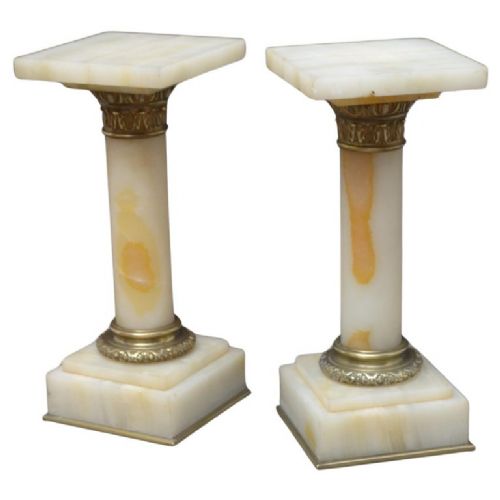


Classical Marble Display Column
A classical marble display column lifts sculpture or bronzes into the light, bringing architectural balance to any room.
Classical Marble Display Column
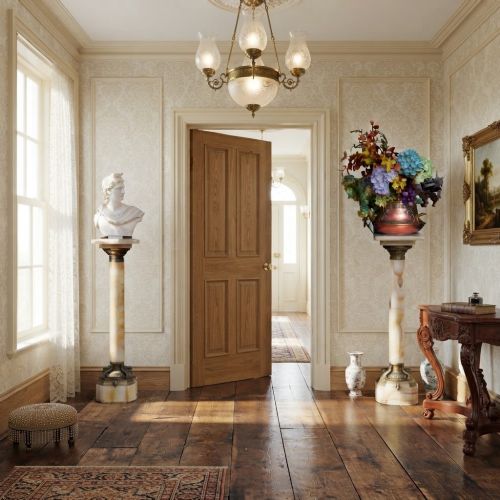
A classical marble display column serves to elevate decorative objects, urns, and busts within a room. When you search for a classical marble display column, you encounter tall, upright supports designed specifically for exhibition purposes rather than structural load-bearing.
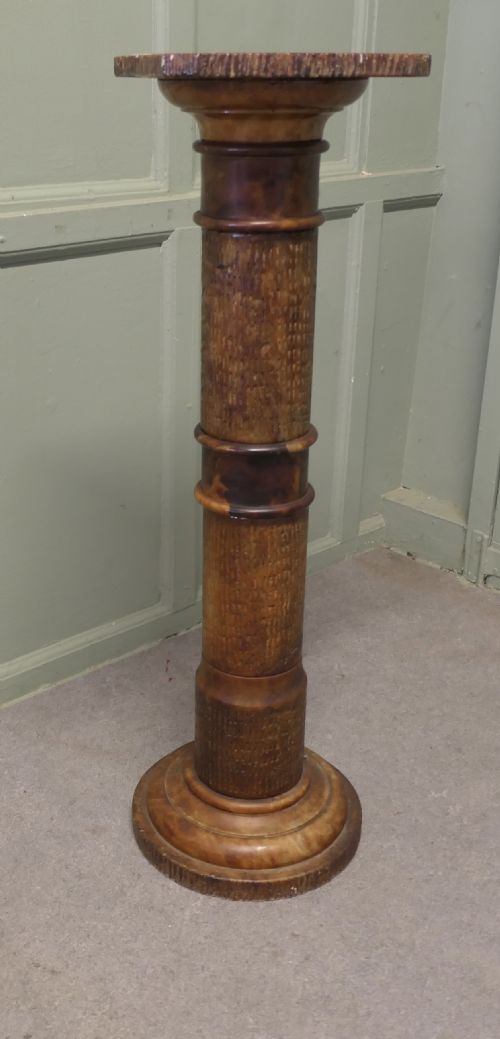
The versions most frequently met on this page date from the nineteenth century and the Victorian era, reflecting Neoclassical and Classical Revival tastes. They appear as solid stone shafts, painted wood imitations, and plaster forms configured as pedestals, torcheres, and plinths.
How they were made
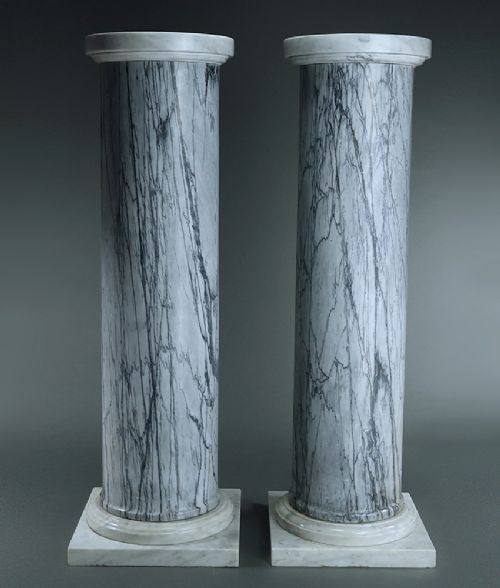
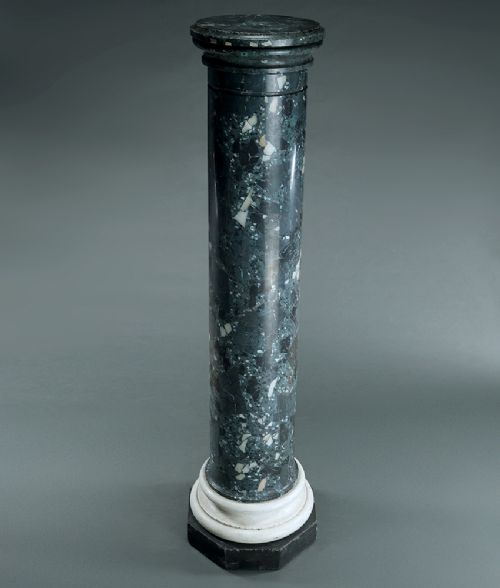
Makers fashioned these supports using natural stones such as Carrara, Bardiglio, Verde Antico, and onyx, often turning them on lathes to achieve smooth, symmetrical shafts. Alternatively, craftsmen worked with scagliola or applied paint to wood, plaster, and pine to simulate costly marbles.
Mounts and collars cast in ormolu and gilt bronze frequently accent the stone shafts, providing decorative contrast at the capital and base. Wood and plaster examples rely on skilled surface decoration to mimic the varied veining found in quarried stone.
Classical Marble Display Column Retail Price Guide 2026
Typical asking prices for classical marble display column among the pieces listed under this phrase on Sellingantiques today, from the lower quarter to the upper quarter. They describe what is for sale here now, not the wider market.
Several columns disguise themselves entirely, using painted pine and plaster to pretend they were quarried in Italy.
What varies in quality
Quality rests upon the selection of materials and the fidelity of the classical proportions. Solid quarried stone columns with rich, natural veining and finely cast ormolu collars occupy the upper tier of craftsmanship.
Lower ranges include simpler painted surfaces on wood or plaster where the simulated grain lacks depth. The crispness of the carved details and the weight of the base separate standard production pieces from finer sculptural works.
The Classical Marble Display Column Glossary
- Ormolu
- Gilded bronze mounts applied to furniture and decorative objects. This technique creates a bright golden contrast against dark stone or wood.
- Scagliola
- A composite material made from pigmented selenite, glue, and plaster. Craftsmen use it to imitate natural marbles and intricate stones.
- Torchere
- A tall ornamental stand designed to hold a lamp, candle, or small sculpture. These pieces often feature slender columns.
- Plinth
- The heavy base supporting a column or statue. It provides stability and visual weight to the upright shaft.
- Neoclassical
- A style inspired by the classical architecture and art of ancient Greece and Rome. It emphasises symmetry, proportion, and classical orders.
Classical Marble Display Column: Frequently Asked Questions
Where should I place a display column?
These pieces suit corners, hallways, or focal points in reception rooms where an upright architectural element adds height and structure. They anchor large spaces by drawing the eye upward.
Position them away from heavy foot traffic to protect the edges of the stone or painted surface from accidental knocks.
How do I clean marble and onyx columns?
Dust the surface regularly with a soft, dry cloth to prevent dirt settling into the natural fissures of the stone. Avoid harsh chemical cleaners that strip protective finishes.
For painted or faux marble surfaces, use a slightly damp cloth followed immediately by a dry one to preserve the decorative finish.
Can these columns hold heavy sculptures?
Solid stone columns handle substantial weight, making them suitable for heavy bronze figures, marble busts, and large urns. Check the top surface area and base stability before placing heavy items.
Wood, plaster, and hollow scagliola versions suit lighter decorative objects, porcelain, or plants rather than massive statuary.