



Victorian Painted Column Stand
A victorian painted column stand serves to elevate sculpture and plants, bringing architectural presence into a room.
Victorian Painted Column Stand
A victorian painted column stand takes the form of a vertical pedestal, support, or plinth designed to elevate busts, urns, and plants within an interior space. These pieces range from classical revival shapes to aesthetic movement designs, functioning as architectural focal points in a hallway or drawing room.
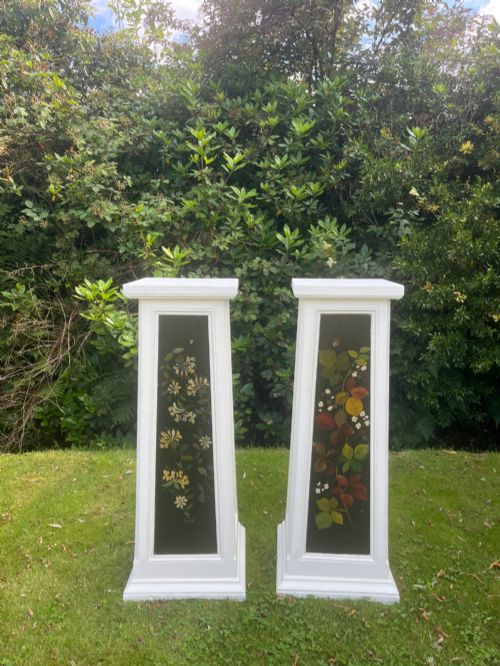
The versions most frequently encountered on this page belong to the nineteenth century, utilising timber finished with decorative paint schemes. Common variations include turned wooden columns, cylindrical cupboard stands, and pairs of display pedestals suited for symmetrical placement.
How they were made
Makers constructed these supports primarily from pine and other woods, frequently employing the technique of grain painting to simulate costly materials like marble. Gesso and applied decorative elements added texture and relief to the timber surfaces before the final painted finish was applied.
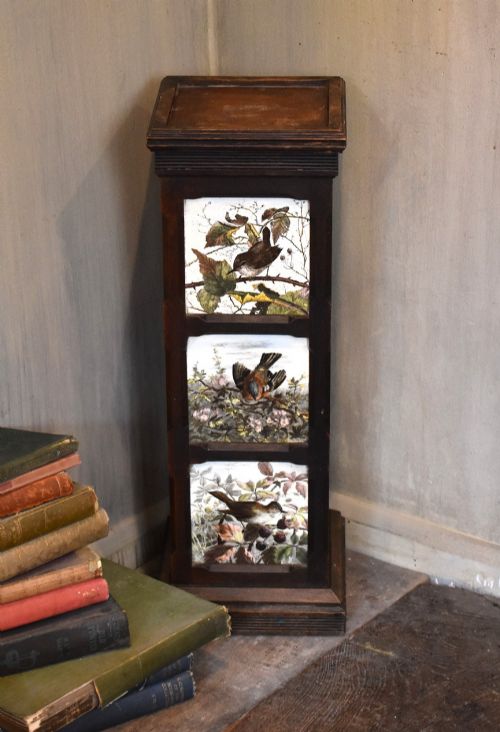
Certain examples incorporate contrasting materials such as brass capitals, marble tops, or ceramic tiles, combining structural timber with decorative accents. Turned woodwork formed the central shafts, while cast elements or heavier bases provided the stability needed to support heavy planters and stone busts.
Victorian Painted Column Stand Retail Price Guide 2026
Typical asking prices for victorian painted column stand among the pieces listed under this phrase on Sellingantiques today, from the lower quarter to the upper quarter. They describe what is for sale here now, not the wider market.
Some nineteenth-century makers created graduated sets of Masonic candlesticks disguised as tall Corinthian columns.
What varies in quality
The standard of a painted column stand rests upon the execution of the decorative surface and the proportion of the turning. Faux finish work that convincingly mimics natural stone demonstrates a higher degree of artisan skill than plain or flat colour applications.
Structural integrity and material selection also define the grade of the piece, particularly where brass mounts, marble inserts, or intricate gesso mouldings are involved. Well-balanced proportions and retained original paint surfaces separate ordinary utilitarian supports from finer decorative examples.
The Victorian Painted Column Stand Glossary
- Column
- A vertical structural element with a cylindrical shaft, base, and capital, frequently adapted in furniture to support display items.
- Faux marble
- A painted surface technique designed to imitate the veining and coloration of natural marble on timber substrates.
- Torchere
- A tall stand or pedestal originally intended to hold a torch or candle, later adapted for lamps, urns, and floral displays.
- Pedestal
- A base or support for a statue, urn, or column, raising the object above floor level for greater visibility.
- Gesso
- A plaster-like mixture applied to wood and painted to create raised decorative details or smooth ground surfaces.
Victorian Painted Column Stand: Frequently Asked Questions
What were column stands used for originally?
These supports held heavy items like marble busts, ceramic jardinieres, and large plants to display them at eye level in period interiors.
They allowed homeowners to introduce classical architectural forms into domestic rooms without utilising solid stone.
How do I identify a Victorian painted stand?
Victorian examples typically exhibit nineteenth-century timber construction, often finished with grain painting, faux marble effects, or applied gesso decoration.
Stylistic cues draw on classical revival, aesthetic movement, or gothic revival motifs popular during the period.
Can these stands support heavy plants?
Most wooden and iron stands were engineered to bear considerable weight, such as large terracotta planters or heavy decorative urns.
Checking the base stability and joint condition ensures the structure remains secure for heavier display items.
Where should I place a column stand?
They suit entrance hallways, corners of reception rooms, or flanking fireplaces where vertical height adds balance to a room scheme.
Pair sets work well positioned symmetrically on either side of a doorway or piece of furniture.