




Faux Marble Column
A faux marble column brings classical weight to a room without the crushing heft of solid stone.
Faux Marble Column
A faux marble column serves primarily as a display pedestal, torchere, or architectural support within a room. When you search for a faux marble column, you encounter pieces designed to elevate busts, urns, clocks, or simply to stand alone as focal points.
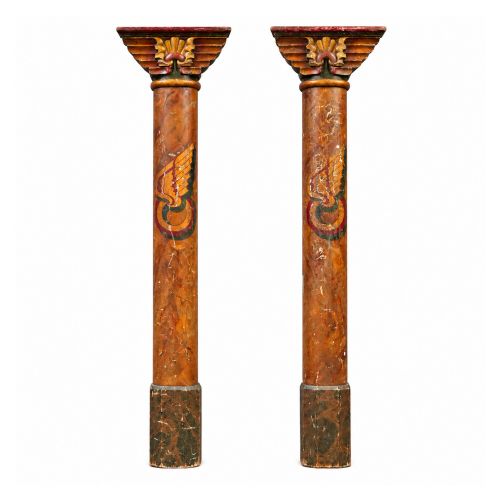
The selections on this page span the nineteenth and early twentieth centuries, drawing heavily from Victorian and Regency aesthetics. Forms range from simple cylindrical cupboards to large square pedestals and matched pairs intended for theatrical or fairground settings.
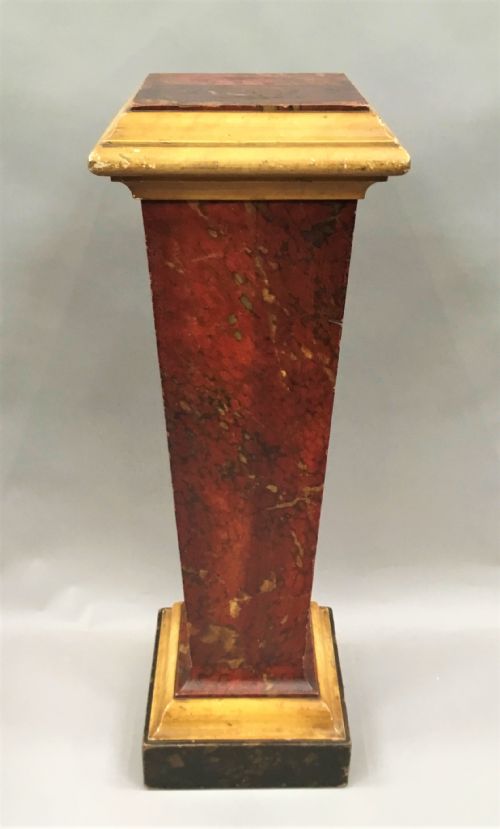
Wooden display columns simulated to resemble specific stones such as verde antico or giallo antico appear frequently alongside plaster and scagliola versions. These objects bridge the gap between grand neoclassical architecture and domestic interior decoration.
Materials and construction
Craftsmen built these pieces using timber, pine, rosewood, or plaster as a structural base before applying intricate paint finishes to simulate costly stones like Sienna or rouge marble. Scagliola also appears frequently, utilising a composite of pigmented selenite, glue, and plasters to achieve a smooth, stone-like surface.
Makers utilised brass details and socle bases on certain columns to anchor the painted shafts. Artisans layered oil paints and glazes over wood to mimic the deep veining and translucent qualities of natural geological specimens.
Object forms documented here range from architectural columns and cylinder cupboard stands to mantel clocks and open bookcases.
Evaluating quality and execution
Quality rests entirely in the convincing execution of the surface finish and the integrity of the underlying structure. The finest examples display meticulous hand-painted veining that reacts to light similarly to actual quarried stone, avoiding flat or repetitive brushwork.
Proportion and scale dictate the success of a piece, with balanced fluting and well-turned capitals distinguishing superior workshop production from simpler decorative items. Original finishes that retain their intended depth and sheen command greater interest than heavily repainted surfaces.
The Faux Marble Column Glossary
- Scagliola
- A composite material made from pigmented plaster, glue, and selenite that mimics true marble when polished. It allows artisans to create seamless columns and urns with complex coloured veining.
- Torchere
- A tall stand or pedestal originally designed to hold a torch or candle, later adapted for lamps or decorative sculptures. These slender pieces often feature simulated marble paint finishes.
- Socle
- A short plain plinth or pedestal supporting a column or bust. It provides a stable flat base for taller shafts.
- Verde Antico
- A dark green serpentine marble heavily veined with white, frequently imitated by painters on wooden columns and display stands. The term describes both the genuine stone and its painted simulation.
Faux Marble Column: Frequently Asked Questions
How do I style a faux marble column?
Position a single column in a corner to hold a bronze bust, a ceramic urn, or a trailing plant. The vertical height draws the eye upward and breaks up flat wall expanses.
Pairs work effectively flanking a doorway, fireplace, or large mirror to create symmetry. Ensure the scale of the object placed on top matches the diameter of the column top.
Are these columns made of real stone?
Most examples utilise a base of painted timber, pine, or plaster rather than solid quarried stone. Artisans applied skilled paint techniques or scagliola to simulate the appearance of marbles such as Sienna or giallo antico.
This construction method kept the pieces light enough to move around domestic interiors while retaining a convincing neoclassical aesthetic.
How do I care for painted marble finishes?
Dust the surface regularly with a soft, dry cloth to prevent dirt accumulation on the painted or scagliola finish. Avoid using liquid cleaners, abrasive sponges, or chemical polishes that can lift or dull historic paint layers.
Keep the pieces away from direct sunlight and sources of extreme heat to protect the wood and painted glazes from drying out or cracking.
How can I tell different periods apart?
Regency pieces often lean into strict neoclassical proportions with dark woods, parcel gilt, and precise simulated stonework. Victorian examples frequently embrace larger scales, bolder painted graining, and heavier plaster or wooden construction.
Early twentieth-century items occasionally introduce playful elements from theatrical or fairground contexts, blending classical forms with decorative whimsy.