

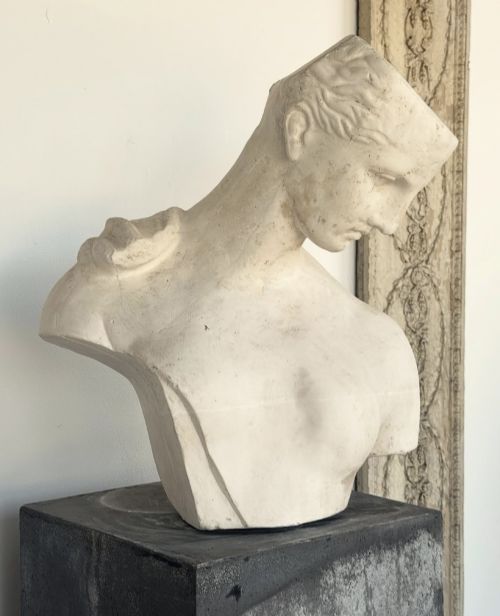

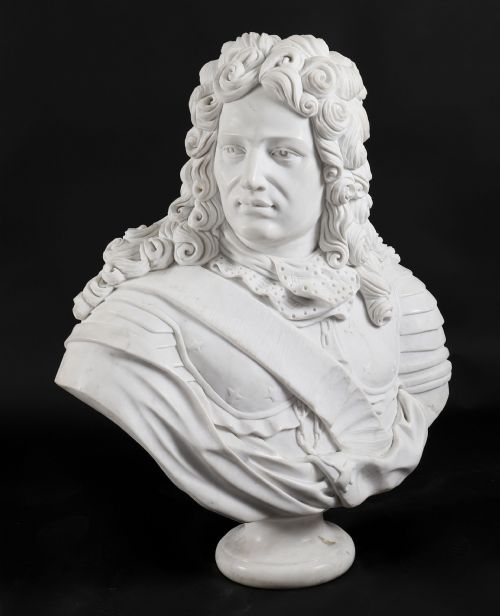
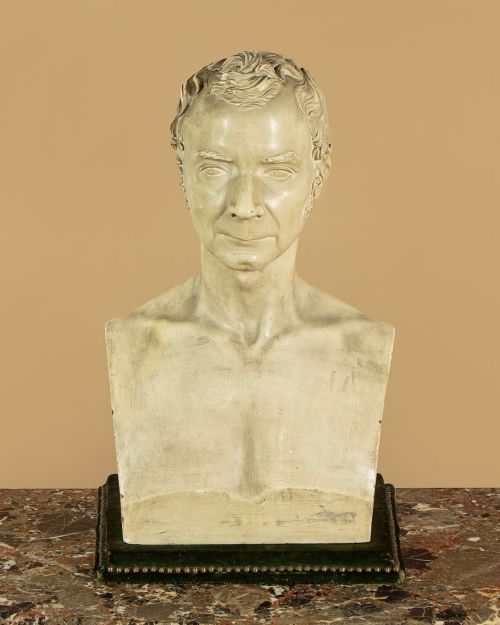


Classical Male Head Bust
A classical male head bust brings the solemnity of antiquity into a room, carved in marble, cast in bronze or moulded in plaster.
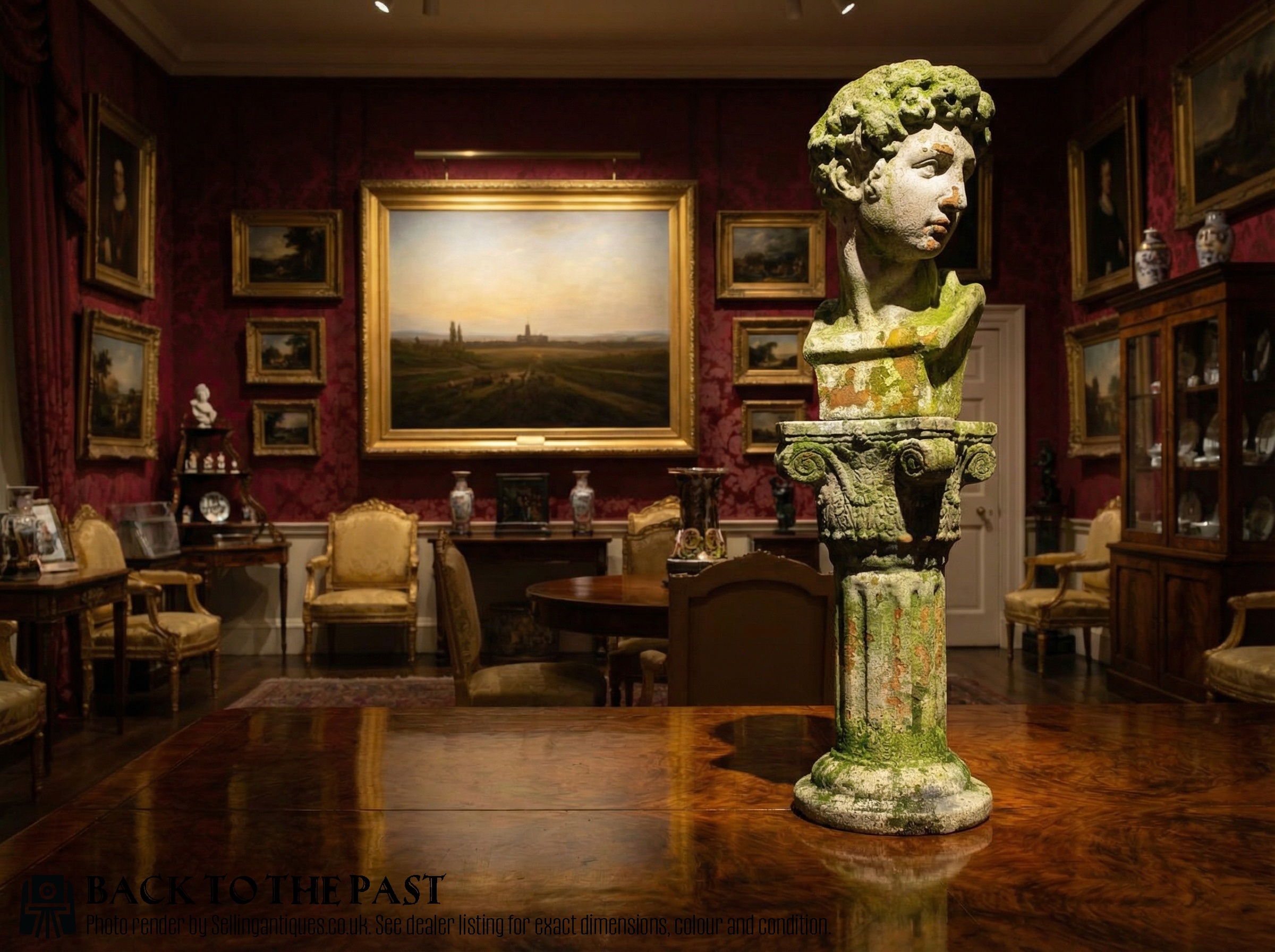
Classical Male Head Bust
A classical male head bust represents figures ranging from anonymous gentlemen and noblemen in armour to historical philosophers, emperors and mythological charioteers. These sculptural works draw upon neoclassical, baroque revival and academic realism traditions, interpreting ancient Greek and Roman forms through later European aesthetics.
The versions most frequently encountered on this page date from the nineteenth and twentieth centuries, spanning Victorian, Edwardian and mid-century periods. They appear as indoor portrait studies in plaster and white marble alongside larger garden pieces cast in stone, concrete and bronze.
How they were made
Carved marble works rely on the direct reduction of stone by hand, capturing fine details in drapery, hair and facial expression through sustained chisel and drill work. White marble and general marble varieties demand exceptional skill from the sculptor to achieve smooth transitions across skin and musculature.
Bronze and metal examples begin as modelled forms before undergoing the lost-wax casting process or sand-casting methods, often finished with patination to heighten tonal depth. Plaster, terracotta and concrete pieces utilise moulds taken from master models, allowing workshops to produce detailed portraiture and garden statuary in multiples.
Classical Male Head Bust Retail Price Guide 2026
Typical asking prices for classical male head bust among the pieces listed under this phrase on Sellingantiques today, from the lower quarter to the upper quarter. They describe what is for sale here now, not the wider market.
One nobleman proudly wears full armour while contemplating the universe from his twentieth-century perch.
What varies in quality
The fidelity of anatomical rendering and the sensitivity of the carving or casting separate superior examples from standard decorative pieces. Master sculptors capture subtle psychological depth and lifelike tension in the musculature and expression, whereas lesser works remain stiff and formulaic.
Material selection and surface finish dictate the longevity and visual impact of the bust. Finely grained marbles and meticulously patinated bronzes hold detail sharply, while plaster and concrete pieces depend entirely on the crispness of the original mould and subsequent preservation.
Giuseppe Moretti·Sir Thomas Brock·Mathurin Moreau
The Classical Male Head Bust Glossary
- Neoclassical
- A style originating in the mid-eighteenth century that draws direct inspiration from the art and culture of classical antiquity. It prioritises order, solemnity and clean lines.
- Patina
- The surface sheen or colour alteration developed on bronze, metal or marble over time through age, handling or chemical treatment. This finish enhances the perceived depth of the material.
- Terracotta
- Fired clay used for sculptural works, typically left unglazed to reveal the porous reddish-brown earthen body. It allows modellers to capture immediate gestural marks.
- Grand Tour
- A traditional trip through Europe undertaken by upper-class young men during the eighteenth and nineteenth centuries to study classical art and architecture. Travellers often acquired miniature or full-scale sculptures as souvenirs.
- Academic Realism
- A style of painting and sculpture produced under the influence of European academies of art during the nineteenth century. It combines classical discipline with close observation of natural subjects.
Classical Male Head Bust: Frequently Asked Questions
Where should I display a marble bust?
Place a marble bust on a sturdy column, pedestal or heavy console table where it receives indirect natural light from the side. This lighting accentuates the carved contours of the face and drapery.
Avoid placing heavy stone or plaster pieces near direct heat sources or in damp areas like unprotected gardens unless the material is explicitly rated for exterior use.
What is the difference between marble and plaster?
Marble is a natural metamorphic rock carved directly by a sculptor, offering a translucent quality and cold touch that endures for centuries. Plaster is a fluid mixture of gypsum and water poured into a mould to set, producing a lighter, more opaque object.
While marble represents a unique carved creation, plaster frequently served as an affordable studio model or an accessible alternative for domestic interiors.
Are bronze busts suitable for outdoor gardens?
Bronze withstands outdoor conditions well, gradually developing a protective natural patina when exposed to rain and air over the years. Bronze garden statuary requires minimal maintenance beyond occasional gentle washing with clean water to remove debris.
Ensure that bronze or stone pieces are securely anchored to a solid pedestal or base to prevent tipping in high winds.