






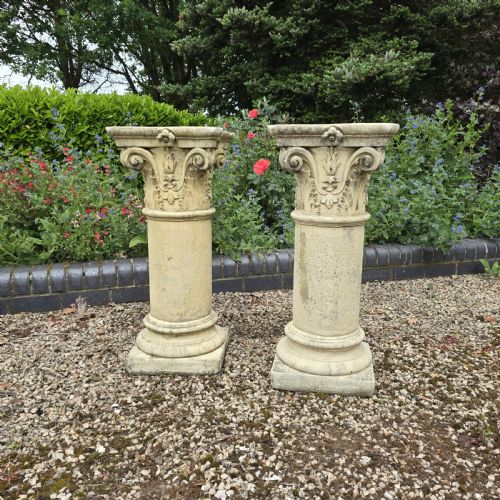


Reconstituted Stone Plinth
A reconstituted stone plinth elevates garden sculpture and urns with architectural presence, giving outdoor displays the weight and structure they need.
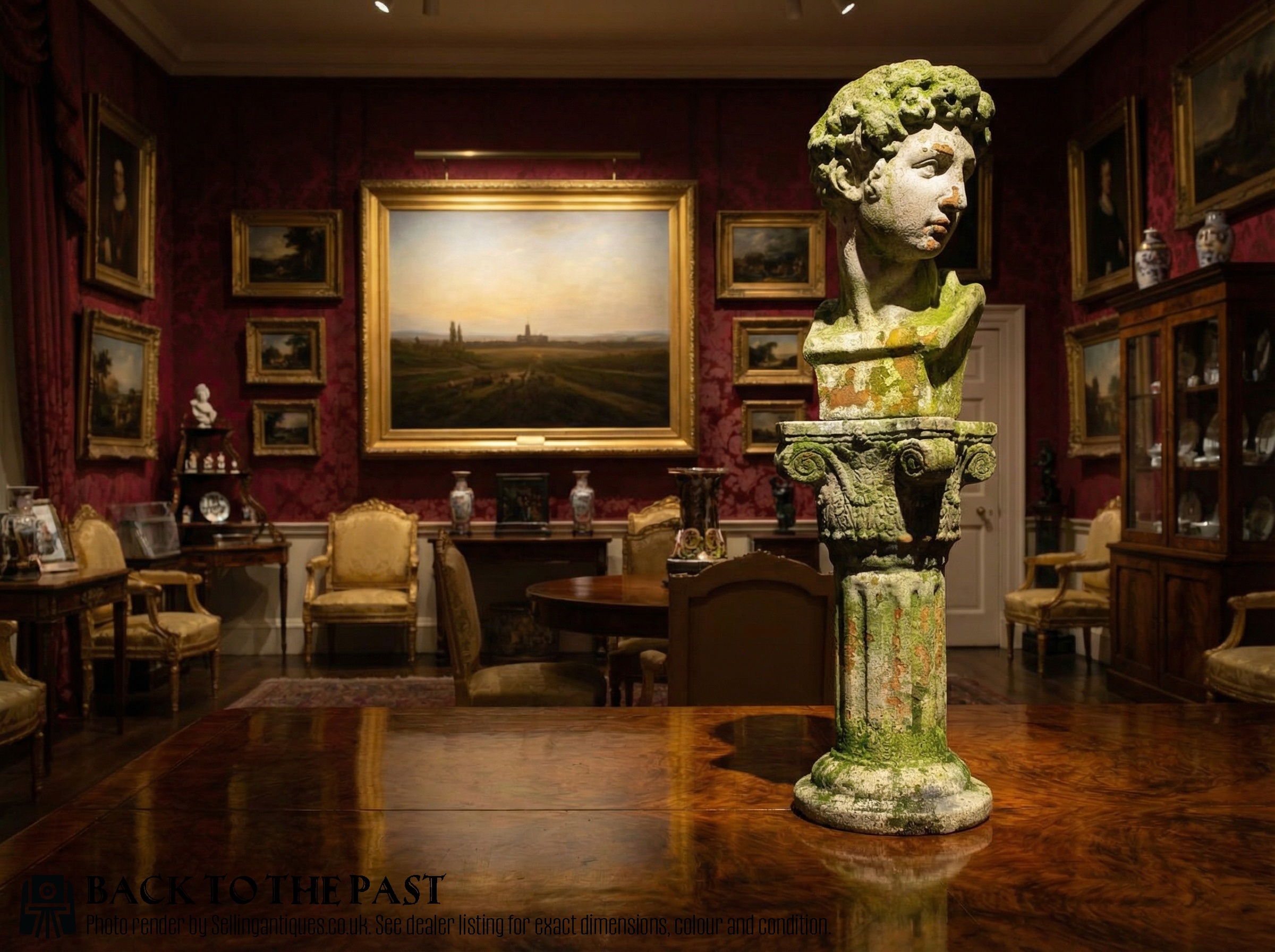
Reconstituted Stone Plinth
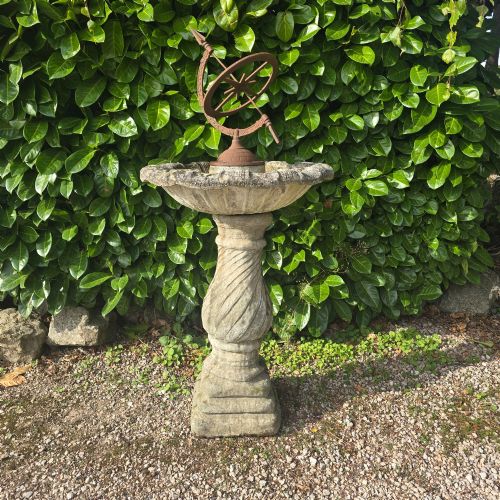
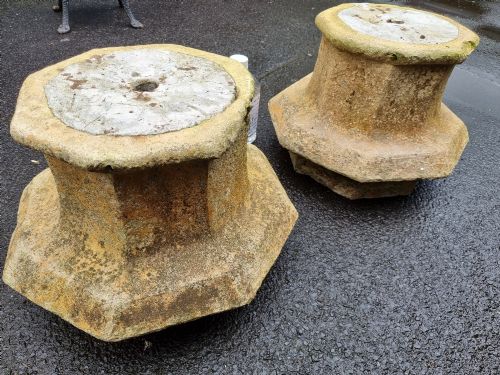
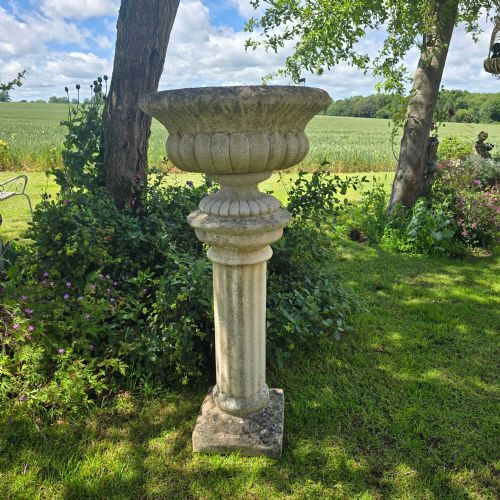
A reconstituted stone plinth serves as a structural base for garden statuary, urns, busts, and columns, lifting ornaments off the ground to anchor them within a garden layout. When searching for a reconstituted stone plinth, buyers encounter sturdy supports ranging from simple pedestals to elaborate architectural forms designed to carry weight outdoors.
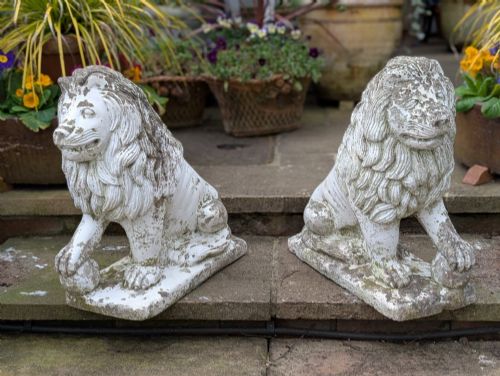
The pieces listed here draw upon 19th Century, Edwardian, 1920, 1930, and 1950 periods, showing influences from classical, neoclassical, Gothic, and Edwardian styles. Common forms include garden pedestals, altars, columns, and dedicated plinths paired with statues of lions, busts of Athena and David, and urns.
What varies in quality
Quality in a reconstituted stone plinth depends on the crispness of the moulded detail and the structural integrity of the aggregate mix. Superior examples maintain sharp architectural lines and balanced proportions that support heavy stone statues without settling.
Weathering patterns also affect the surface character, as natural ageing creates organic patination that integrates the cast material into garden settings more convincingly than uniform new surfaces.
Reconstituted Stone Plinth Retail Price Guide 2026
Typical asking prices for reconstituted stone plinth among the pieces listed under this phrase on Sellingantiques today, from the lower quarter to the upper quarter. They describe what is for sale here now, not the wider market.
David and Athena occasionally share showroom floor space with four seasons and French lions.
The Reconstituted Stone Plinth Glossary
- Reconstituted stone
- A manufactured material made from crushed stone or aggregate bound with cement, moulded into architectural forms. It provides the visual weight of natural stone with greater uniformity.
- Composite stone
- A durable mix of stone dust, aggregate, and binding agents used to cast garden ornaments and plinths. This material withstands frost and weathering in outdoor environments.
- Cast stone
- A refined form of concrete masonry manufactured to simulate natural cut stone. It forms the foundation of many twentieth-century garden pedestals and architectural antiques.
- Pedestal
- A vertical support or base that elevates a statue, urn, or bust. In garden design, it establishes a focal point by lifting ornaments to eye level.
- Neoclassical
- A style drawing on the classical art and architecture of ancient Greece and Rome. Plinths and statues from this tradition often feature formal proportions and restrained ornamentation.
Reconstituted Stone Plinth: Frequently Asked Questions
Are reconstituted stone plinths frost-resistant?
Most cast and composite stone plinths are manufactured for exterior use and tolerate cold weather well. Good drainage prevents moisture accumulation within the internal structure during freezing conditions.
Positioning bases on gravel or paving slabs rather than directly on damp soil reduces winter moisture absorption and extends the lifespan of the material.
How do I clean weathered garden plinths?
Gentle washing with water and a soft brush removes loose dirt and organic debris while preserving the natural patination. Avoid harsh chemical cleaners or abrasive pressure washing, which can erode the outer cement matrix.
Allowing moss and lichens to age naturally on stone surfaces enhances the historical appearance of 19th-century and mid-century garden ornaments.
Can plinths support heavy marble statues?
Solid concrete and composite stone pedestals provide substantial weight capacity for heavy garden statuary, urns, and bronze sundials. Ensuring the top surface is level during installation distributes the load evenly.
Pairing weights correctly prevents tipping on uneven lawns or gravel paths, keeping tall compositions stable throughout the year.
How do I date a stone plinth?
Dating relies on stylistic clues such as neoclassical moulding profiles, Gothic revival tracery, or the simpler geometric forms typical of mid-century production. Material composition and the extent of weathering also offer broad chronological indicators.
Comparing the casting style with dated examples of garden statuary and architectural antiques helps narrow down the period of manufacture.