





Antique Garden Bust Statue
An antique garden bust statue brings classical gravity to an outdoor terrace, offering sculptural presence carved from stone or cast in iron.
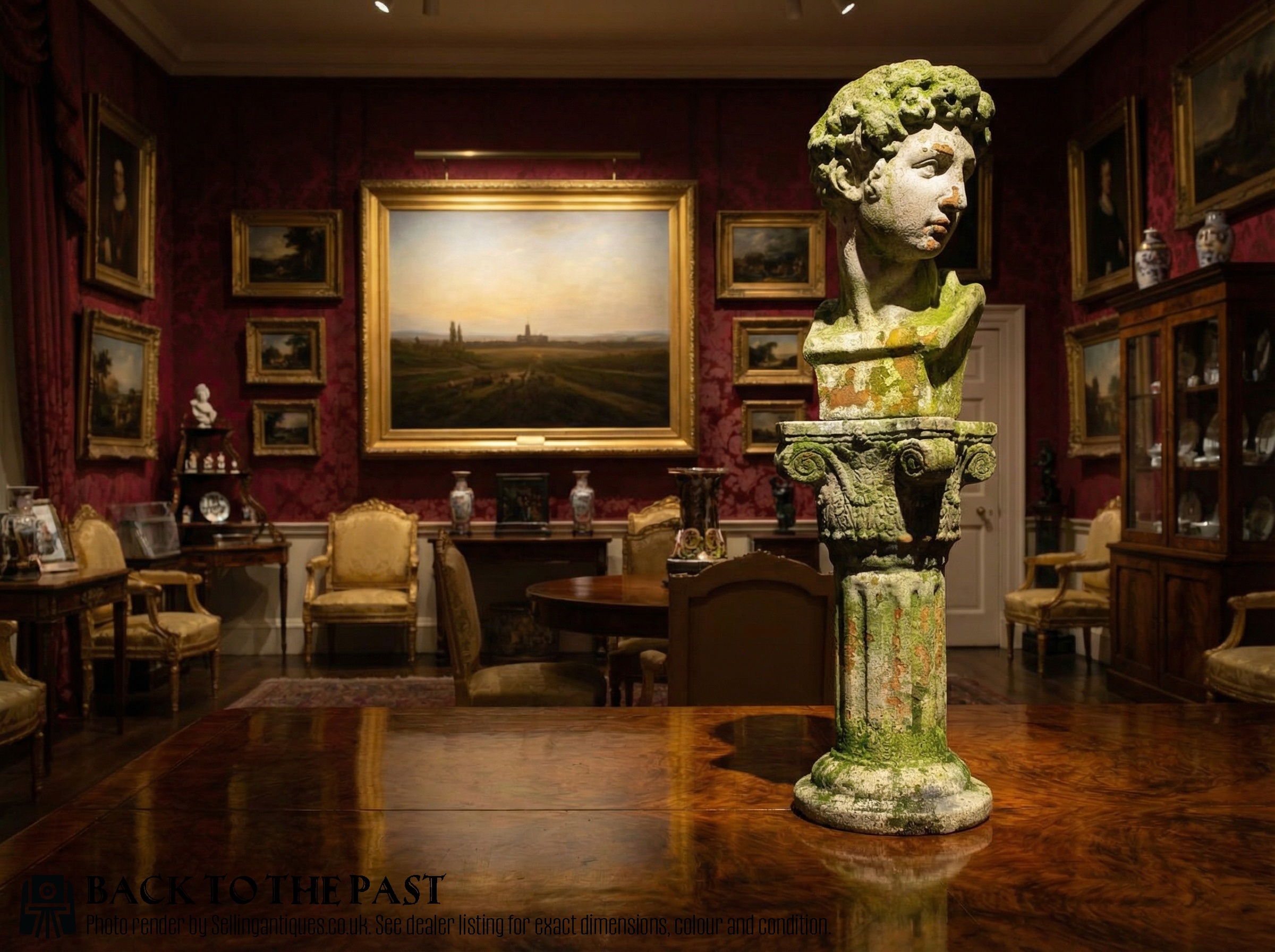
Antique Garden Bust Statue
When you search for an antique garden bust statue, you encounter sculptural portraits and figures designed to anchor outdoor spaces. The selection ranges from nineteenth century grand tour marble pieces to durable twentieth century reconstituted stone and cast iron examples.
Most pieces on this page appear as substantial garden statues or architectural salvage, often mounted upon pedestals or plinths. Forms extend from classical depictions like David and young women to horse head hitching posts and terracotta studies.
Origins span the nineteenth century through the mid twentieth century, encompassing classical revival, neoclassical, and Victorian styles. Buyers frequently select these works to create focal points among planting schemes or along garden pathways.
How they were made
Materials recorded in the inventory rely heavily on durable substances suited for exterior placement, including cast iron, reconstituted stone, concrete, and clay. Artisans also utilised fine natural media such as marble and Carrara marble for grander decorative works.
Manufacturing techniques combine traditional hand carving with nineteenth and twentieth century casting methods. Iron and metal forms utilise industrial casting, whilst marble items reflect skilled hand carving often associated with grand tour souvenirs and classical revival sculpture.
Antique Garden Bust Statue Retail Price Guide 2026
Typical asking prices for garden bust statue among the pieces listed under this phrase on Sellingantiques today, from the lower quarter to the upper quarter. They describe what is for sale here now, not the wider market.
Listings incorporate nineteenth century items alongside pieces dated from the 1920s, 1930s, and 1950s, utilising marble, terracotta, and cast iron.
What varies in quality
Distinctions in quality arise from the purity of the material and the precision of the sculptural execution. Finely carved Carrara marble and detailed nineteenth century terracotta demonstrate superior artistic ambition compared to later mass produced concrete.
Surface weathering and patination significantly influence the character of each piece. Natural oxidation on cast iron and organic lichen growth on stone display authentic ageing that enhances the sculptural depth.
The Antique Garden Bust Statue Glossary
- Plinth
- A heavy base or square slab upon which a statue or bust is mounted. It elevates the sculpture to improve visibility in a garden setting.
- Grand Tour
- A traditional trip through Europe undertaken by upper class scholars in the nineteenth century, yielding collectible art and classical sculpture. These objects often formed the basis of later garden collections.
- Reconstituted Stone
- A composite material made from crushed stone and a binder, moulded to resemble natural carved stone. It provides durability for exterior display.
- Carrara Marble
- A white or blue grey marble quarried in the city of Carrara in Tuscany, Italy. Sculptors have utilised this material for centuries for fine portrait busts and statues.
Antique Garden Bust Statue: Frequently Asked Questions
Can these statues stay outside year round?
Most materials listed, such as cast iron, reconstituted stone, and concrete, withstand outdoor conditions across seasons. However, severe frost can affect certain porous clay or terracotta items.
Providing appropriate shelter or winter covering helps protect more delicate marble and terracotta pieces from extreme weather fluctuations.
How do I clean an antique stone bust?
Gentle washing with water and a soft brush removes dirt without damaging the historical surface. Avoid harsh chemical cleaners or pressure washers that strip away desirable patination.
Allowing natural weathering to remain often preserves the character and visual depth accumulated over decades in the garden.
Are pedestals included with the busts?
Some listings specifically include pedestals or plinths in the description, while others offer the bust alone. Checking individual item details clarifies whether the base comes as part of the piece.
Grouping a bust with a matching stone or iron pedestal creates the classic height and proportion intended for formal garden displays.
How do I identify nineteenth century pieces?
Nineteenth century examples often display specific stylistic markers from the Victorian or classical revival periods. Hand carved details in marble and traditional foundry marks on cast iron provide key clues to their age.
Comparing the material composition and weathering patterns helps distinguish older nineteenth century works from mid twentieth century productions.