

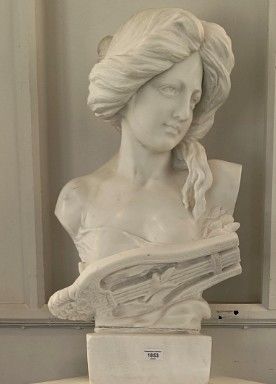
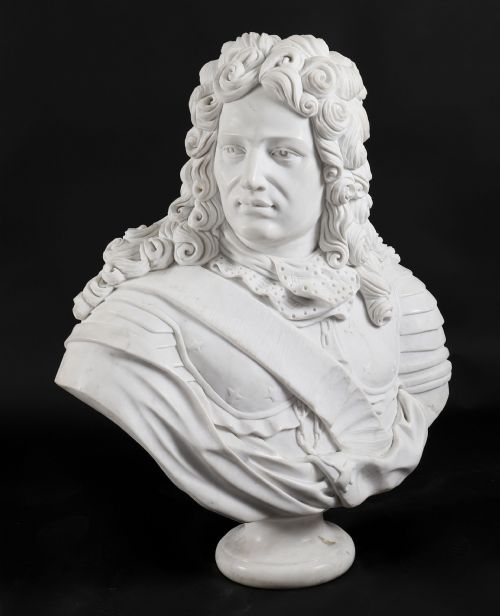
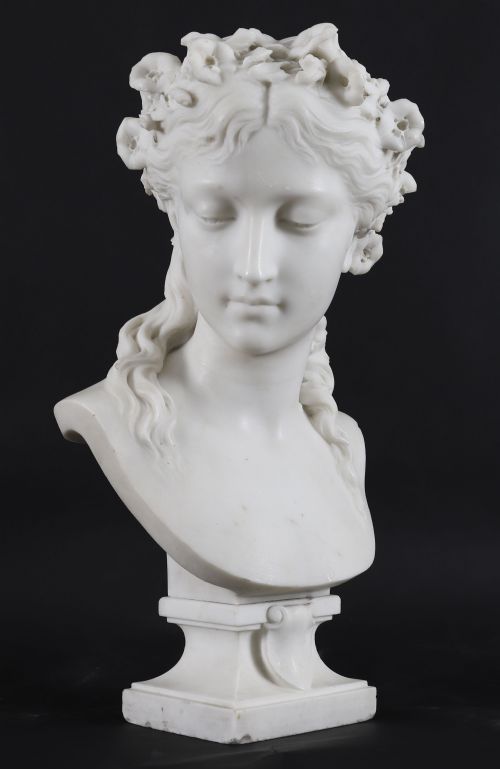
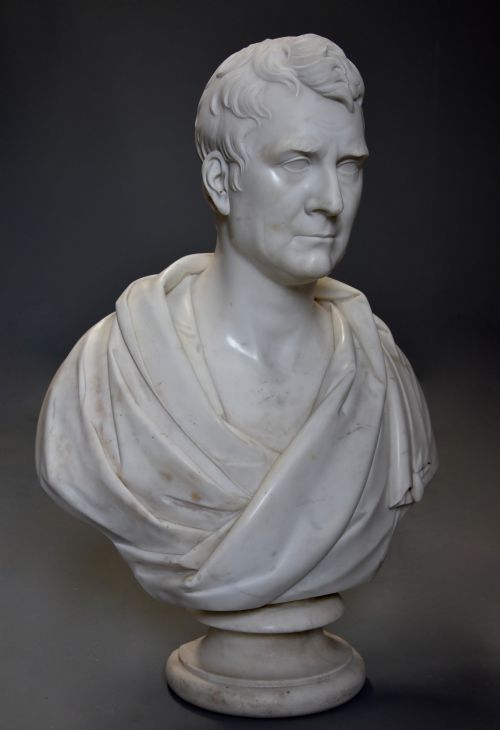

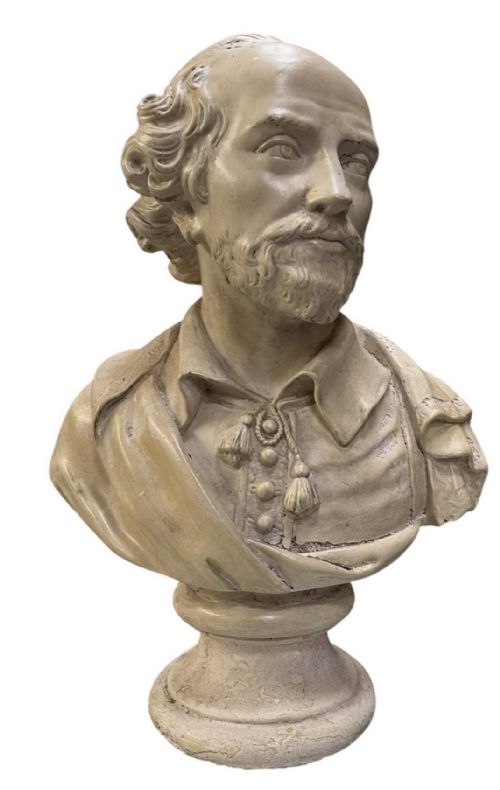
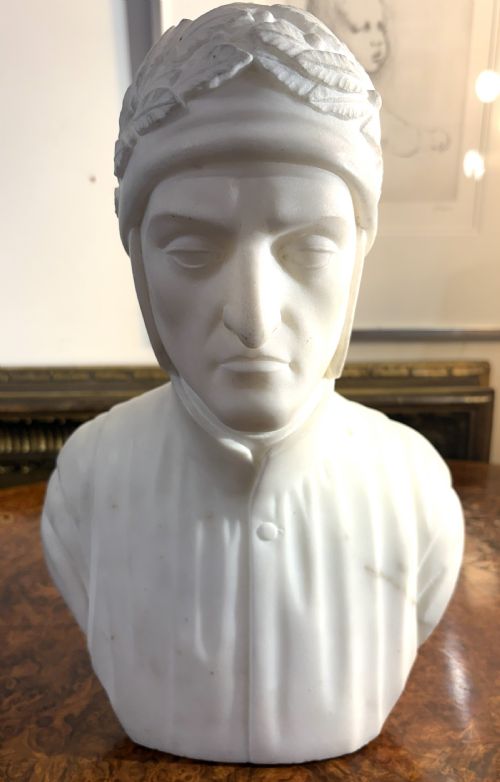
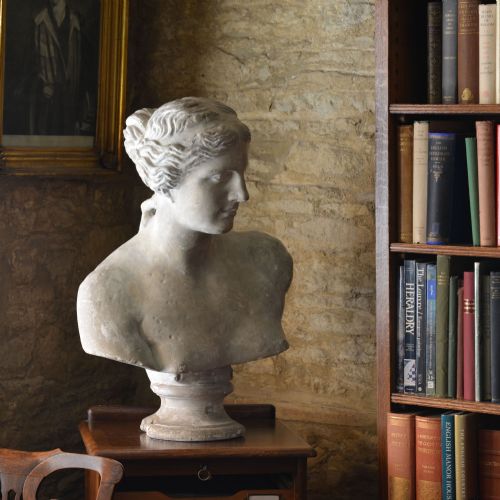

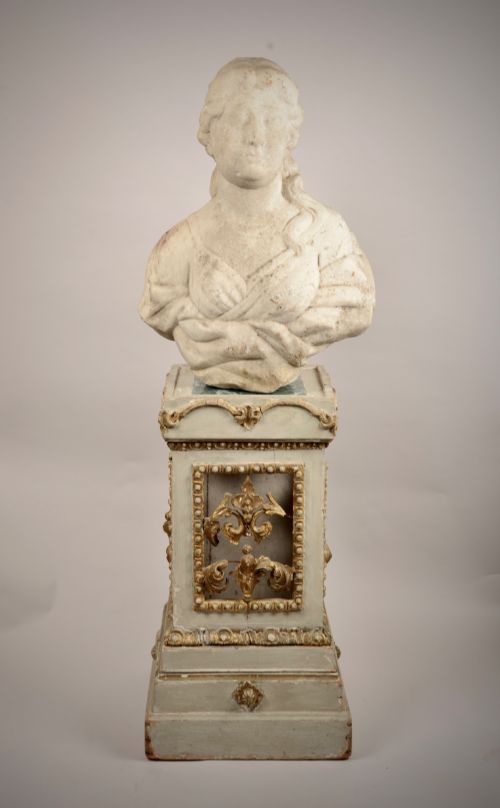

Stone Classical Bust Statue
A stone classical bust statue brings the gravitas of antiquity into a room through carved likenesses of emperors, poets, and mythological figures.
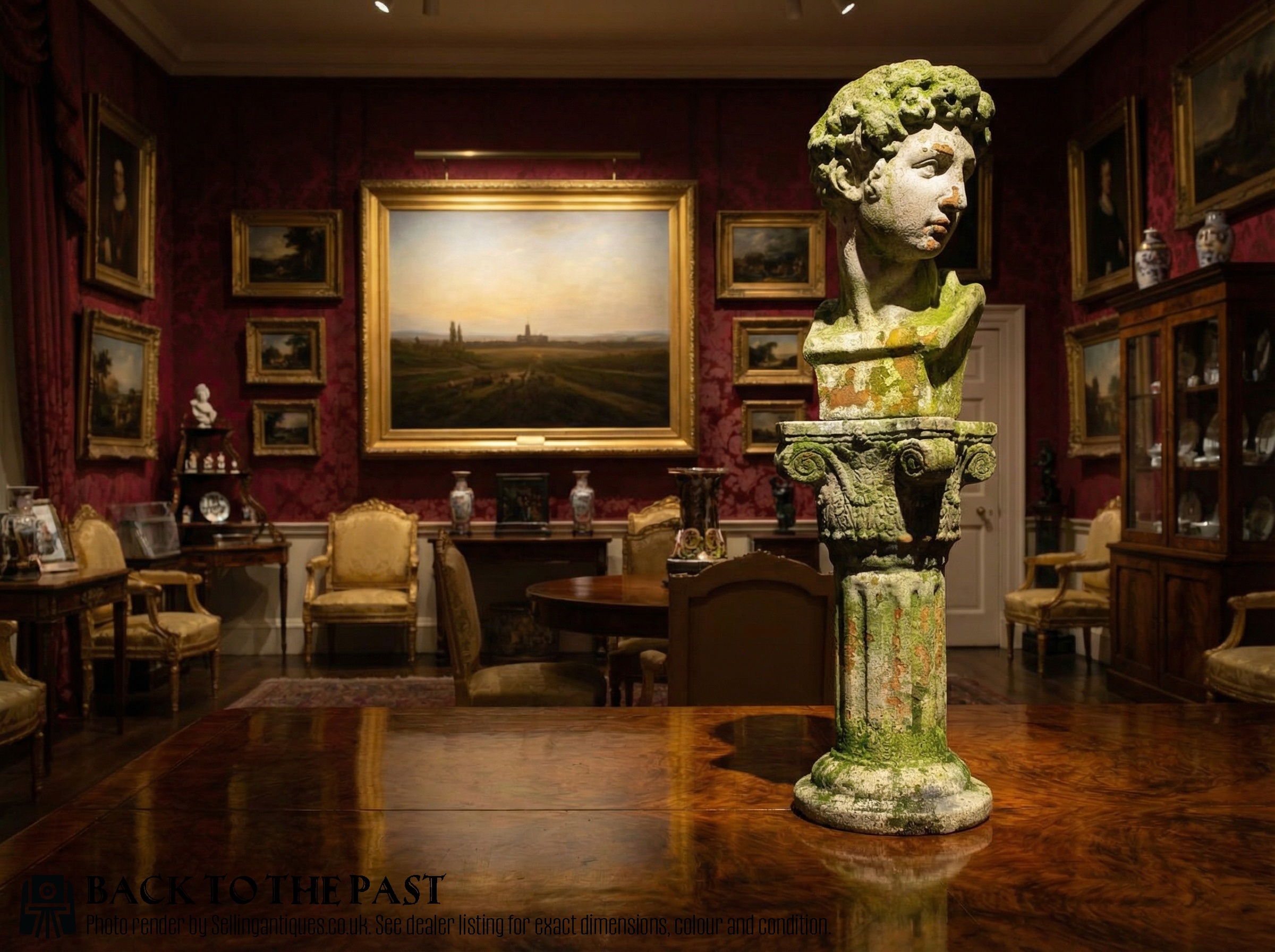
Stone Classical Bust Statue
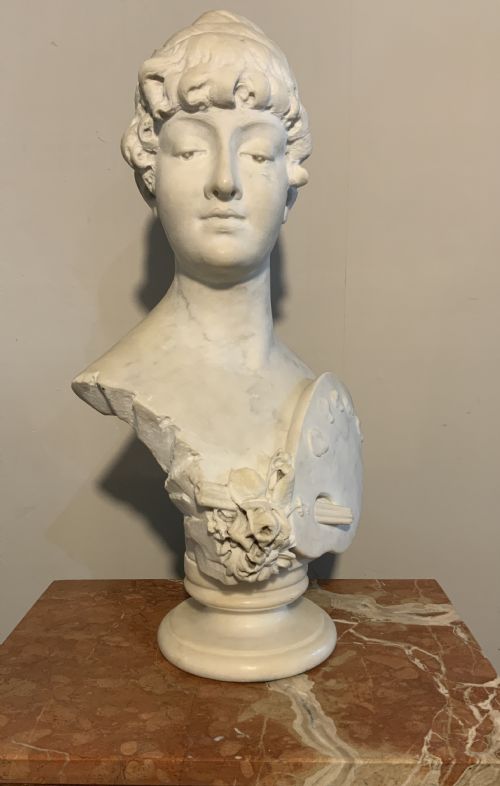
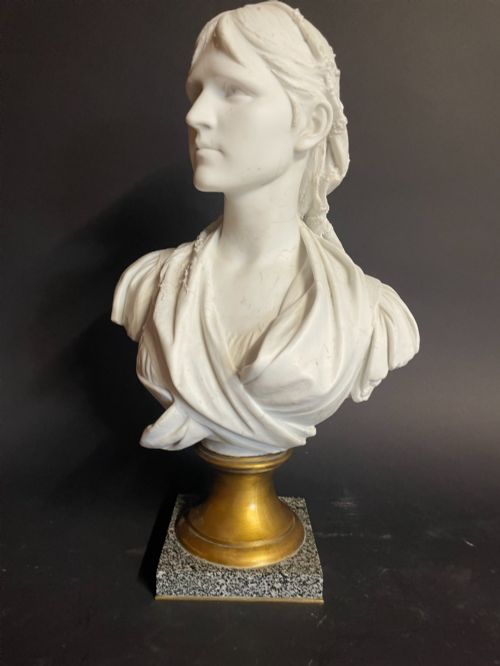
A stone classical bust statue represents the sculptural portrait tradition spanning from the seventeenth century through to the mid-twentieth century. These pieces take the form of historical figures, literary icons, and anonymous nobility carved to echo ancient Greek and Roman ideals.
The versions most commonly met in these listings include nineteenth-century Carrara marble library portraits and monumental garden statuary cast in stone. Makers drew upon neoclassical, Victorian, and Baroque revival styles to create likenesses ranging from small chamber pieces to life-sized garden ornaments.
How They Were Made
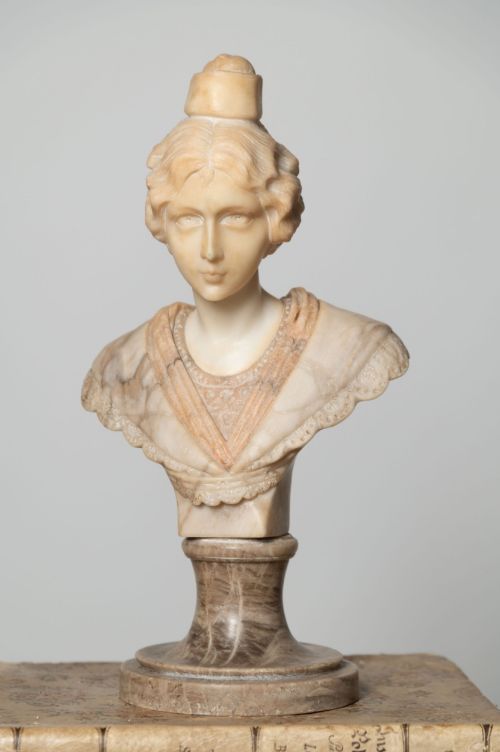
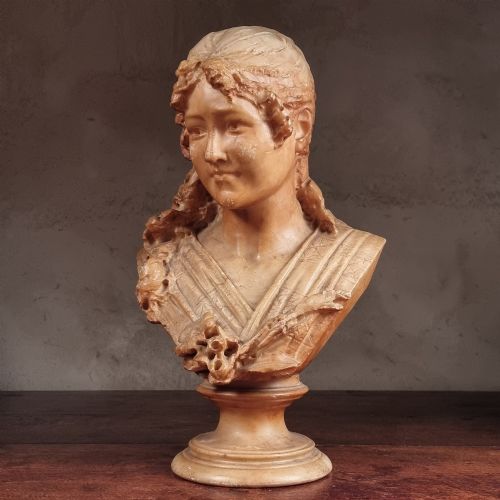
Carvers shaped these portraits primarily from solid blocks of white marble, Carrara marble, and softer alabaster, employing chisels and rasps to render intricate drapery and hair. Workshops also cast larger architectural and garden examples using reconstituted stone, cast stone, and plaster.
Many works bear the signatures of noted sculptors or originate from Italian studios catering to nineteenth-century collectors on the Grand Tour. Finishing techniques involved polishing smooth flesh surfaces while leaving hair or plinths with a more textured appearance.
The sculptural subjects span Roman emperors, Greek mythological figures, literary authors, and nineteenth-century public figures carved in neoclassical and Victorian styles.
What Varies in Quality
Quality rests in the anatomical precision of the carving, particularly how realistically the sculptor renders the musculature, expression, and drape of fabric. Finer works display subtle transitions in the stone that give skin a lifelike warmth.
The choice of material alters the character of the piece, with dense Carrara marble allowing for sharper detail than softer alabaster or cast plaster. Signed works by recognised nineteenth-century sculptors demonstrate a superior handling of proportion and personality compared to unsigned studio pieces.
Eugene Aizelin·R. Mattei·John Wenlock Rollins·Mieczyslaw Leon Zawiejski·Raffaelo Monti
The Stone Classical Bust Statue Glossary
- Carrara marble
- A type of white or blue-grey marble quarried in the city of Carrara in Tuscany, Italy. Sculptors have favoured this material since classical times for its fine grain and consistent texture.
- Alabaster
- A fine-grained, translucent stone that is softer than marble. It allows light to penetrate slightly beneath the surface, giving carved skin tones a warm glow.
- Grand Tour
- A traditional trip of Europe undertaken by upper-class European young men of the eighteenth and nineteenth centuries. Travellers frequently returned with classical sculpture and portrait busts.
- Plinth
- A heavy base or pedestal upon which a bust or statue stands. Many library and garden busts are mounted permanently to matching stone supports.
- Neoclassical
- A Western cultural movement inspired by the art and culture of classical antiquity. This style dominated European sculpture during the eighteenth and nineteenth centuries.
Stone Classical Bust Statue: Frequently Asked Questions
Where should I place a heavy marble bust?
These sculptures require sturdy furniture such as a strong sideboard, a dedicated wooden column, or a reinforced masonry plinth if displayed outdoors. Because stone and marble carry significant weight, positioning them away from busy household traffic prevents accidental tipping.
Interior placement benefits from stable, dry environments away from direct heat sources that might cause thermal shock in softer stones like alabaster. Garden statuary needs a level stone foundation to prevent moisture absorption from rising damp during winter months.
How do I clean an antique marble bust?
Dusting with a dry, soft microfibre cloth removes everyday accumulation without abrading the polished stone surface. Avoid household detergents, abrasive pads, or acidic cleaners which etch and ruin the traditional finish.
If the stone requires deeper cleaning, a damp cloth with mild soap water suffices, followed immediately by thorough drying. Professional conservators should handle stubborn staining or historical grime on nineteenth-century surfaces.
How can I tell the age of a stone bust?
Examining the tooling marks left on the underside or back of the piece reveals whether artisans used hand chisels or modern rotary machinery. Weathering patterns, surface patination, and the specific type of marble or stone also offer clues to the manufacturing period.
Signatures, foundry marks, or inscriptions pointing to nineteenth-century exhibitions help date individual sculptures. Comparing the subject matter to known portrait subjects of the Victorian era provides further chronological context.
What is the difference between marble and alabaster?
Marble is a metamorphic rock formed from limestone, offering high density, durability, and a cool crystalline structure. Alabaster is a softer mineral composed of gypsum, which dissolves slowly when exposed to prolonged moisture.
Light passes deeper into alabaster than into standard white marble, creating a translucent quality ideal for indoor portraiture. This softness means alabaster requires strict indoor placement away from garden weather.