
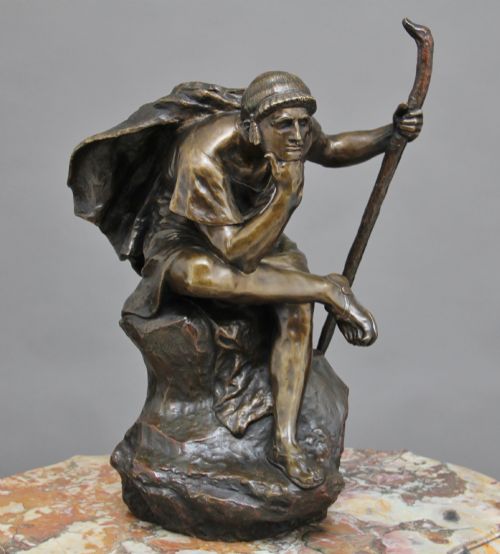
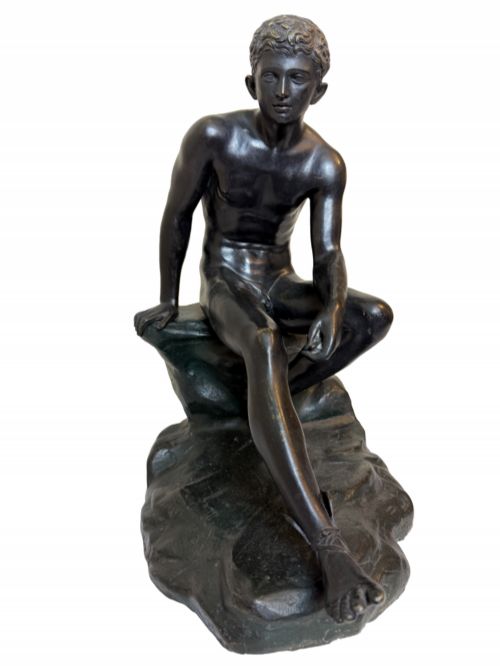

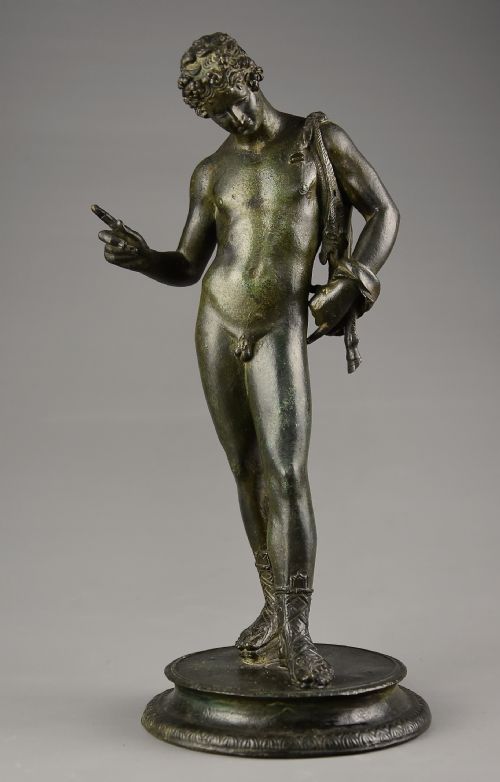
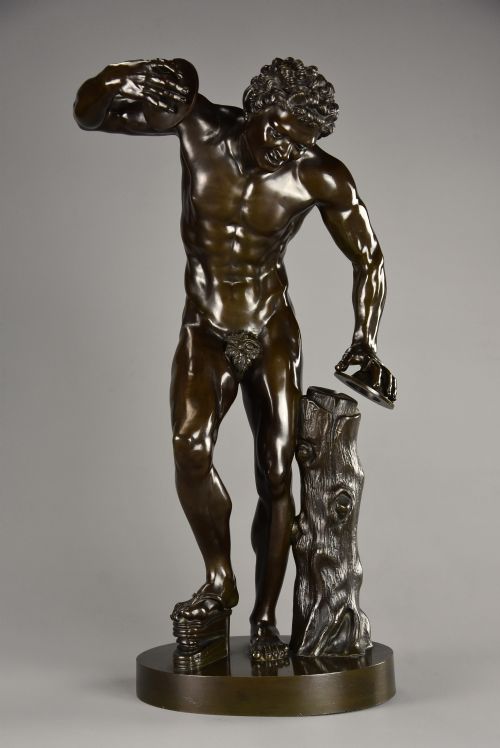


Classical Male Bronze Figure
A classical male bronze figure brings the sculptural ideals of antiquity directly into an interior, capturing heroic forms through enduring metal.
Classical Male Bronze Figure
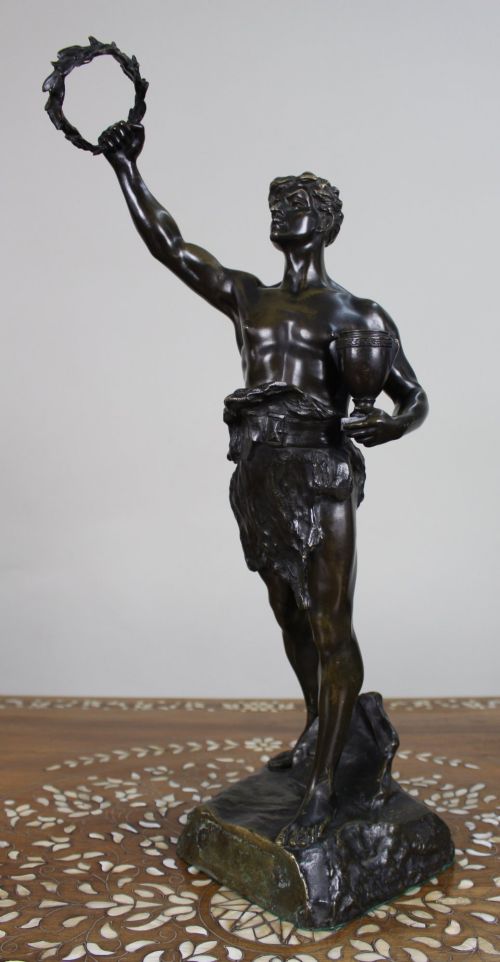
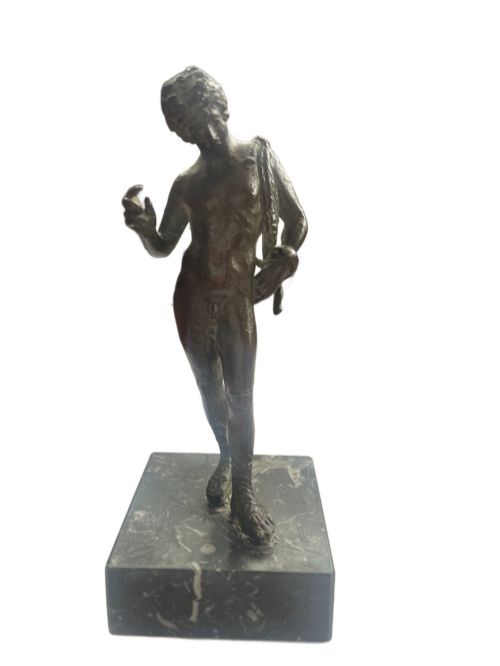
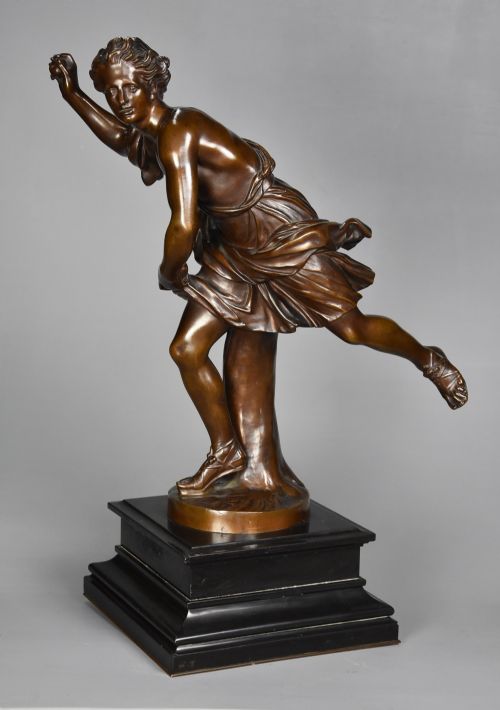
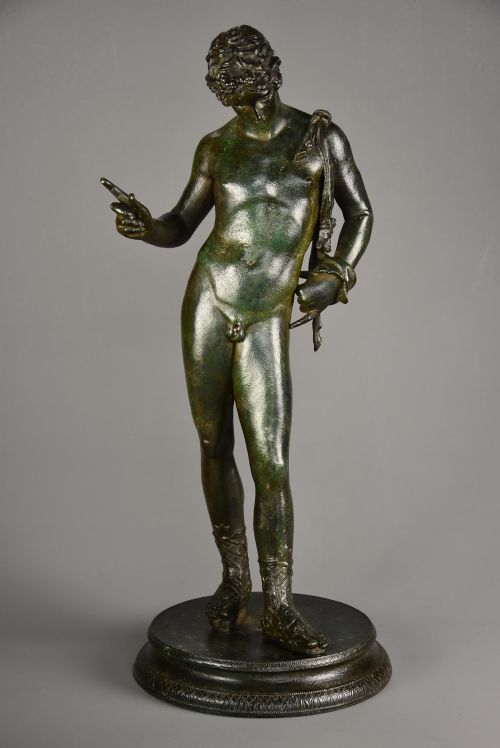
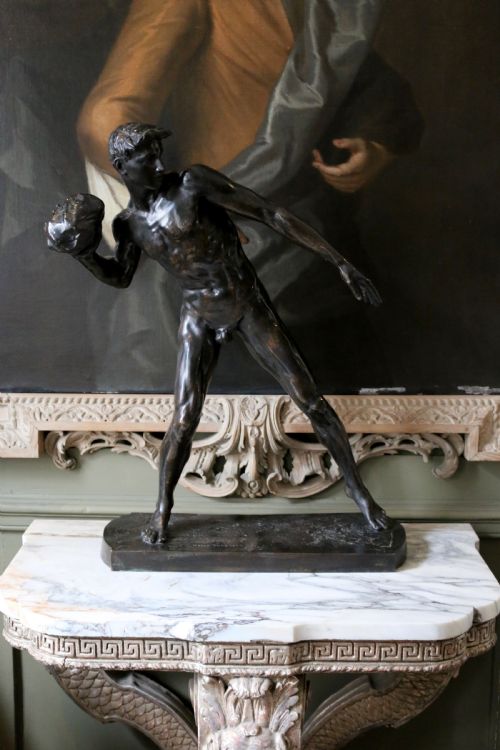
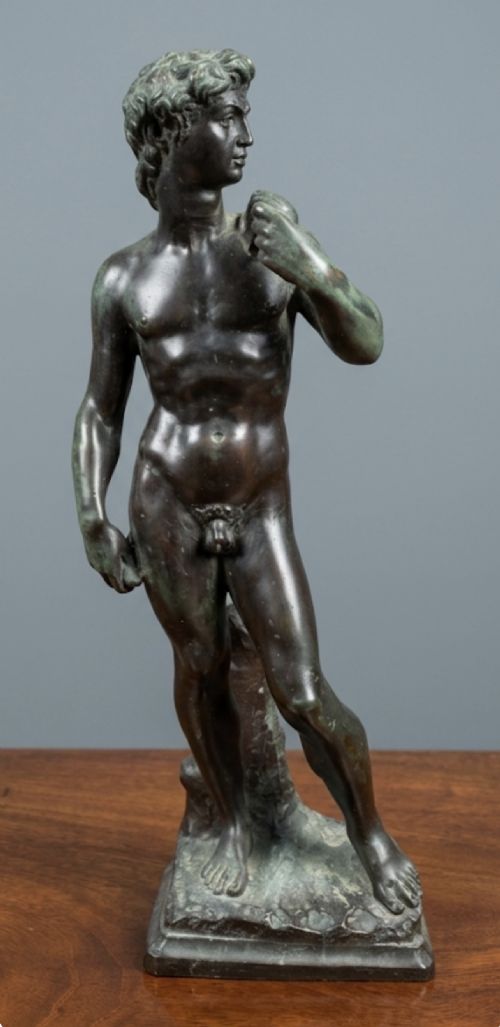
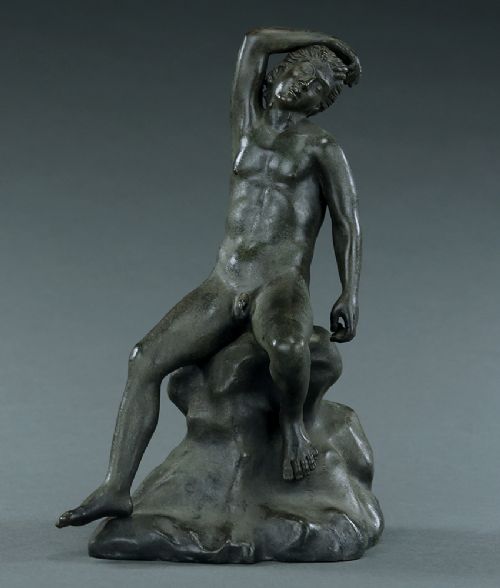
A classical male bronze figure draws heavily from antique mythology, heroic literature, and archaeological discoveries, depicting subjects such as Narcissus, Mercury, David, and various athletes. These pieces frequently manifest as Grand Tour souvenirs, French salon sculpture, or Victorian interpretations cast during the nineteenth century. Buyers encounter smaller cabinet bronzes alongside larger monumental castings, often mounted upon marble or fossilised stone bases.
The aesthetic vocabulary encompasses Neoclassical restraint, French foundry work, and occasional later turns into Art Deco styling. Many examples represent direct reductions of famous ancient statues discovered at Pompeii, Herculaneum, or Roman excavations, rendered by European foundries for collectors travelling abroad. These sculptures range from resting figures and dancing fauns to warriors and mythological deities captured in mid-action.
Casting and surface treatments
Foundries utilised the lost-wax method or sand-casting techniques to produce these bronzes, allowing for intricate detail in musculature, drapery, and facial expressions. Molten bronze was poured into moulds, after which the metal was chased with tools to sharpen contours and remove casting flaws. Substantial marble, fossil marble, or ebonised wood plinths frequently provided structural balance and architectural weight to the finished sculpture.
Surface patination played a crucial role in the final appearance, achieved through chemical treatments that produced dark brown, verdigris, or deep green tones. This patinated skin protected the underlying metal while simulating the aged surfaces characteristic of recovered ancient artefacts. Selected examples incorporate brass elements or incorporate functional lighting as figural lamps.
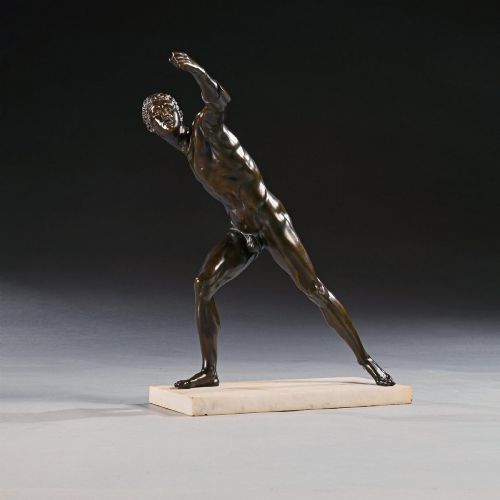
At least one ancient Greek athlete is captured mid-stride with a stone firmly in hand.
Assessing foundry work and finish
Quality rests primarily on the crispness of the chase work and the fidelity of the casting to the original antique source. Superior bronzes retain sharp anatomical definition in the muscles and hands, whereas lesser examples show softness or blurring resulting from worn moulds. Foundries known for high standards, such as Barbedienne, maintained rigorous oversight that resulted in cleaner lines and more complex patination.
The weight and selection of the base material further distinguish superior pieces from standard commercial castings. Finer sculptures utilise solid fossil marble or carefully turned stone plinths fitted precisely to the bronze figure, whereas ordinary pieces employ simpler timber or unrefined bases. The depth and evenness of the patination likewise reflect the skill applied during the final stages of workshop production.
Barbedienne·Emile Louis Picault·Franz Iffland·Julien Lorieux·Raoul Francois Larche
The Classical Male Bronze Figure Glossary
- Grand Tour
- A traditional journey through Europe undertaken by upper-class young men to collect art and antiquities. Bronzes purchased during these travels often replicated famous Roman and Greek sculptures.
- Patination
- The chemical treatment applied to the surface of the bronze to alter its colour and simulate age. Common variations include dark brown, verdigris, and deep green.
- Lost-wax casting
- A historic method of metal casting where a wax model is melted out of a mould and replaced with molten bronze. This technique allows for exceptional detail in sculptural work.
- Chasing
- The process of hand-finishing a raw metal casting using hammers and punches. Skilled artisans used this method to refine textures, hair, and musculature.
- Spelter
- An alloy of zinc and copper often utilised as a cheaper alternative to bronze. It lacks the weight and resonance of true bronze.
Classical Male Bronze Figure: Frequently Asked Questions
What is a Grand Tour bronze?
A Grand Tour bronze is a nineteenth-century miniature or reduction of a famous classical sculpture, purchased by travellers visiting Italy and Greece.
These pieces served as academic souvenirs and decorative objects for libraries and drawing rooms across Europe.
How do I identify the subject of a figure?
Subjects are typically identified by specific attributes, such as Mercury's winged cap, Narcissus gazing downwards, or a faun with pointed ears and pan pipes.
Inscribed titles on the base or foundry stamps often provide direct confirmation of the mythological character.
Are these figures solid bronze?
Most nineteenth-century figural sculptures are hollow-cast to reduce weight and save metal, utilising a bronze skin over an internal core.
Heavier bases made of marble or stone provide stability to counterbalance the hollow bronze upper sections.
How should I clean a patinated bronze?
Dusting gently with a soft, dry brush is generally sufficient to maintain the surface without disturbing the historic patination.
Water, abrasives, and chemical polishes should be avoided entirely to prevent permanent damage to the metal finish.