


Classical Lion Statue
A classical lion statue brings sculptural power to a room or garden, channelling antique majesty through bronze, marble and stone.
Classical Lion Statue
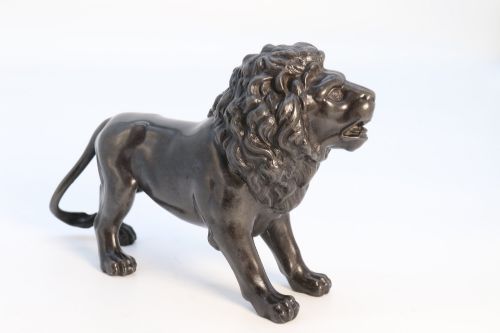
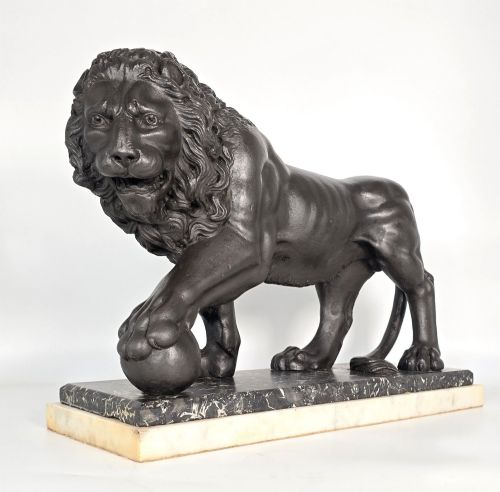
A classical lion statue is a sculptural representation rooted in antiquity, appearing in forms ranging from monumental garden guardians to small bronze studies. These works draw directly on historic prototypes such as the Medici lions or the Winged Lion of Saint Mark, reflecting centuries of artistic engagement with classical sculpture.
The versions most commonly met on this page span the nineteenth century, encompassing grand tour bronzes designed for interiors alongside robust stone and reconstituted stone figures made for gates or gardens. Makers and sculptors varied from anonymous provincial workshops to named artists like G. Gardet and Octave Galliard-Sansonetti, yet all share a preoccupation with noble posture and architectural dignity.
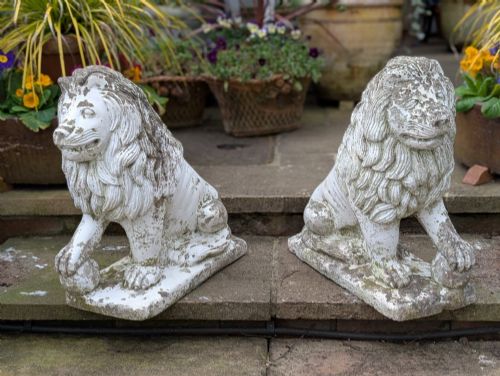
Whether carved from solid marble, cast in bronze or moulded in stone, these sculptures serve as enduring focal points for domestic spaces and outdoor grounds. They appear as singular studies, matched pairs for architectural placement, or narrative groups depicting subjects such as Una and the Lion.
How they were made
Bronze sculptures of this subject were typically produced using the lost wax casting technique, allowing for fine muscular detail and dynamic surface textures before receiving patination. Marble and stone examples rely on traditional hand-carving methods, where craftsmen shaped hard mineral blocks using chisels and gouges to achieve defined anatomical precision.
Reconstituted and cast stone pieces utilised aggregate mixtures poured into moulds, offering a durable alternative for exterior garden statuary while retaining the visual weight of carved stone. Pewter studies utilised metal casting within smaller domestic scales, capturing similar sculptural ambitions in softer alloy compositions.
Listings feature classical lion statues spanning the seventeenth to the twentieth century, executed in bronze, marble, pewter, and stone.
What varies in quality
The quality of a classical lion statue rests primarily on the anatomical conviction of the modelling and the crispness of the carving or casting. Superior examples display a careful understanding of tension in the musculature and mane, whereas lesser pieces rely on formulaic repetition without proportional harmony.
Material selection also dictates distinction, separating solid carved marble or finely chased bronze from simpler cast compositions. The treatment of surface finish, whether through subtle patination on metal or master stonemasonry on exterior figures, elevates the piece from decorative ornament to accomplished sculpture.
G. Gardet·Octave Galliard-Sansonetti
The Classical Lion Statue Glossary
- Medici Lion
- A representation of a lion standing with one paw upon a sphere, modelled after the pair of ancient marble sculptures in Florence. These iconic figures became standard templates for sculptors across Europe.
- Grand Tour
- A period of European travel traditionally undertaken by upper-class young men to absorb classical culture, resulting in the acquisition of small-scale bronzes and sculptures like these. Such works were made to be transported back to British country houses.
- Animalier
- A nineteenth-century artistic movement focused on the realistic depiction of animals, particularly predators in motion or repose. Sculptors in this tradition studied anatomy closely.
- Neoclassical
- A style reviving the decorative and structural principles of ancient Greece and Rome. This aesthetic prioritises symmetry, restraint and classical motifs.
- Patina
- The surface sheen or colour achieved through age, oxidation or intentional chemical treatment on bronze and metalwork. A good patina enhances the perceived depth of the material.
Classical Lion Statue: Frequently Asked Questions
Where should I place a stone lion statue?
Stone and reconstituted stone statues are traditionally positioned outdoors as gate guardians, flanking paths or anchoring garden terraces. Their weather-resistant materials allow them to integrate naturally into landscape architecture.
For interior spaces, smaller stone or marble figures find a natural home on pedestals, consoles or heavy mantelpieces where their weight can be properly supported.
How do I care for a bronze lion?
Bronze sculptures require minimal intervention, needing only a light dusting with a dry, soft cloth to prevent particulate accumulation. Avoid using chemical cleaners or abrasive polishes that might strip the historic surface patina.
Applying a very thin coat of microcrystalline wax periodically can help protect the metal surface, particularly if the sculpture is kept in a humid environment.
What is a Grand Tour lion?
A Grand Tour lion is a smaller-scale sculpture, usually cast in bronze or carved from marble, purchased by travellers visiting Italy during the eighteenth and nineteenth centuries. These pieces were brought home as portable reminders of classical antiquity seen abroad.
They often include integral marble plinths and demonstrate high levels of chasing and finishing to appeal to collectors.
How do I date a marble lion?
Dating marble sculpture involves examining tool marks, the weathering of the stone surface, and the stylistic adherence to periods like the neoclassical revival or seventeenth-century Italian carving traditions. The composition of the accompanying marble plinth also offers clues.
Comparing the anatomical treatment to documented works from known periods helps narrow down the decade of production.