







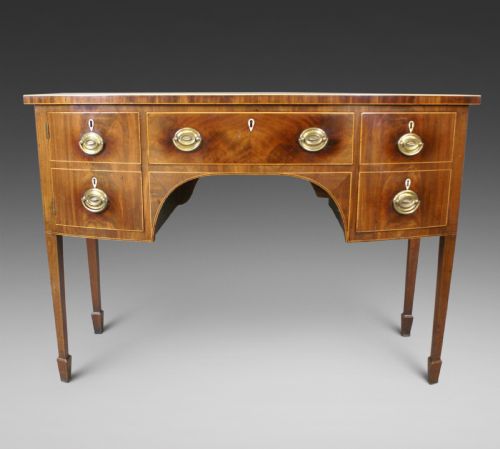
Classical Inlaid Cabinet
A classical inlaid cabinet brings refined geometry and rich timber into a room, offering both practical storage and a formal display surface.
Classical Inlaid Cabinet
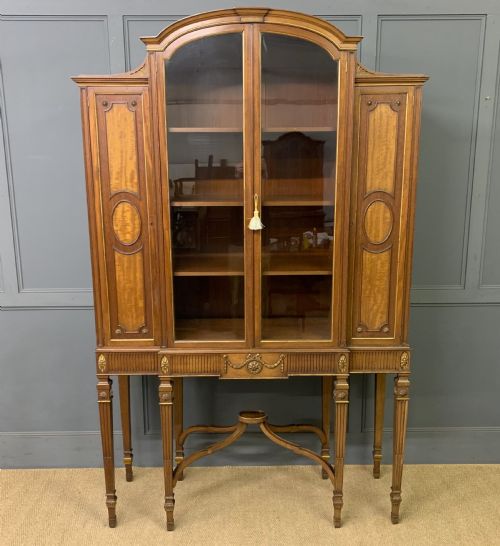
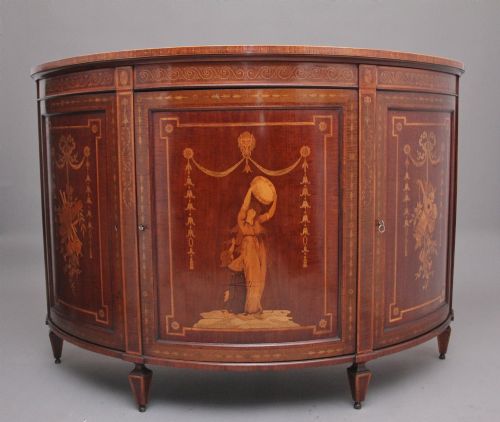
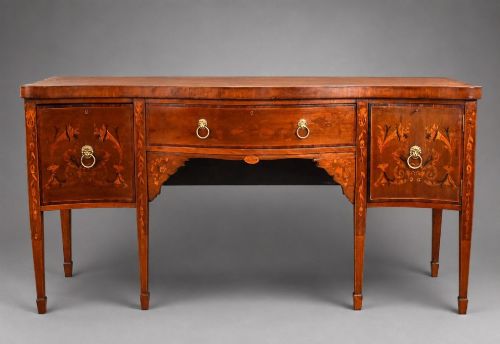
A classical inlaid cabinet encompasses forms ranging from corner cupboards and display cabinets to sideboards, bedside cabinets, and bureau bookcases. These pieces span the nineteenth century and the early decades of the twentieth century, with Edwardian and Victorian examples appearing most frequently.
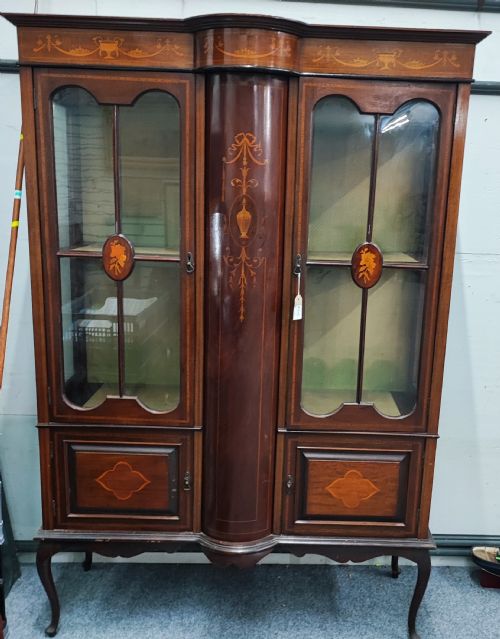
The styles draw heavily on Sheraton Revival, Regency, and Neo-Classical idioms, showing symmetrical layouts and architectural proportions. Makers worked in mahogany, satinwood, and rosewood, applying contrasting stringing and floral motifs across facades.
Buyers will find that side cabinets and display cabinets dominate the selection, often featuring glazed doors or bowfront profiles. Regional variations include English revival pieces alongside Dutch, French, and Italian examples.
Distinctions in Execution
The standard of a classical inlaid cabinet rests on the precision of its marquetry and the choice of its primary timbers. Tighter vegetal motifs and crisp, unbroken boxwood lines signal superior workshop output.
Secondary elements such as interior shelving, original brass hardware, and the trueness of door alignments differentiate standard production from exhibition pieces. The depth of the timber finish and the integrity of the veneer ground indicate the level of care taken at the bench.
Classical Inlaid Cabinet Retail Price Guide 2026
Typical asking prices for classical inlaid cabinet among the pieces listed under this phrase on Sellingantiques today, from the lower quarter to the upper quarter. They describe what is for sale here now, not the wider market.
Listings feature mahogany, satinwood, and rosewood combined with boxwood inlay across the nineteenth and early twentieth centuries.
Edwards & Roberts·Keeble London·Pietro Ferrario
The Classical Inlaid Cabinet Glossary
- Marquetry Inlay
- A decorative technique where small pieces of tinted wood, shell, or ivory are fitted into a veneer ground to form pictorial or geometric patterns. This method defines the primary ornamentation on many revival surfaces.
- Astragal Glazing
- Wooden bars that divide glass panes within a cabinet door into smaller geometric sections. These delicate mouldings are typical of Georgian and Edwardian display pieces.
- Satinwood
- A durable, lustrous timber native to India and Ceylon with a natural golden sheen. It serves as a pale background for contrasting inlay work.
- Compactum Wardrobe
- A large fitted wardrobe combining hanging space with internal drawers and shelves in a single carcass. Edwardian makers often integrated inlay into these substantial pieces.
Classical Inlaid Cabinet: Frequently Asked Questions
Where should I place a classical inlaid cabinet?
These cabinets suit reception rooms, dining areas, or hallways where natural light can catch the polished timber and varied tones of the inlay. Keeping them away from direct heat sources protects the veneer from drying out.
Corner cabinets make efficient use of unutilised wall junctions, while display cabinets with glass doors provide a secure dust-free space for ceramics or books.
How do I care for satinwood and mahogany surfaces?
Dust the timber regularly with a soft, dry cloth to prevent surface abrasion. Avoid using silicone-based sprays or modern household polishes that can build up and dull the French polish.
Applying a traditional beeswax sparingly once or twice a year helps nourish the wood and maintain its natural lustre without harming the antique finish.
How can I tell a Sheraton Revival piece from an original 18th-century piece?
Sheraton Revival pieces generally date from the late nineteenth or early twentieth century and often show machine-sawn internal timbers or modern screw fixings. Their inlay work tends to be brighter and more uniform due to the industrial methods available to later makers.
Original eighteenth-century pieces display hand-cut joinery marks, deeper timber patina, and structural wear consistent with extended use over a longer span.