

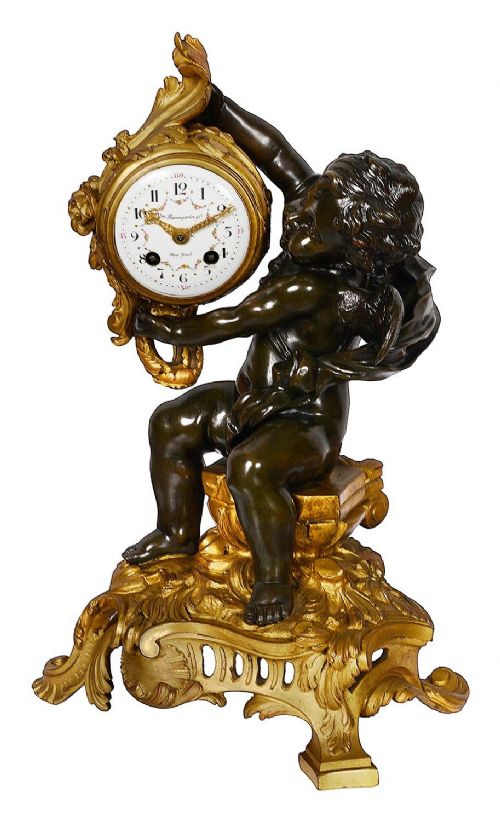
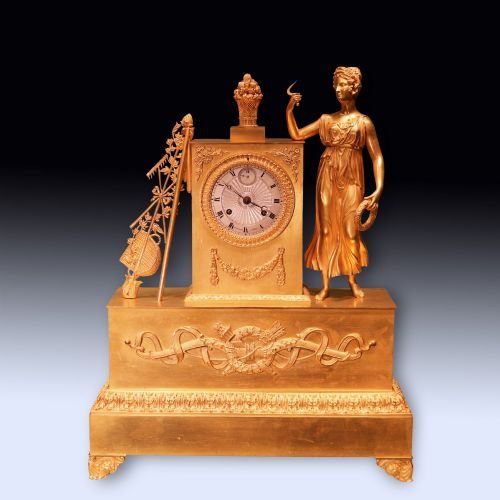
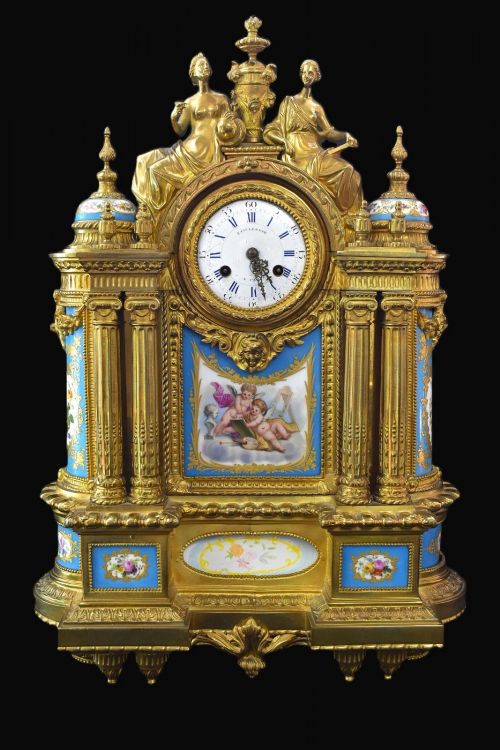


Classical Bronze Mantel Clock
These heavy classical bronze mantel clock designs bring nineteenth-century French architectural precision and mythological figures straight to your hearth.
Classical Bronze Mantel Clock
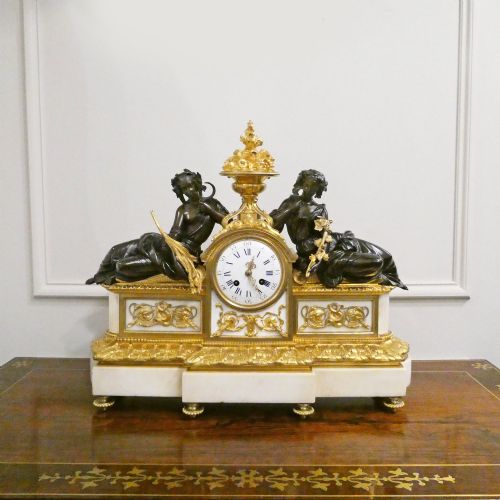
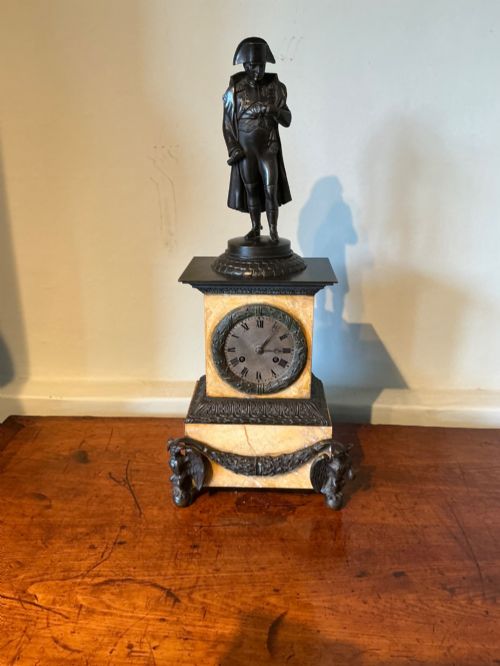
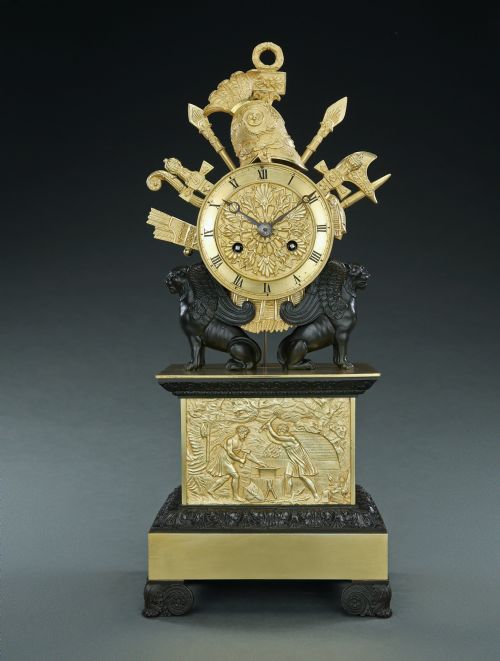
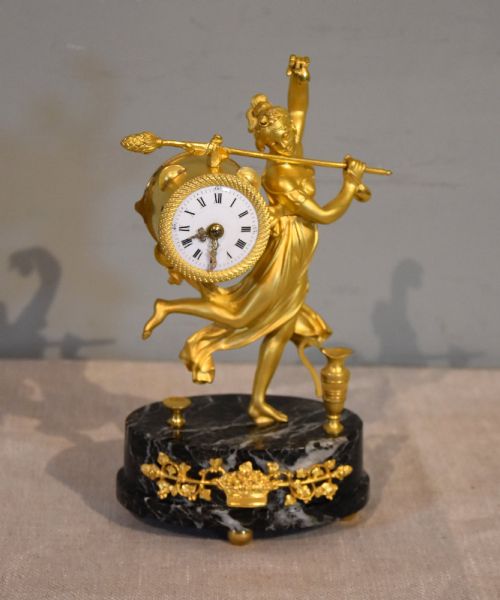
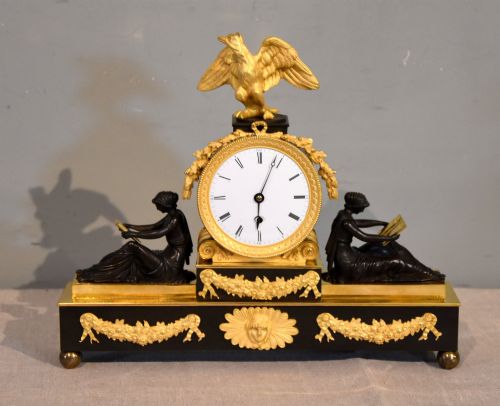
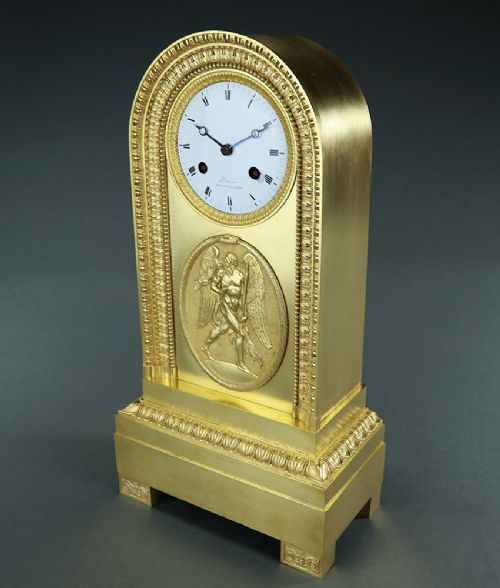
A classical bronze mantel clock combines heavy cast metal with polished stone bases, designed to anchor a formal room. You will regularly encounter French pieces from the nineteenth century utilising architectural marble cases and mythological figures.
Many examples arrive paired with matching side ornaments as part of a garniture set. The dial itself sits within or upon bronze mounts, often driven by an eight-day movement.
Materials and construction
Foundries cast bronze and brass into intricate figural mounts and bezels, then applied mercury gilding or patination to the metal surfaces. These decorative elements were screwed or pinned onto hand-cut marble, onyx, or slate bodies.
Clockmakers fitted mechanical gear trains behind enamel dials, frequently incorporating striking mechanisms to mark the hours.
Assessing quality and execution
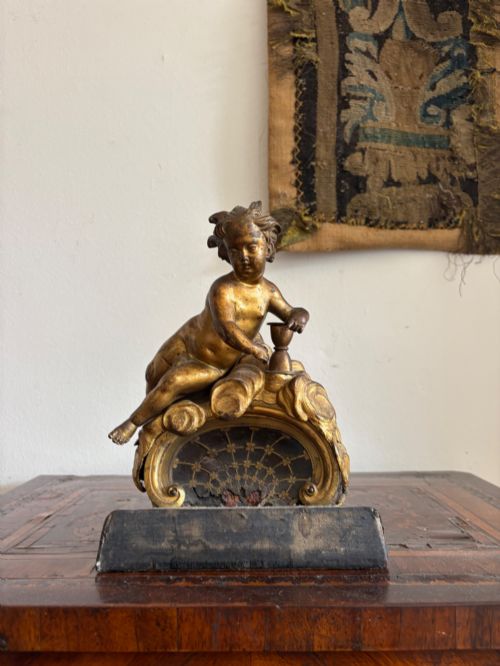
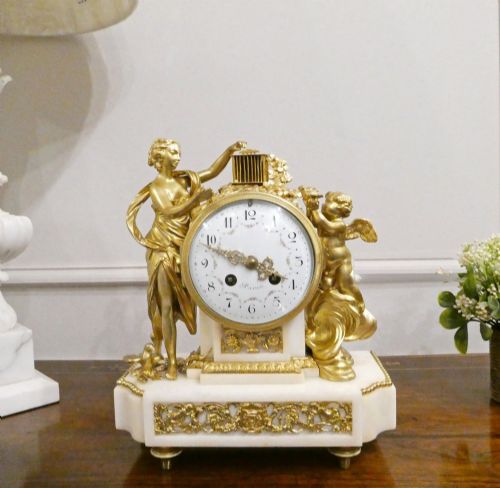
The crispness of the bronze chasing separates ordinary castings from superior workshop production. Sharp relief in figures like cherubs or military trophies indicates skilled hand-finishing after the foundry stage.
The choice and mass of the stone base also signal tier, with dense sienna or rouge marble housing heavier, more complex movements.
Vincenti·Canaillor of Paris·Etienne Lenoir·Japy Freres·Philippes Paris·Berger Paris
The Classical Bronze Mantel Clock Glossary
- Ormolu
- Gilt bronze produced by applying a mercury and gold amalgam to cast metal and firing it. This creates a durable golden finish seen on nineteenth-century French cases.
- Garniture
- A matching set consisting of a central clock flanked by matching decorative vases or candelabra. These sets created symmetrical displays on nineteenth-century mantelpieces.
- Portico clock
- A clock design featuring four supporting columns framing a central suspended pendulum movement. They often utilise glass panels and gilt bronze mounts.
- Drum head clock
- A timepiece where the movement sits inside a circular metal housing resembling a drum, mounted atop a marble plinth.
Classical Bronze Mantel Clock: Frequently Asked Questions
How do I wind an antique clock?
Use the correct matching key on the winding arbors found on the enamel dial face. Turn gently until you feel resistance, taking care not to overwind the mainspring.
Most nineteenth-century movements are eight-day systems, requiring attention roughly once a week to maintain accurate timekeeping.
What is a clock garniture?
A garniture is a decorative set comprising a central mantel clock accompanied by two matching side pieces, such as urns or candelabra. These sets were manufactured to provide a balanced, symmetrical arrangement on a fireplace mantel.
They share identical decorative motifs, such as ormolu mounts or marble bases, tying the room scheme together.
How can I date these clocks?
Dating relies on stylistic clues like Louis XVI revival motifs, nineteenth-century marble types, and maker signatures stamped on the backplate of the movement. Case designs often reflect French imperial tastes or Victorian industrial production.
Comparing the dial signature and bronze patination against documented workshop periods helps narrow down the decade.
Are these clocks heavy?
These clocks are exceptionally heavy due to the solid marble, slate, or onyx housings paired with cast bronze ornaments. Lifting one requires caution and proper support underneath the stone base.
Because of this weight, they need a sturdy surface like a mantelpiece or heavy sideboard rather than thin shelving.