

Classical Bronze Cherub
A classical bronze cherub brings winged grace and sculptural weight to an interior, appearing as a playful putto, infant Bacchus, or celestial musician.
Classical Bronze Cherub
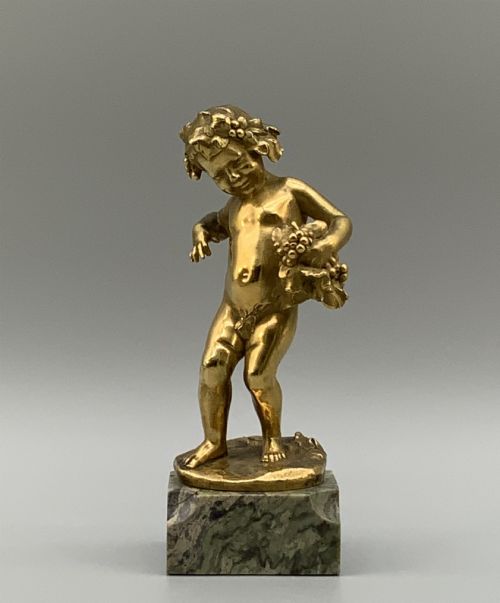
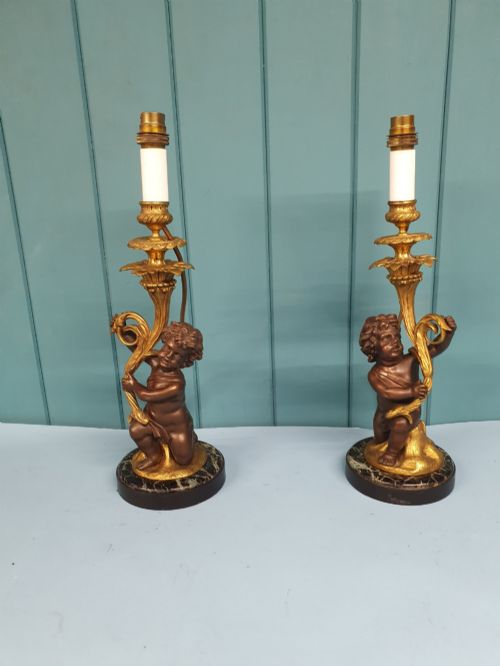
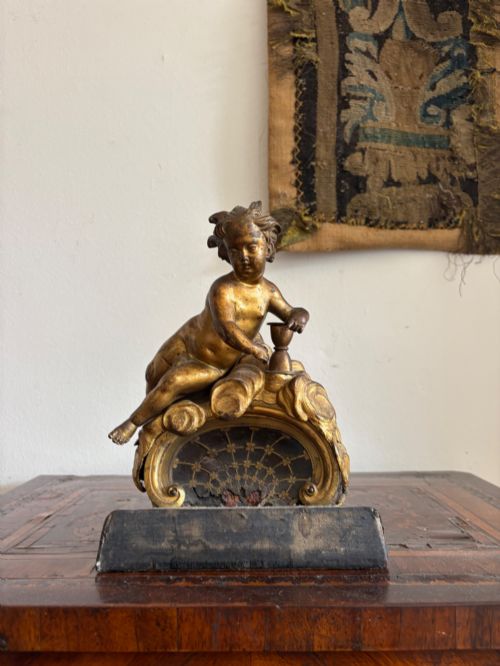
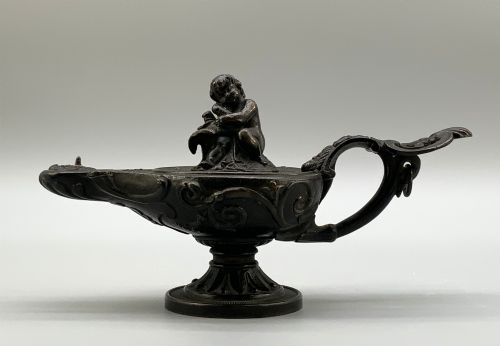
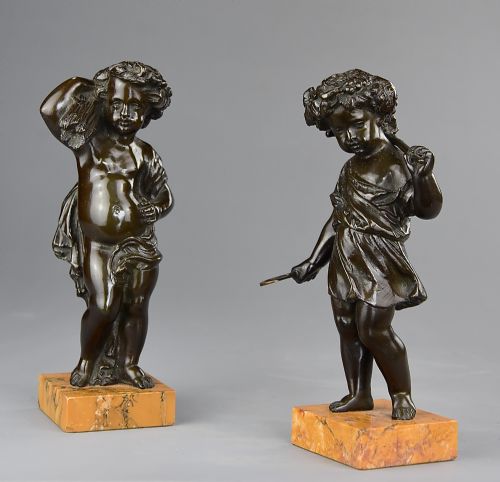
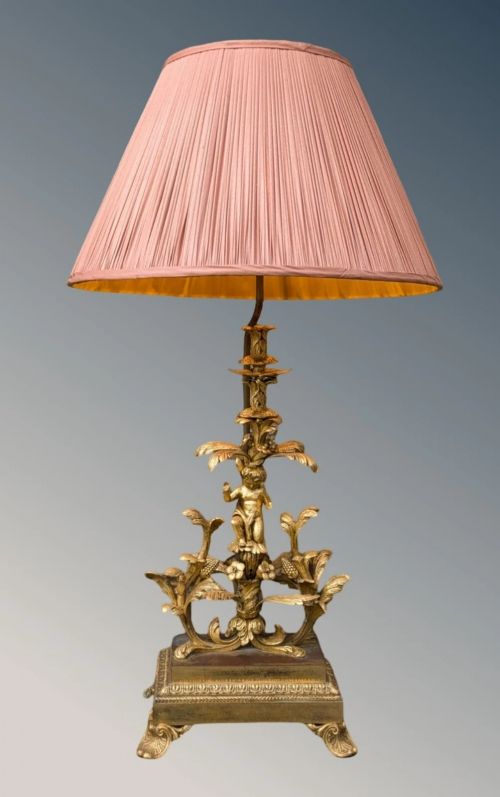
A classical bronze cherub captures the winged child motif familiar from mythology, appearing throughout nineteenth-century European decorative arts. These figures emerge on this page as freestanding sculptures, lamp bases, clock mounts, and wall sconces.
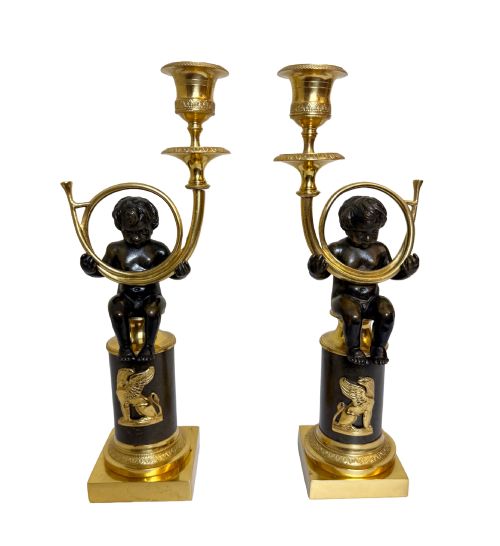
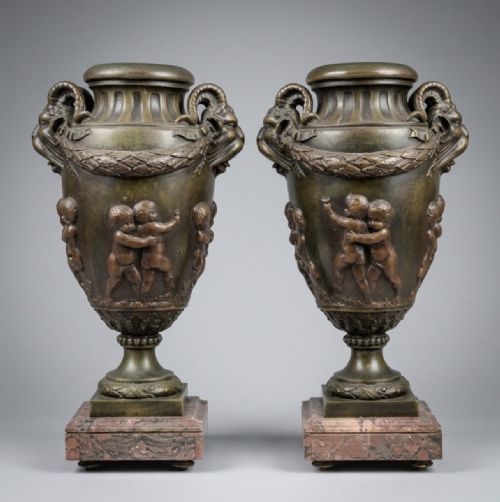
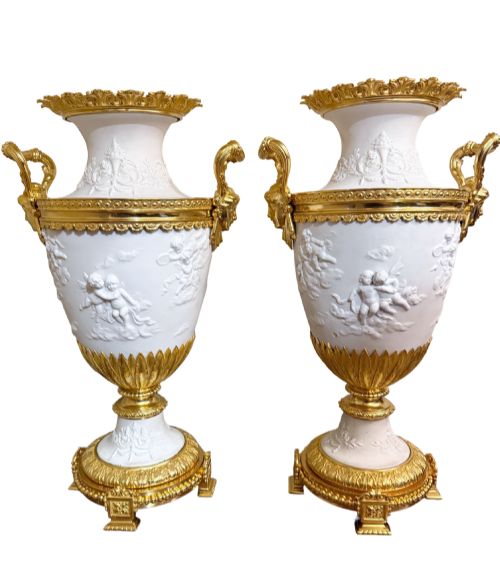
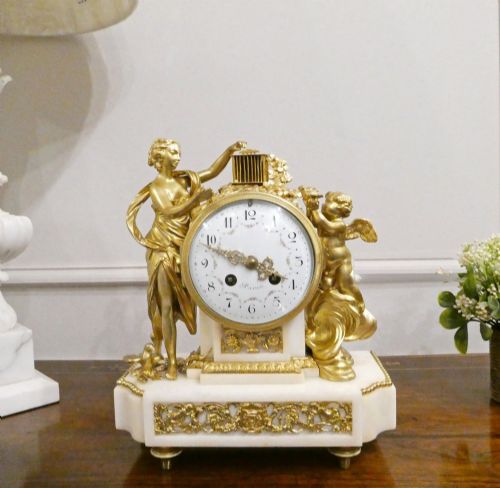
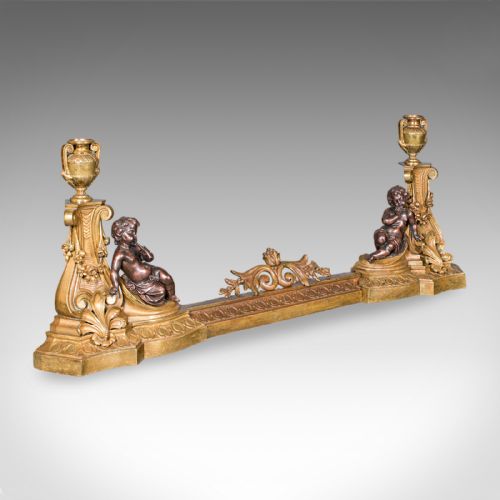
Makers utilised these figures extensively in French Rococo Revival, Neoclassical, and Empire styles, integrating them into functional items like candelabras and mantel garnitures. The forms range from small desk ornaments to monumental candelabra pairs resting on marble bases.
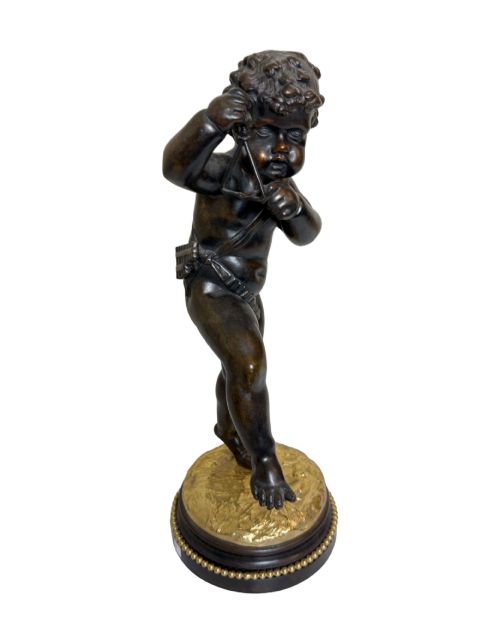
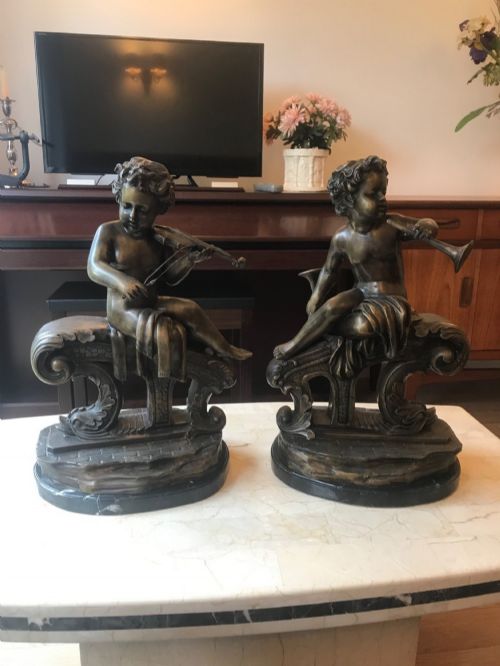
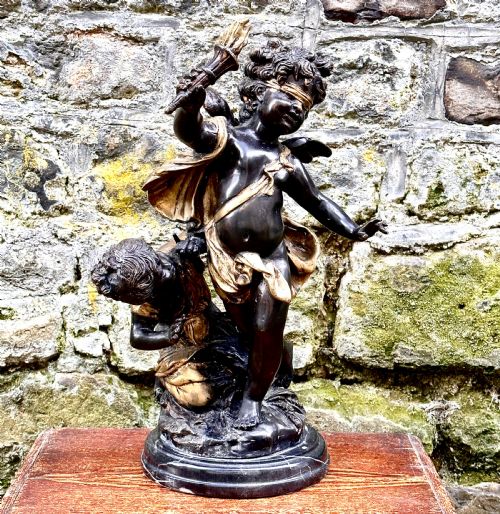
Buyers will most frequently encounter nineteenth-century French and Italian Grand Tour productions, often cast as allegorical figures holding grapes, musical instruments, or torches. These pieces reflect a sustained nineteenth-century fascination with classical antiquity and Renaissance sculpture.
Materials and casting methods
Foundries produced these pieces using traditional lost-wax or sand-casting methods in bronze, patinated bronze, and ormolu. Artisans then chased the cooled metal surfaces by hand to sharpen feather details, hair, and facial expressions.
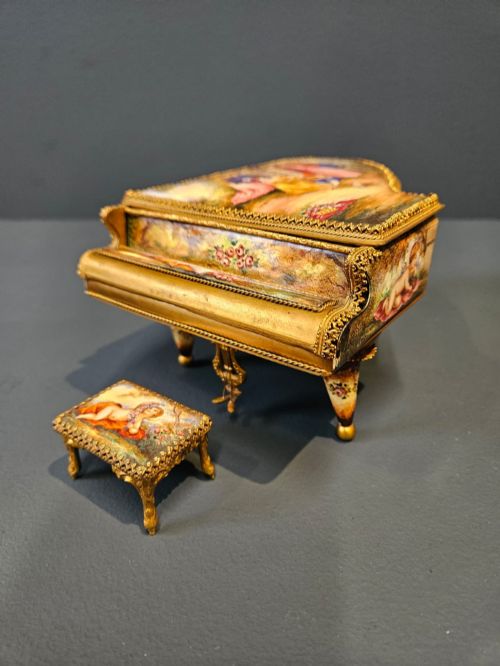
Many figures are paired with contrasting materials such as veined white or black marble bases, enamel dials, and porcelain inserts. Gilt bronze elements received fire-gilding or electroplating to achieve a brilliant, enduring golden surface.
A winged child occasionally abandons celestial duties to chase a spaniel or play a triangle.
Distinctions in execution and finish
The precision of the metal chasing separates standard production from exceptional studio work. Superior casts display crisp anatomical definition in the cherub's limbs and delicate texturing in feathered wings, whereas inferior examples appear soft and blurred.
The richness and depth of the patination or mercury gilding dictates visual success. Master founders achieved subtle tonal gradations in patinated bronze and deep, luminous warmth in ormolu, while lesser pieces rely on flat, uniform paint or degraded plating.
Charles Louis Malric·Susse Frères·Claude Michael Clodion·Louis Auguste Moreau
The Classical Bronze Cherub Glossary
- Putto
- A plump, naked male child, often winged, derived from classical art. They populate Renaissance and nineteenth-century decorative works as symbols of secular or divine love.
- Ormolu
- Finely chopped high-karat gold applied to a bronze base using a mercury amalgamation technique. This process creates a distinct, warm lustre characteristic of fine French decorative arts.
- Grand Tour
- A cultural journey undertaken by wealthy young Europeans to visit continental art and antiquities. Souvenirs included small bronze sculptures and architectural models purchased in Italy.
- Patinated Bronze
- Metal treated with chemical solutions to produce a controlled surface coloration ranging from deep brown to verdigris. This finish protects the alloy and enhances sculptural depth.
- Garniture Set
- A decorative matching arrangement comprising a central mantel clock flanked by matching vases, urns, or candelabras. These sets dominated nineteenth-century drawing-room mantelpieces.
Classical Bronze Cherub: Frequently Asked Questions
How were bronze cherub lamps wired?
Nineteenth-century lighting fixtures were originally designed for oil, gas, or candles before later being converted to electricity. Modern rewiring is typically routed discreetly through the original hollow bronze casting.
A professional electrician can update the internal wiring without altering the antique metalwork or damaging the vintage patination on the cherub figure.
Where should I place a cherub sculpture?
These figures suit prominent display surfaces where their detailed casting can be appreciated up close, such as mantelpieces, entrance tables, and desks. Heavier pairs also function well as decorative bookends.
Ensure the piece rests on a stable, level surface away from direct moisture, particularly if the bronze is mounted on a porous marble base.
How do I identify a Grand Tour piece?
Grand Tour bronzes typically reference famous classical sculptures or archaeological finds from Roman and Greek sites in Italy. They often feature deep, dark patination and are frequently mounted on columnar marble plinths.
These souvenirs date primarily from the nineteenth century and reflect the romantic academic tastes of travellers touring European heritage sites.