

Classical Brass Lighting
Classical brass lighting brings structural warmth and historic refinement to a room through enduring metalwork and polished proportion.
Classical Brass Lighting
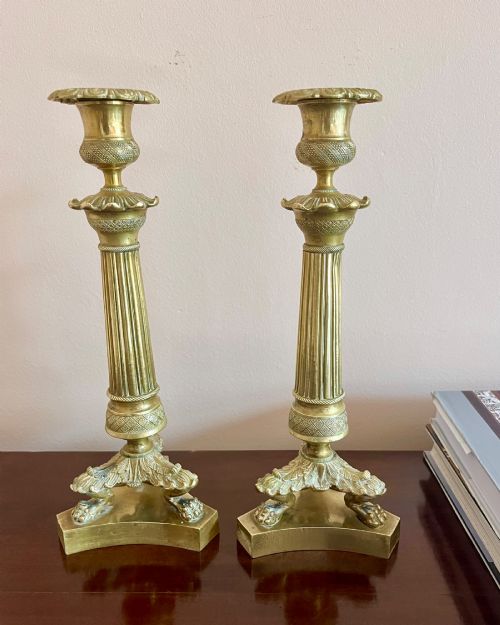
Classical brass lighting encompasses a diverse range of functional metal objects designed to illuminate interiors across the nineteenth and early twentieth centuries. Table lamps, chandeliers, wall lights, and candlesticks form the core of what is available, with heavy representation from French Neoclassical and Victorian design traditions.
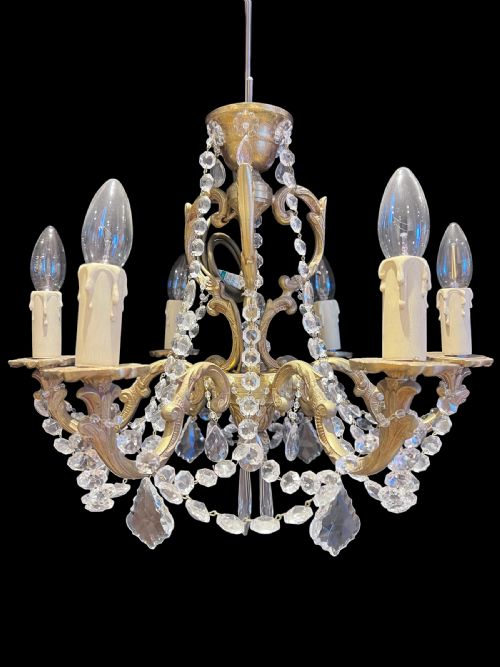
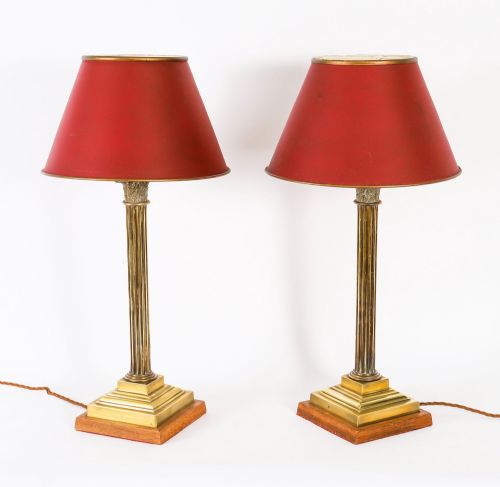
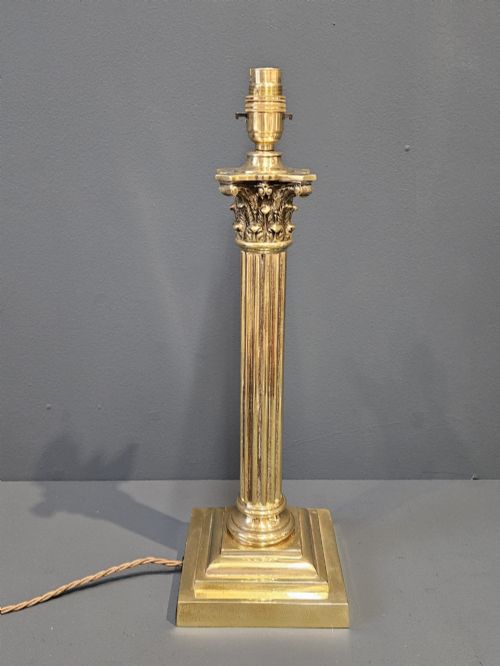
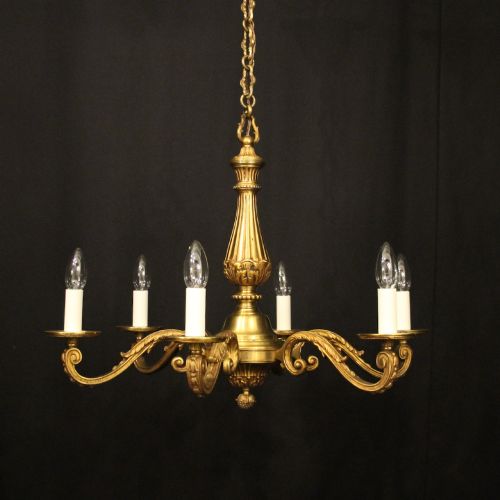
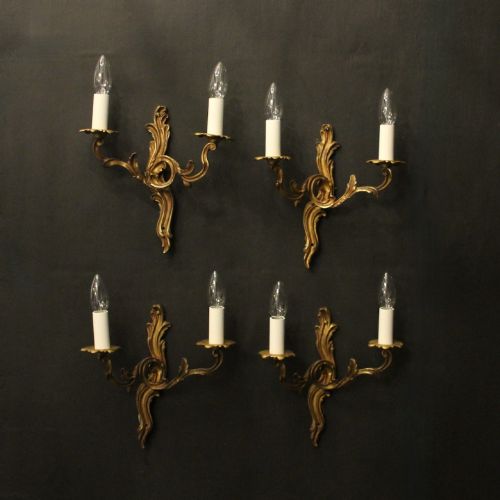
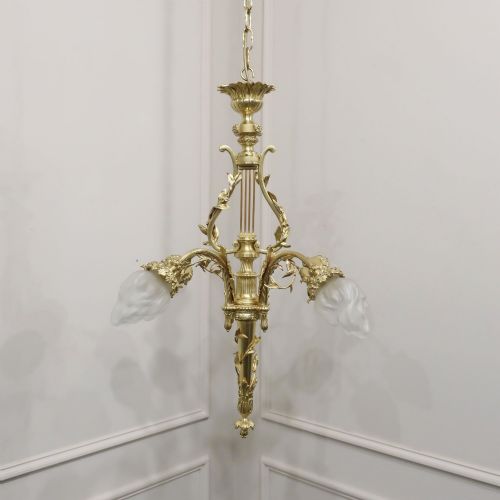
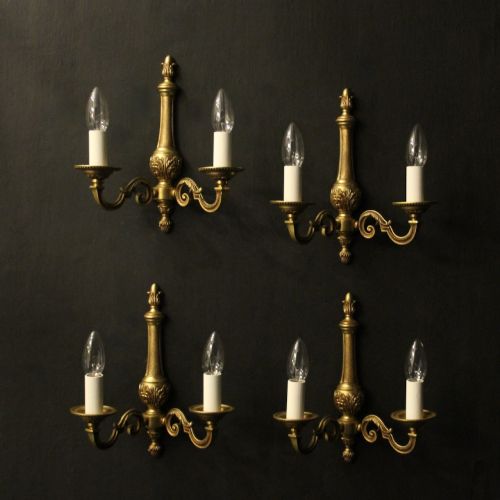
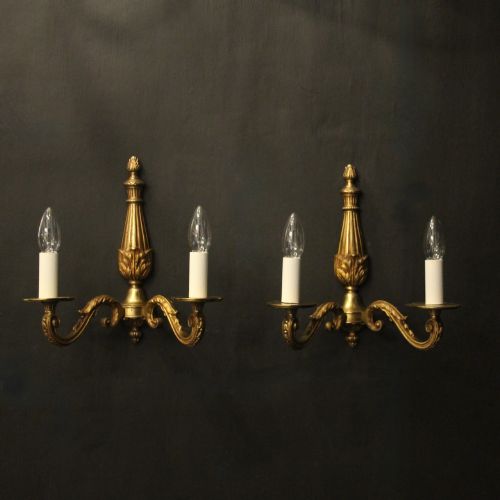
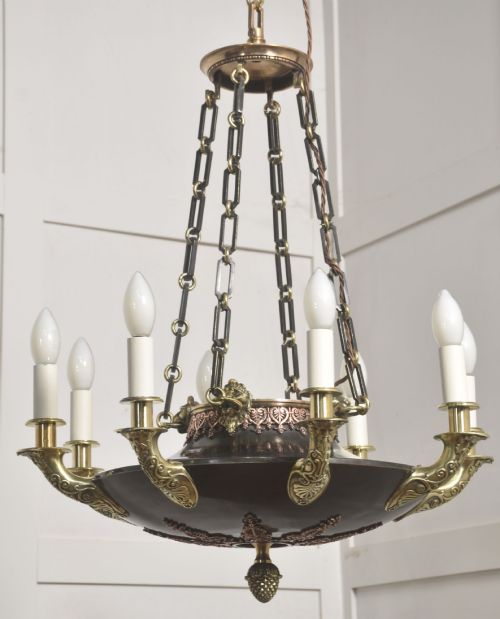
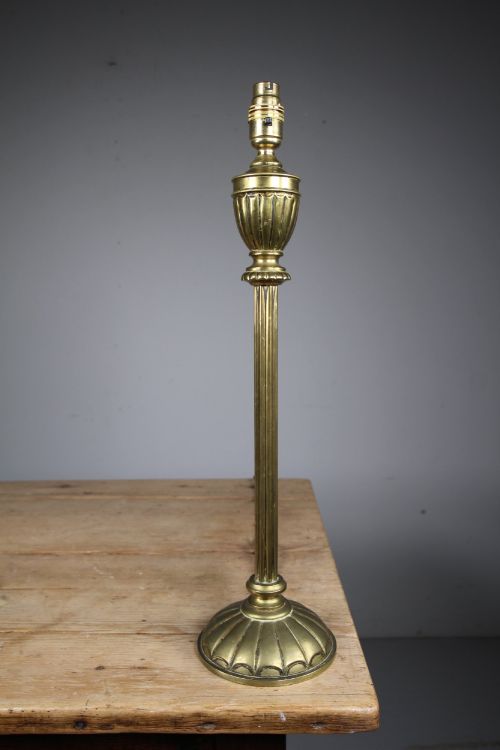
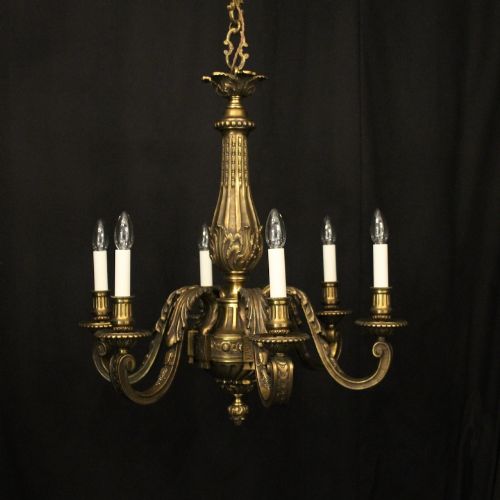
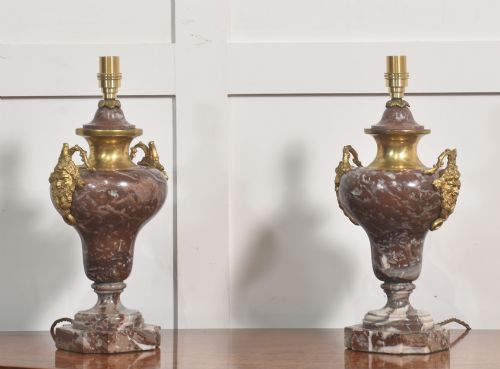
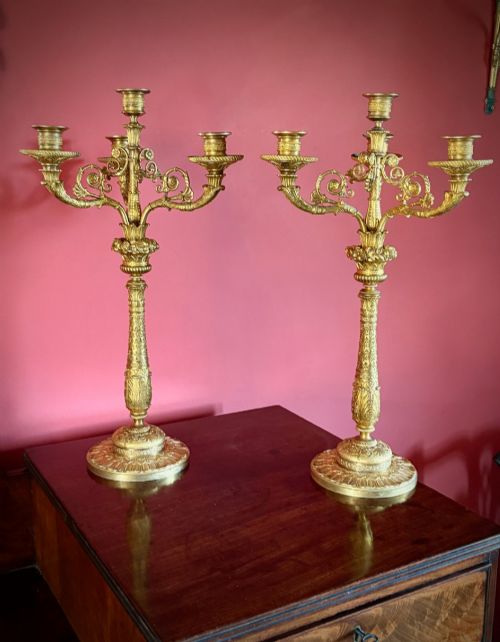
Buyers seeking classical brass lighting most frequently encounter heavy Corinthian column table lamps, multi-armed gilded bronze chandeliers, and paired wall sconces. These pieces draw heavily on historical architectural motifs, utilising disciplined columns and balanced armatures suited to period interiors.
Materials and Construction
Brass, gilt bronze, and ormolu provide the primary metallic foundations, often combined with cast metal, copper, and structural iron components. Secondary materials such as cut crystal drops, marble bases, onyx inserts, and fabric shades add textural contrast and visual weight to the finished fixtures.
Construction relies heavily on traditional casting, chasing, and turning techniques to shape the metal columns, arms, and mounts. Components are securely threaded or pinned together, allowing for structural rigidity while accommodating period wiring conversions or oil-burning mechanisms.
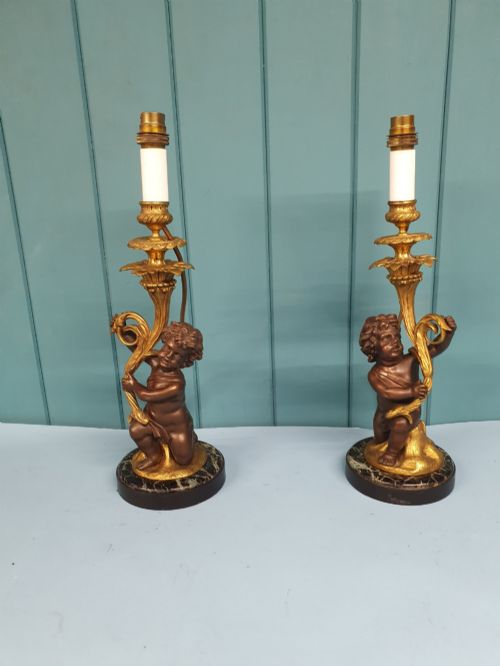
Several heavy bronze cherubs happily moonlight as structural supports for towering nineteenth-century table lamps.
Distinctions in Execution
The degree of crispness in the chased surface detail separates standard production from superior examples. Finely articulated acanthus leaves, sharp fluting on columns, and cleanly cast figural elements indicate skilled hand-finishing rather than basic mass production.
Weight and structural integrity also define the upper tier of these pieces. Substantial gauge metal, stable marble or bronze bases, and well-balanced multi-arm configurations ensure the fixture maintains its physical presence and alignment over decades of use.
Casier·L & F Moreau
The Classical Brass Lighting Glossary
- Ormolu
- Gilded bronze produced by applying a mercury and gold amalgam to a bronze base and firing it. This historic technique yields a warm, durable golden surface texture.
- Corinthian column
- A classical architectural column form featuring an ornate capital decorated with acanthus leaves. It is frequently adapted for the shafts of heavy table lamps.
- Candelabra
- A branched lighting fixture designed to hold multiple candles simultaneously. Many surviving examples later undergo conversion to electricity for modern interior use.
- Tent and waterfall chandelier
- A historic lighting form featuring strings of small glass beads arranged in a tent shape above cascading streams of crystal drops. These fixtures maximise light refraction across a room.
- Gilt bronze
- Bronze metal that has been coated with a thin layer of gold leaf or gold paint. It provides a bright, reflective finish without relying on mercury gilding.
Classical Brass Lighting: Frequently Asked Questions
How do I wire antique brass lamps safely?
Most period lamps require rewiring to meet current electrical standards and ensure safe operation in modern homes. A qualified electrician can replace aged internal cabling while retaining the original exterior brass components.
Care should be taken to preserve original switches, key sockets, and heavy weighted bases during any restoration or rewiring process.
How do I clean classical brass and ormolu?
Dusting with a soft, dry cloth is usually sufficient for regular maintenance of gilt bronze and brass surfaces. Avoid abrasive commercial metal cleaners that can strip away historic gilding or patination.
If deeper cleaning is necessary, use a mild solution of soapy water and dry thoroughly immediately afterward to prevent spotting.
Were these chandeliers originally wired for electricity?
Most nineteenth-century chandeliers and wall lights were initially designed for candles or oil before being converted to electricity later in their lifespans. This evolution is a standard part of their history rather than a modern alteration.
Conversions often involve subtle internal wiring paths that respect the original cast metal design of the arms and central column.
How do I distinguish French Neoclassical from Victorian styles?
French Neoclassical designs often emphasise refined symmetry, crisp gilt bronze mounts, and architectural proportions inspired by antiquity. Victorian pieces tend to be heavier, incorporating dense ornamentation, reeded columns, and robust brass castings.
Examining the casting quality and specific decorative motifs helps identify the distinct regional workshop traditions behind each fixture.