



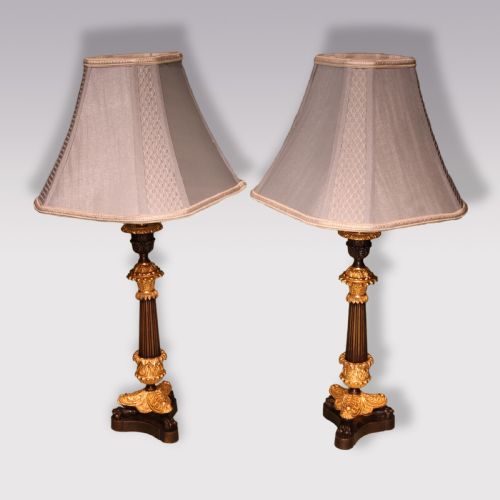


Vintage Brass Buffet Lamp
These vintage brass buffet lamp examples bring slender height and polished warmth to a sideboard, pairing classical columns with practical light.
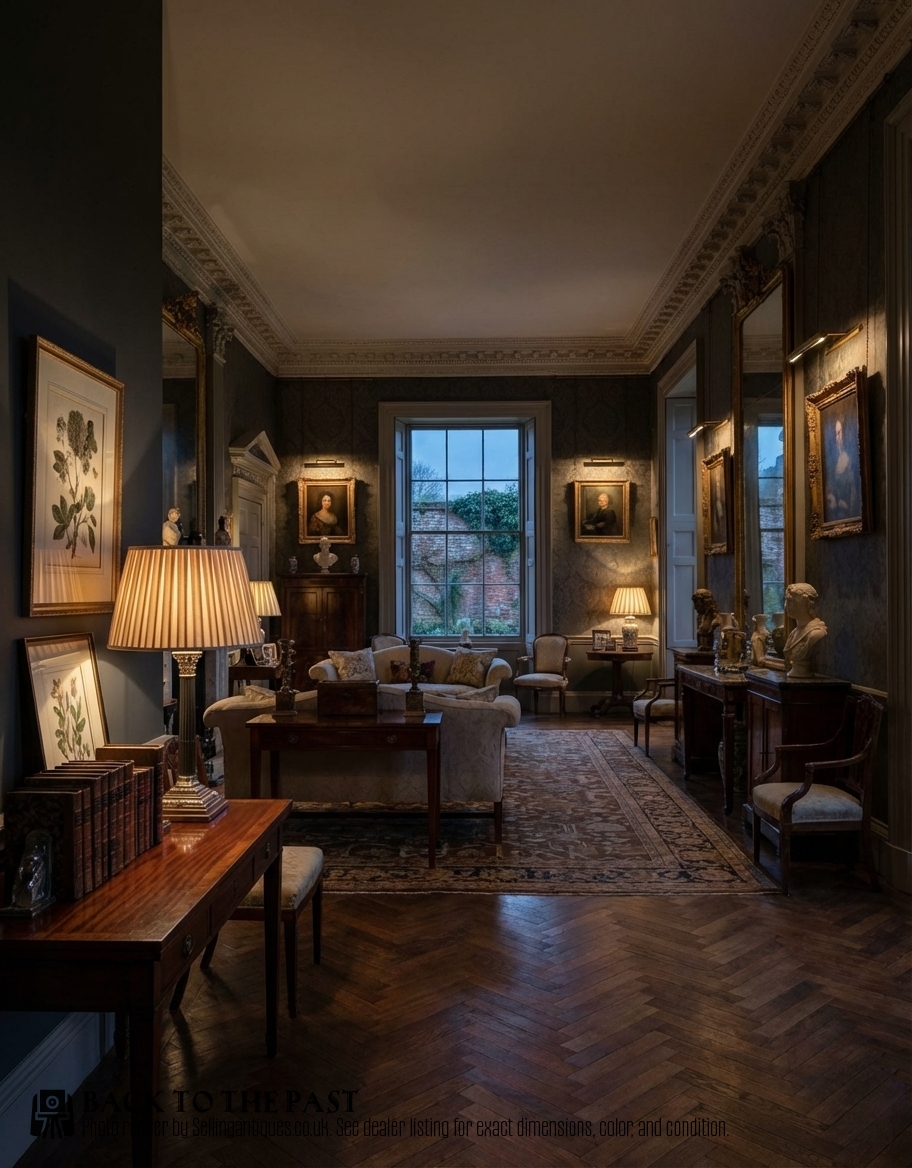
Vintage Brass Buffet Lamp
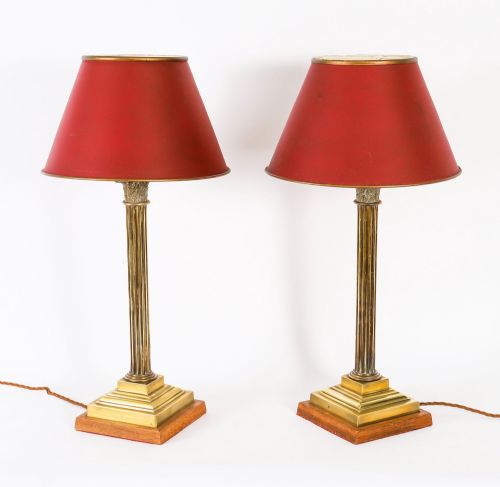
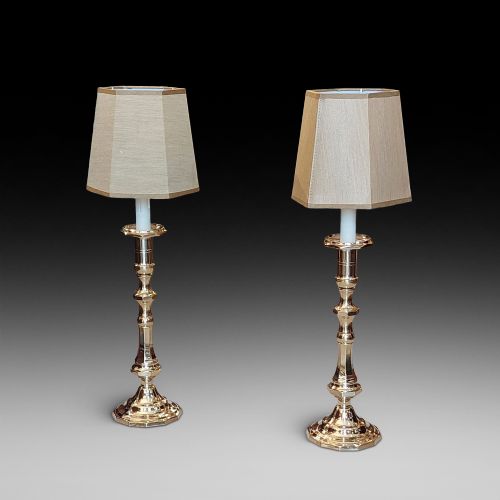
A vintage brass buffet lamp provides the narrow profile and elevated reach required for sideboards and side tables, where standard table lamps occupy too much ground. The selections here encompass sturdy Corinthian columns, slender candlesticks, and slender column forms derived from nineteenth-century designs.
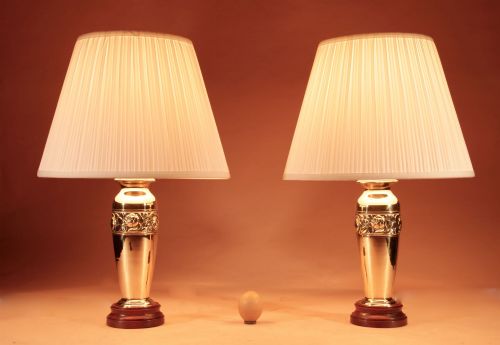
Makers adapted traditional lighting structures across several decades, resulting in pieces spanning Victorian exuberance through to the cleaner lines of the 1920s and Art Deco periods. Brass dominates the selection, frequently paired with ormolu, bronze, and occasional accents of glass or porcelain de Paris.
Buyers encounter distinct regional interpretations, particularly French Neoclassical and Louis XV styles alongside traditional British columnar standards. These tall fixtures illuminate narrow surfaces effectively without overwhelming the furniture beneath them.
Qualities of distinction
Superior examples demonstrate crisp casting definition in architectural details such as column capitals and acanthus leaf mounts, whereas lesser pieces show soft, rounded edges from worn moulds. The weight of the metal and the precision of the vertical alignment determine the structural integrity of the taller silhouettes.
Surface finish separates ordinary production from finer studio work, with genuine mercury gilding, hand-chased ormolu, and patinated bronze retaining depth that modern electroplating struggles to replicate. Integration of secondary materials, such as Sevres porcelain or hand-painted tole, further elevates the stature of an individual piece.
Materials recorded across the inventory include solid brass, bronze, gilt bronze, ormolu, glass, porcelain de Paris, and fabric.
The Vintage Brass Buffet Lamp Glossary
- Ormolu
- Gilded bronze produced by applying a mercury and gold amalgam to cast bronze before firing. This historic French technique yields a warm, matte golden lustre.
- Corinthian column
- An architectural order featuring an ornate capital decorated with acanthus leaves. Lamps adopting this form translate classical stone architecture into scaled metalwork.
- Repoussé
- A metalworking technique where the artisan hammers decoration from the reverse side to form raised relief patterns on the front. This method creates tactile surface enrichment on brass bodies.
- Tole-peinte
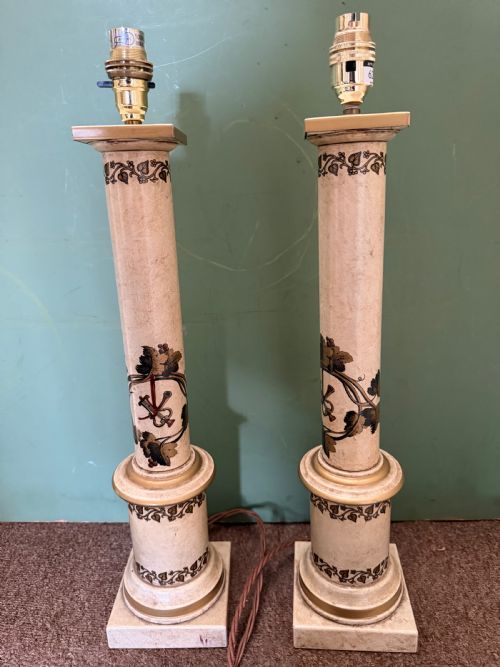
- Painted sheet metal used historically for decorative shades and column casings. It introduces flat colour and hand-painted motifs to lighting fixtures.
- Porcelain de Paris
- Fine hard-paste porcelain manufactured by various independent workshops in the French capital. These ceramic bodies frequently serve as decorative plinths or central shafts for tall lamps.
Vintage Brass Buffet Lamp: Frequently Asked Questions
Where should I place a buffet lamp?
These tall, slender lamps suit narrow sideboards, console tables, and buffets where space is constrained horizontally. Their elevated height distributes light above serving dishes or decorative objects.
Position them symmetrically on either side of a large mirror or artwork to create a balanced focal point in a dining room or hallway.
How do I date a brass lamp?
Dating relies upon stylistic markers, casting methods, and material combinations seen in the construction. Victorian and nineteenth-century examples often favour heavy Corinthian columns and elaborate bronze work, while 1920s pieces lean towards streamlined Art Deco geometries.
Examining the internal wiring channels, screw threads, and base construction helps distinguish antique foundry work from later reproductions.
Are these lamps wired for standard use?
Most antique lighting has been adapted or re-wired at various points in its history to meet modern electrical standards. Buyers should inspect the flex and lamp holder upon arrival to ensure compatibility with current safety regulations.
Qualified electricians can easily replace internal cords while preserving the original brass components and exterior structure.
What is the difference between brass and ormolu?
Brass is an alloy of copper and zinc, valued for its bright metallic tone and durability across everyday decorative objects. Ormolu specifically denotes gilded bronze, where a layer of gold is bonded to a bronze base using historical mercury techniques.
Ormolu displays a deeper, more buttery golden hue and appears more frequently on French neoclassical and Louis XV style pieces.