

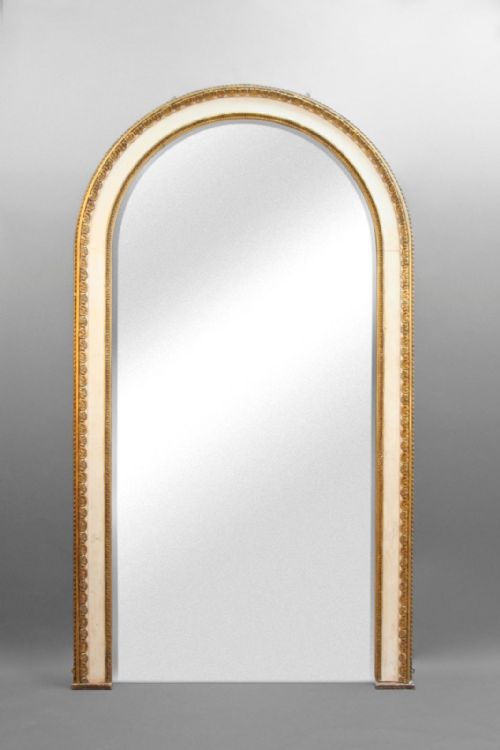
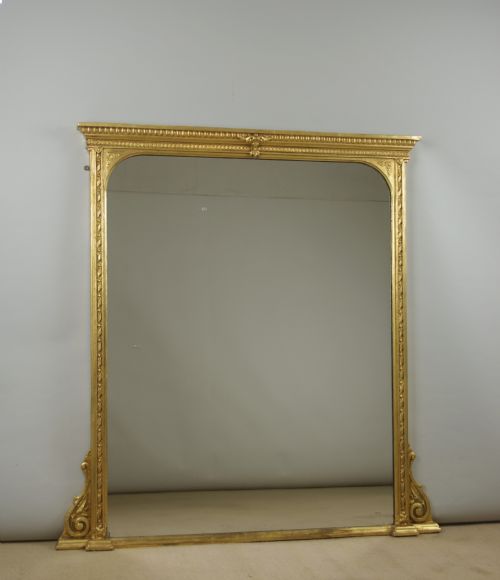


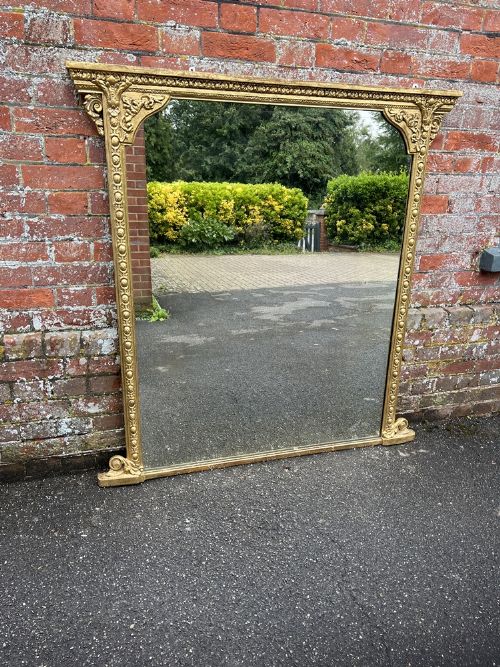


Classical Arched Mirror
These classical arched mirror pieces bring nineteenth-century proportion and reflected light to a room, offering the grand presence of Victorian and French design.
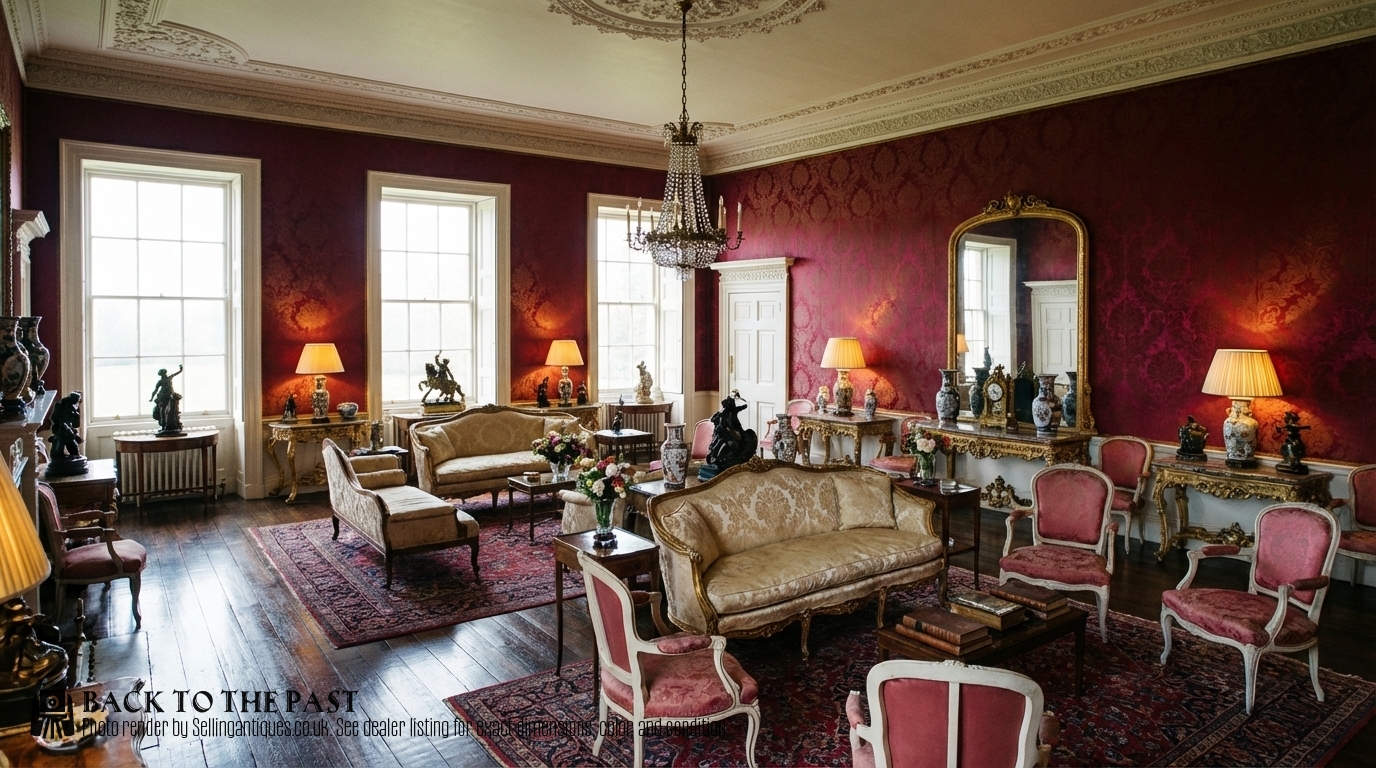
Classical Arched Mirror
A classical arched mirror is primarily encountered in nineteenth-century overmantel and wall formats, originating from English, French, and Irish country houses. These large architectural plates command attention above a fireplace or along a hallway.
The prevailing form on this page is the Victorian gilt overmantle mirror, featuring distinct arched or shaped tops. Examples range from simple mahogany frames to massive giltwood and gesso creations with elaborate cresting.
How they were made
Makers shaped these frames from wood, cast iron, or carved wood and gesso, applying gold leaf, composition, and black paint to achieve a rich surface. Skilled artisans carved rope twist motifs, putto cresting, and classical detailing by hand.
Mirrors relied on heavy glass plates set securely into timber backboards behind the decorative gilt or mahogany structures.
Classical Arched Mirror Retail Price Guide 2026
Typical asking prices for classical arched mirror among the pieces listed under this phrase on Sellingantiques today, from the lower quarter to the upper quarter. They describe what is for sale here now, not the wider market.
What varies in quality
The depth and crispness of the carved wood and gesso ornament distinguish finer pieces from simpler ones. Deeply modelled classical details and substantial giltwood frames indicate superior craftsmanship over flat or lightly moulded surfaces.
Scale and proportion drive the character of these mirrors, with larger architectural overmantels requiring precise joinery to support heavy glass and elaborate cresting without distortion.
The Classical Arched Mirror Glossary
- Overmantle mirror
- A large mirror specifically designed to sit on the mantelpiece above a fireplace. These pieces often feature wide frames and arched tops to fill the chimney breast.
- Gesso
- A plaster-like material applied to wooden frames as a smooth base for gilding. Artisans carved intricate decorative motifs directly into this surface.
- Giltwood
- Timber that has been coated with gold leaf or gold paint. It provides the characteristic bright, reflective finish seen on Victorian and classical frames.
- Pier glass
- A tall mirror designed to hang on the wall between two windows. They reflect additional daylight deep into nineteenth-century rooms.
- Archtop
- A frame shape featuring a curved upper section. This classical outline softens the rigid geometry of nineteenth-century interiors.
Classical Arched Mirror: Frequently Asked Questions
Where do I hang an overmantle mirror?
These mirrors are traditionally positioned directly above a fireplace mantelpiece to anchor the room's focal point.
They also function effectively along large hallway walls where their scale amplifies natural light.
How do I identify a Victorian mirror?
Victorian pieces frequently display rich giltwood, gesso ornament, and architectural arched tops characteristic of nineteenth-century revival styles.
Examine the construction of the timber frame and the backing boards for signs of nineteenth-century joinery methods.
What is a pier hall mirror?
A pier hall mirror is a tall wall-mounted glass designed to occupy the narrow wall space between architectural openings.
These pieces maximise light diffusion in entryways and reception rooms.
How do I care for giltwood frames?
Dust giltwood and gesso surfaces gently with a soft, dry brush to protect the delicate gold leaf and composition details.
Avoid liquid cleaners entirely, as moisture degrades nineteenth-century gilding and underlying plaster.