



Classical Allegorical Statues
Classical allegorical statues embody mythological and seasonal themes in bronze, marble, and porcelain.
Classical Allegorical Statues
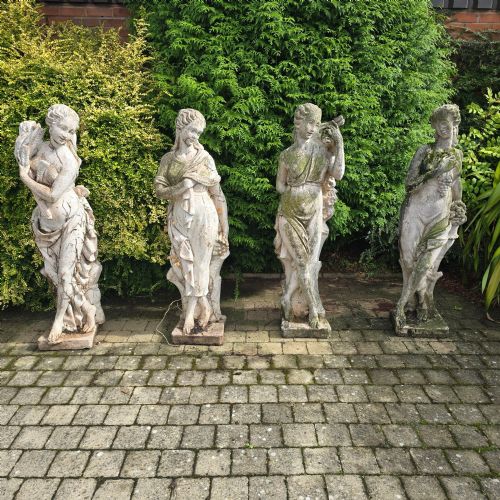
Classical allegorical statues represent personifications of seasons, virtues, elements, or mythological concepts rendered in sculptural form. Buyers seeking these pieces encounter figures symbolising entities such as the four seasons, harvest, peace, and water. The selection includes works created to interpret classical themes through various historical lenses.
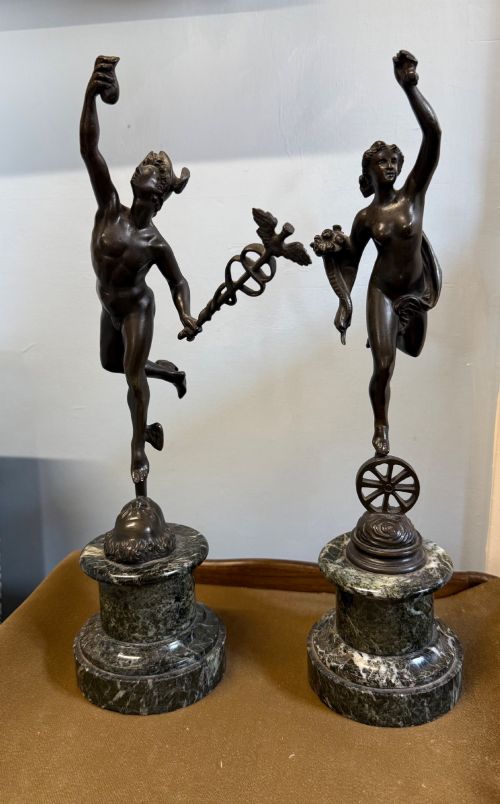
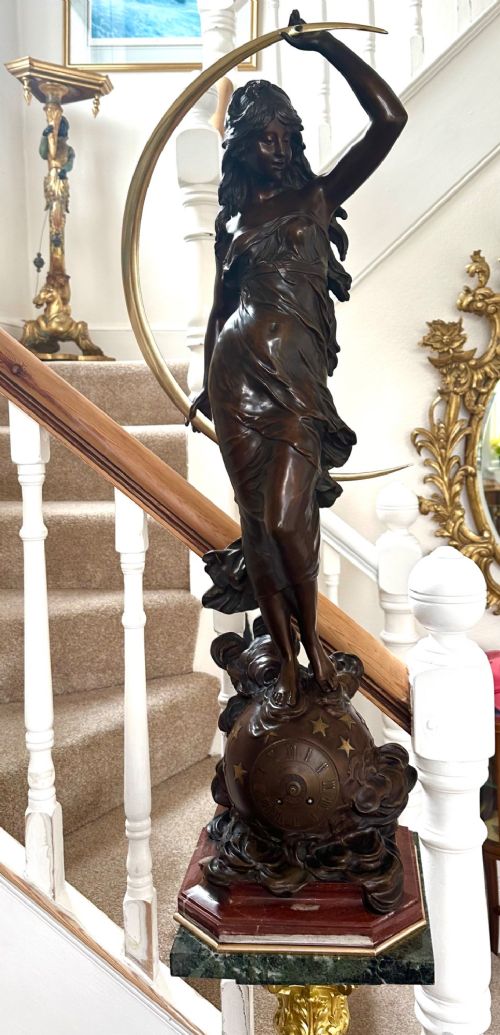
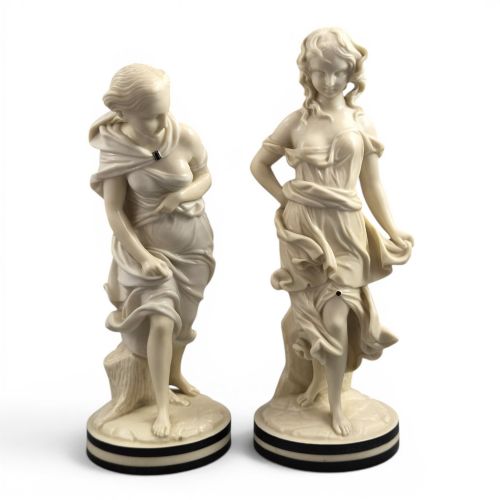
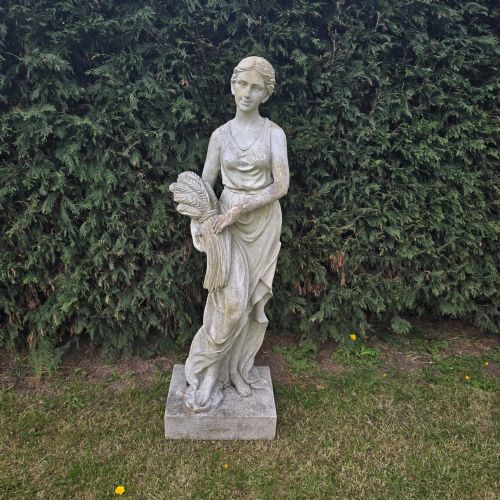
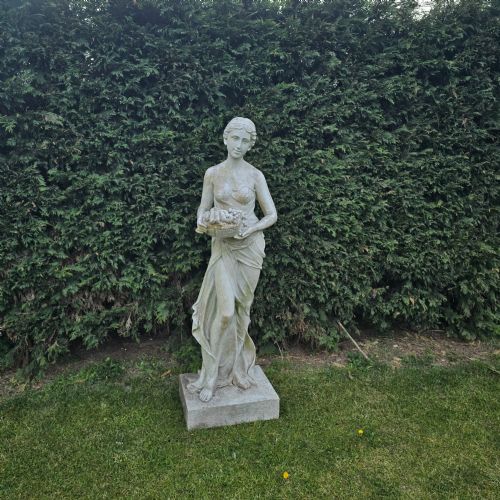
Nineteenth century French bronzes and porcelain figurines dominate the available forms. Sculptures range from cabinet-sized porcelain groups to life-sized garden figures cast in stone or carved in marble. Pieces often depict named subjects or allegorical personifications like Selene, Fortuna, and Aurora upon marble or stone bases.
Materials and Construction
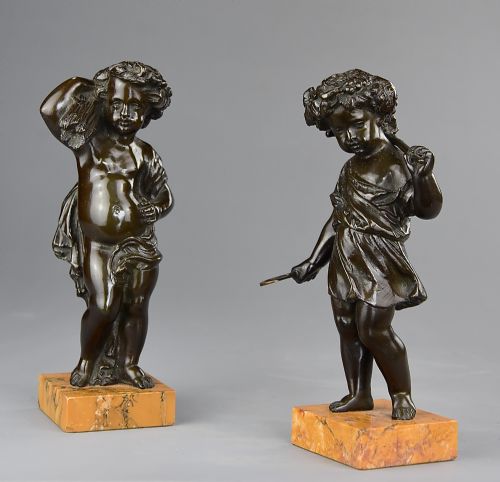
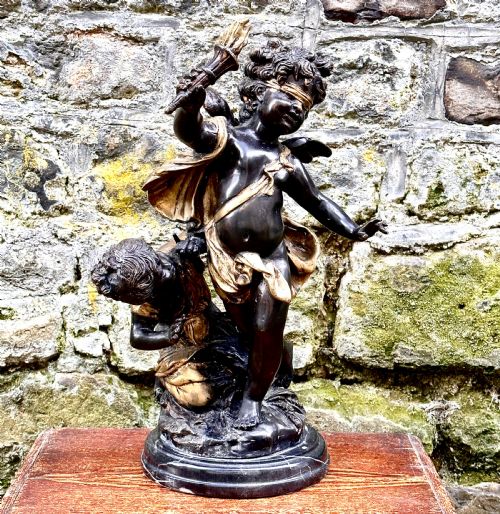
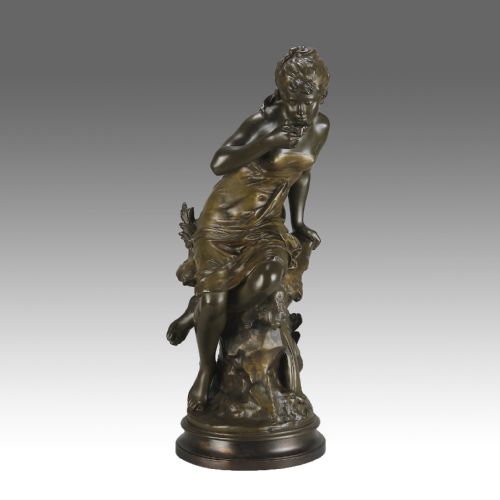
Foundry cast bronze forms the core of many works, often paired with shaped marble plinths or patinated to heighten detail. Sculptors utilised lost-wax and sand casting methods to achieve the fine drapery and facial expressions seen in French and Italian bronzes. Spelter and cast metal appear as alternative metallic mediums in later production.
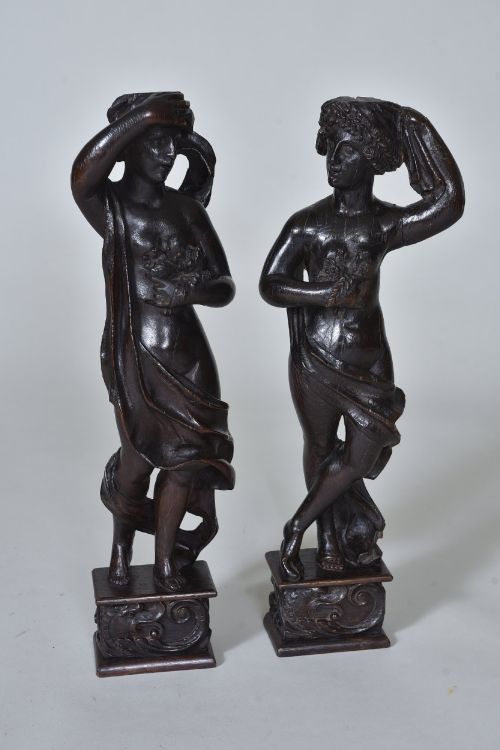
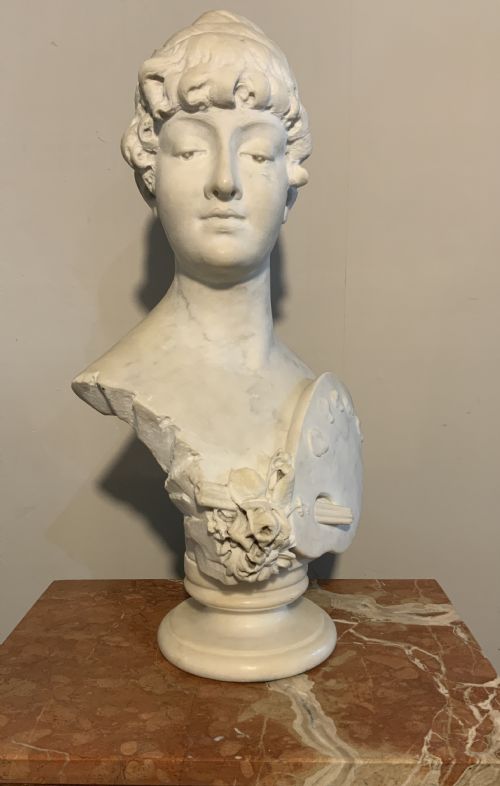
Porcelain figures rely on hard-paste ceramic bodies fired with enamel paints and gilding, produced by factories across England, France, and Germany. Carved works utilise Carrara marble, alabaster, oak, and solid stone for garden and interior display. Each material dictates the scale and level of anatomical precision achievable by the maker.
Listings feature works spanning the eighteenth century through to the nineteen fifties, encompassing bronze, marble, porcelain, and stone.
Quality and Execution
Quality rests upon the sharpness of the casting or the depth of the carving. Superior bronzes retain crisp chisel work on hair and drapery after casting, whereas lesser pieces show smoothed details and softened edges. Marble and stone sculptures distinguish themselves through the natural handling of anatomical weight and fluid movement in cloth.
The finish of the patination or the precision of the hand-painted enamel on porcelain separates standard production from masterworks. Foundry marks, signatures inscribed into the base, and artist attribution add substance to individual pieces. Material density and the selection of supportive marble plinths further define the execution of the statue.
August Moreau·Mathurin Moreau·James Hadley·Achille Mollica·Emile Louis Picault·Barbedienne
The Classical Allegorical Statues Glossary
- Allegory
- The representation of abstract ideas through human figures or symbolic narratives. Statues of this type often personify seasons, elements, or virtues.
- Patina
- The surface colour and sheen developed on bronze through age or chemical treatment. Artists apply patination to accentuate sculptural depth and shadow.
- Spelter
- A zinc alloy used as a cost-effective substitute for bronze in nineteenth-century figures. It possesses a lighter weight and softer surface texture.
- Plinth
- The flat base or block upon which a statue or bust stands. Many bronzes utilise shaped marble plinths for stability and visual contrast.
Classical Allegorical Statues: Frequently Asked Questions
What do classical allegorical statues represent?
These sculptures embody abstract concepts, seasonal changes, or mythological narratives through human personifications. Common themes include agricultural harvests, elements like water and land, and virtues such as peace.
Artists used established iconography, such as wheat sheaves or chariots, to make the underlying subject instantly recognisable to viewers.
Where were these figures displayed originally?
Earlier examples adorned nineteenth-century drawing rooms, libraries, and grand hallways upon marble tables or dedicated pedestals. Larger stone and cast versions were placed in gardens and courtyards.
Table lamps also incorporated these figures into functional household lighting during the late Victorian and Edwardian periods.
How do I distinguish bronze from spelter?
Bronze offers a heavier weight and a sonorous ring when tapped gently, whereas spelter feels lighter and softer. Spelter also shows a greyish metal beneath worn areas of patination.
Magnification reveals the sharper grain and denser molecular structure typical of cast bronze.
How should I care for antique marble sculptures?
Dust marble surfaces regularly with a soft, dry cloth to prevent particulate accumulation. Avoid chemical cleaners or excessive water, which can penetrate porous stone and alter the finish.
Alabaster requires particular caution due to its extreme sensitivity to moisture.