




Allegorical Porcelain Ornaments
These allegorical porcelain ornaments embody abstract concepts like seasons and elements in sculpted clay that brings spirited narrative charm to a room.
Allegorical Porcelain Ornaments
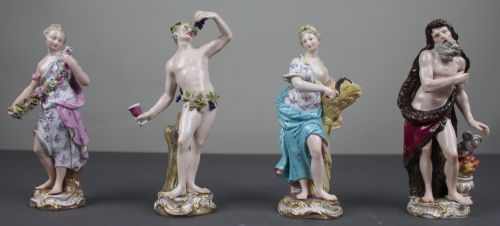
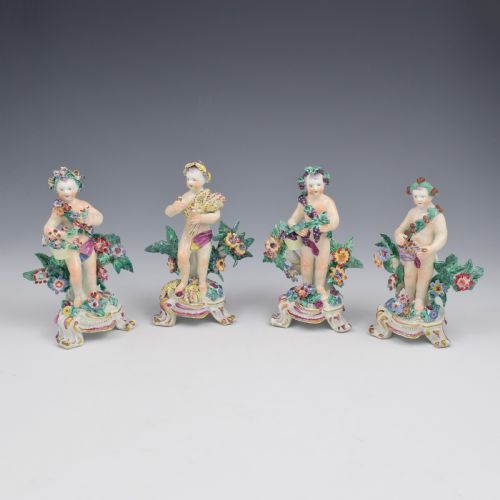
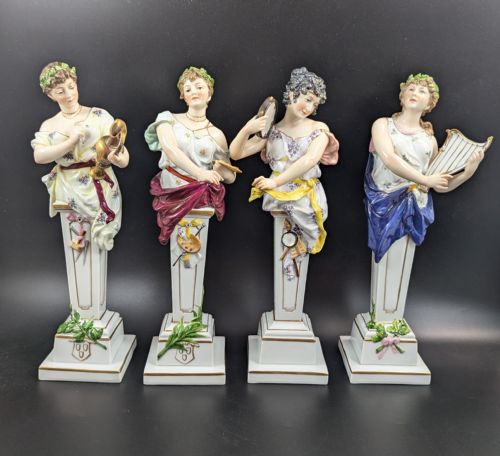
When you search for allegorical porcelain ornaments, you encounter figurative sculptures designed to personify abstract themes such as the Four Seasons and the four elements like water and land. These pieces represent human and putti forms holding attributes that reveal their symbolic identity.
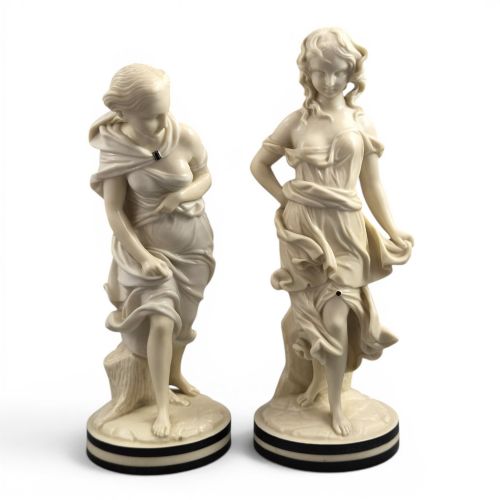
The versions you meet on this page span the eighteenth and nineteenth centuries, originating from English and continental factories including Bow, Chelsea, Derby, Meissen, and Samson of Paris. They appear as individual figures or pairs and occasionally survive as complete sets.
Object types include decorative figurines and porcelain figures modelled with detailed attire and naturalistic or rococo scroll bases. Collectors prize them for their historical breadth and the theatrical presence they bring to a mantelpiece or cabinet.
How They Were Made
These figures utilise soft-paste porcelain or hard-paste porcelain as their foundational body, shaped through skilled moulding and modelling techniques. Artisans then applied enamel colours by hand to define clothing, facial expressions, and symbolic attributes.
Gilding and gold leaf highlights were meticulously brushed onto bases, garments, and accessories to catch the light and accentuate sculptural details. Firing in kilns set the glaze and fixed the enamel pigments into durable finishes.
Rustic putti wearing serious expressions while clutching sheaves of wheat bring an enduring theatrical charm to your display shelf.
What Varies In Quality
The application of gilding and gold leaf also differentiates tiers of work, with better ornaments showing careful burnishing rather than flat, dull metallic surfaces. Complete sets and figures retaining their original symbolic attributes command greater interest among collectors.
Bow Porcelain·Royal Worcester·Samson of Paris·Volkstedt·Achille Mollica·Derby Porcelain·Chelsea Porcelain·Meissen
The Allegorical Porcelain Ornaments Glossary
- Allegory
- The representation of abstract ideas through human or figurative forms. In these ornaments, figures embody concepts like seasons or continents.
- Putto
- A plump, naked male child figure often depicted with wings. They frequently appear in these groupings representing the seasons.
- Soft-paste porcelain
- A ceramic material composed of clay and glass frit fired at lower temperatures. It produces a warm translucent body common in eighteenth-century English factories.
- Hard-paste porcelain
- A true porcelain made from kaolin and petuntse fired at high temperatures. This body yields a bright white surface and durable vitrified finish.
- Enamel
- Vitreous coloured paints applied over glazed porcelain surfaces and refired to fuse permanently. They provide the vibrant palette seen on garments and floral bases.
Allegorical Porcelain Ornaments: Frequently Asked Questions
What do these figures represent?
These ornaments portray personifications of abstract themes, most notably the Four Seasons or elements such as water, land, and continents like Asia. Each figure holds specific attributes, such as agricultural produce for autumn or water jugs for aquatic themes.
Such symbolism reflects eighteenth and nineteenth-century taste for classical learning integrated into decorative arts.
How do I identify eighteenth-century pieces?
Eighteenth-century examples from factories like Bow, Chelsea, and Derby often exhibit soft-paste porcelain bodies with characteristic glaze pooling and hand-modelled floral encrustations. Their bases frequently display rococo scrollwork typical of the period.
Examining the underglaze characteristics and potting style helps distinguish these early productions from later nineteenth-century revivals.
Where should I display them?
These ornaments suit enclosed cabinets, mantelpieces, or designated console tables where their detailed painting and modelling remain protected. Because many pieces feature delicate applied flowers or outstretched limbs, placement away from high-traffic areas is advisable.
Pairing matching figures together creates a balanced visual display on either side of a central object.
How do Samson figures differ?
Samson of Paris produced revival and interpretive pieces during the nineteenth century, often working in the style of earlier Chelsea or Meissen models. These items replicate the aesthetic of eighteenth-century allegorical figures while utilising nineteenth-century manufacturing standards.
Recognising these works involves looking at the specific palette and factory marks associated with the Paris firm.