


Classic British Landscape Art
Classic British landscape art brings rural rivers, sheep pastures, and coastal views indoors through nineteenth-century oils and watercolours.
Classic British Landscape Art
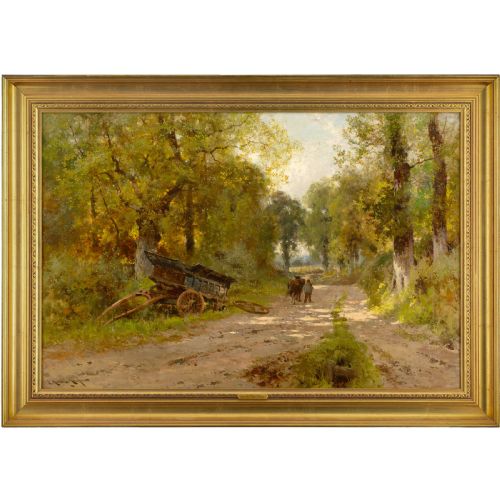
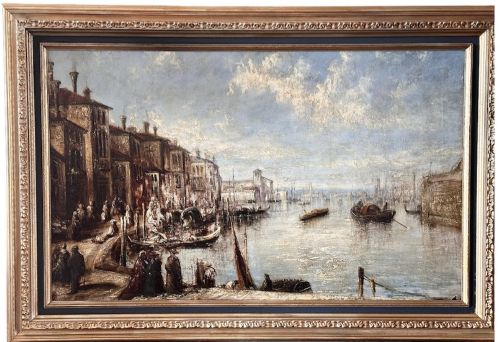
Classic british landscape art covers framed pastoral scenes, rural villages, and river views produced across the nineteenth and early twentieth centuries. These paintings record changing countryside views from Wales, Berkshire, and Worcester, alongside Italianate compositions and coastal harbours.
Most examples found here take the form of traditional oil paintings on canvas or board, accompanied by occasional watercolours. The styles span Victorian realism, the English Country School, and Edwardian pastoral painting.
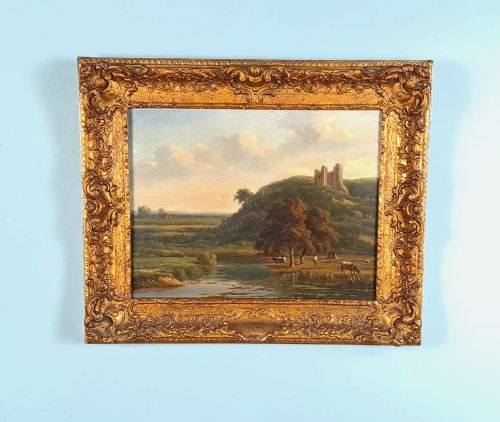
Subjects range from quiet sheep resting in fields and farmers near taverns to grand mountain lakes and castle hills. They offer a direct window into historical views of the British countryside.
How they were made
Artists built these works using oil paint applied to canvas, board, or paper supports. Many pieces rely on layered brushwork to capture natural light across water, trees, and skies.
Surviving works are typically set within original or period frames fashioned from wood, gesso, and giltwood. These ornate frames provide structural support and define the visual boundary of each canvas.
Thirsty farmers, resting sheep, and boating children populate these quiet historic vistas.
What varies in quality
Quality rests upon the artist's handling of perspective, atmospheric light, and natural detail within the composition. Works by established painters demonstrate more confident brushwork and balanced colour harmony.
The condition of the canvas and the preservation of the original giltwood or gesso frame influence the overall integrity of the piece. Subtle details in foliage, water, and animal figures separate standard decorative works from accomplished regional studies.
John Horace Hooper·Francis Moltino·William Henry Mander·William Mellor·Walter J Watson·Benjamin Williams Leader·Peter Deakin·John Wright Oakes·Alfred de Breanski·Sydney Kendrick·James L Brooke·Frederick J Knowles·Ernest Walbourn·Alfred Banner·Edward H Holder·William Stephen Coleman·A Davis·James Poole·John Holland Snr·Peter de Wint
The Classic British Landscape Art Glossary
- Oil on canvas
- A painting technique where pigmented oil paint is applied to a stretched woven fabric support. This combination allows for rich colour blending and textured surface details.
- Giltwood
- Wood carved and coated with a thin layer of gold leaf or metallic gilt. It frequently appears on traditional nineteenth-century picture frames.
- Watercolour
- A painting method where fine pigment is suspended in a water-soluble binder on paper. These works are typically displayed behind glass.
- Victorian Pastoral
- An artistic style focusing on idealized rural scenes, farming life, and quiet countryside landscapes. It reflects nineteenth-century romanticism regarding nature.
- Gesso
- A paint mixture consisting of a binder mixed with chalk, gypsum, or pigment. It serves as a smooth preparation layer for wooden frames before gilding.
Classic British Landscape Art: Frequently Asked Questions
What periods do these paintings date from?
These works date primarily from the nineteenth century through to the early twentieth century, spanning Victorian, Edwardian, and Regency eras.
Specific dates on listings range from the early 1800s up to the 1940s, capturing shifting stylistic approaches to rural scenery.
How should I hang and light oil paintings?
Display oil paintings away from direct sunlight and steady moisture sources to protect the canvas and the giltwood frame.
Picture lights mounted above the frame can illuminate the details without generating excessive heat that might damage the paint surface.
Are these paintings created on canvas or board?
The listings include both traditional oil on canvas and oil painted directly onto wooden boards. Watercolours on paper also appear among the selections.
Each material provides a distinct surface texture that interacts differently with framing and glass protection.
What subjects are common in these landscapes?
Common subjects include river views, Welsh lakes, coastal harbours, and pastoral fields populated with sheep, cattle, and farmworkers.
Artists also recorded village taverns, country homes, and Italianate compositions with figures in the foreground.