




Antique Waterfall Landscape
An antique waterfall landscape captures rushing torrents and tranquil rivers in oils and watercolours from the nineteenth century.
Antique Waterfall Landscape
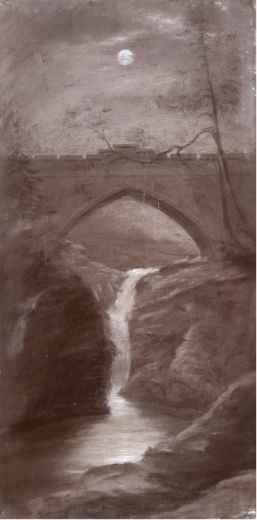
An antique waterfall landscape depicts natural cascades, rivers, and mountainous terrain captured by British, Continental, and Japanese makers. These works range from intimate watercolours on paper to large oil paintings on canvas housed in original gilt frames.
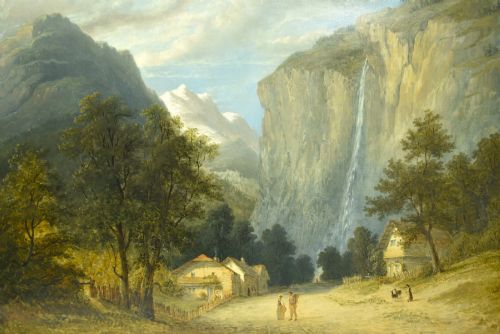
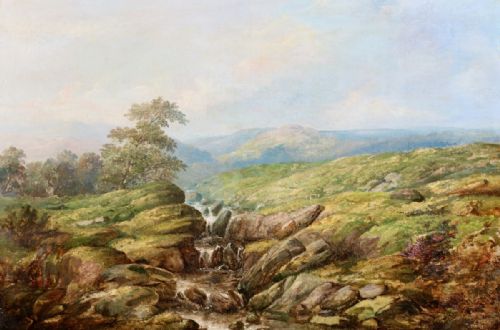
You are most likely to encounter nineteenth-century oil paintings portraying British and Alpine scenery. Painters such as William Mellor and Clarence Henry Roe frequently recorded these wooded glens and rushing waters during the Victorian era.
Materials and construction methods
Artists painted primarily with oil or watercolour upon canvas, board, and paper. Canvas supports frequently bear heavy brushwork and glazing, whilst watercolours utilise fine washes on paper to capture the transparency of rushing water.
Frames are constructed from wood and finished with gilt or gilding techniques. Many nineteenth-century canvases retain their original moulded wooden frames finished in gilded wood.
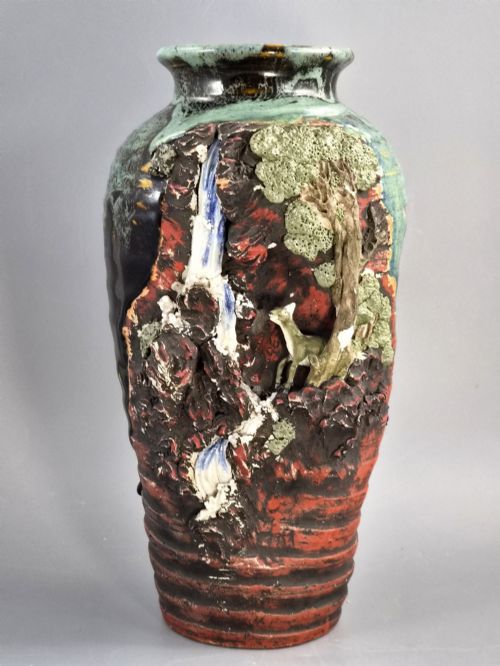
A ceramic vase amongst the selection manages to cram an entire Japanese mountain path, stag, and cascading waterfall into one sculptural vessel.
Distinctions in quality
Quality rests upon the artist's ability to render the movement and luminosity of water. Superior works display confident brushwork and precise tonal control in capturing foam and spray against darker rocks.
The integrity of the original frame and surface condition dictates the standing of a piece. Works retaining their untouched nineteenth-century giltwood frames and stable canvas surfaces command greater attention from collectors.
Alexandre Le Bihan·Clarence Henry Roe·William Mellor·Frederick Richard Lee·James Poole·Peter de Wint·John Sowden·Axel Nordgren·Thomas Creswick·John Pearson
The Antique Waterfall Landscape Glossary
- Victorian Naturalism
- An artistic movement focusing on detailed observation of the natural world. Painters sought to record topography and botanical elements with rigorous fidelity.
- Giltwood
- Timber carved and coated with gold leaf or metallic powder. This finish appears frequently on nineteenth-century picture frames surrounding oil paintings.
- Continental School
- A designation for artists trained in mainland Europe rather than Britain. These painters often worked in the Alps or studied at regional academies.
- Meiji Period
- The era in Japanese history spanning from eighteen sixty-eight to nineteen twelve. Ceramics and decorative arts from this time often incorporated sculptural landscape motifs.
Antique Waterfall Landscape: Frequently Asked Questions
What subjects appear in these landscapes?
Paintings show waterfalls, rivers, and mountainous terrain across Britain, Switzerland, and North America. Figures of hikers, anglers, and travellers frequently populate the foreground.
Artists recorded specific locations such as the Scottish Highlands, North Wales, and Alpine valleys in Switzerland. These compositions blend topographical accuracy with romantic atmosphere.
How do I care for these paintings?
Keep oil paintings and watercolours away from direct sunlight and severe humidity changes. Natural light fades pigments over decades, whilst damp environments damage canvas and paper supports.
Dust gilt frames gently with a dry, soft brush. Avoid applying chemical cleaners to the painted surface or the gilded wooden moulding.
How are periods identified?
Dating relies upon stylistic markers, artist signatures, framing techniques, and canvas stamps. Victorian works often display naturalistic detail and heavy giltwood framing characteristic of the nineteenth century.
Records of exhibited works and biographical dates of painters help narrow the creation window. Unsigned pieces are attributed through stylistic comparison with known school examples.
Where were these works displayed?
Nineteenth-century collectors hung these large oil paintings in domestic drawing rooms and formal reception spaces. Their scale was designed to command attention on principal walls.
Smaller watercolours and sketches suited more intimate domestic settings and portfolios. Many works were exhibited regionally before entering private collections.