



Circular Library Desk
A circular library desk, also known as a drum table, brings centered elegance and rotating practicality to a study.
Circular Library Desk
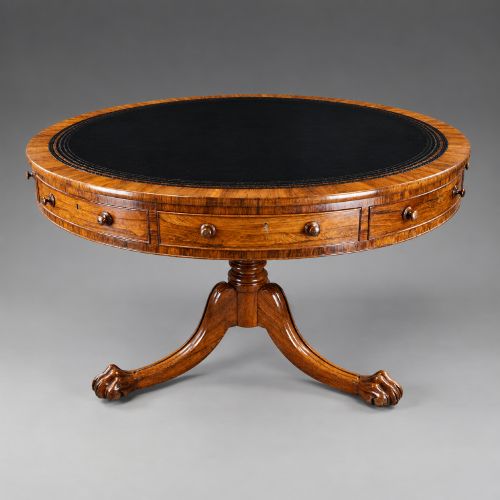
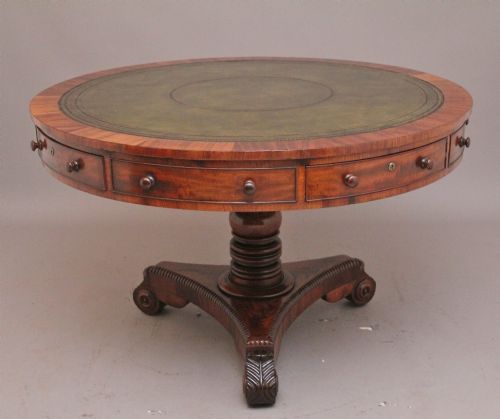
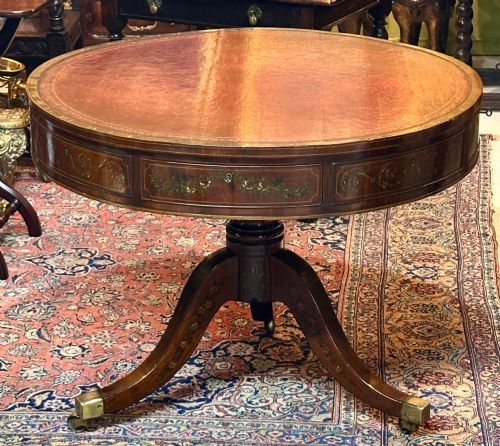
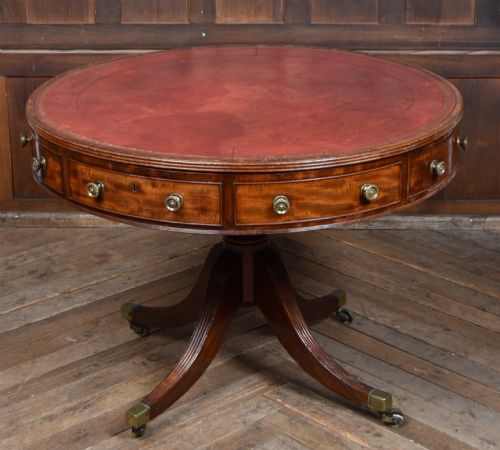
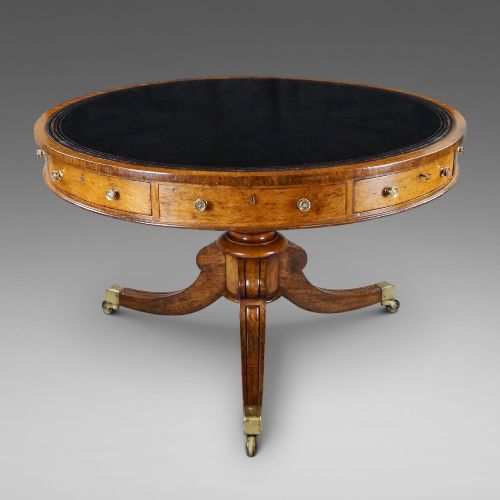
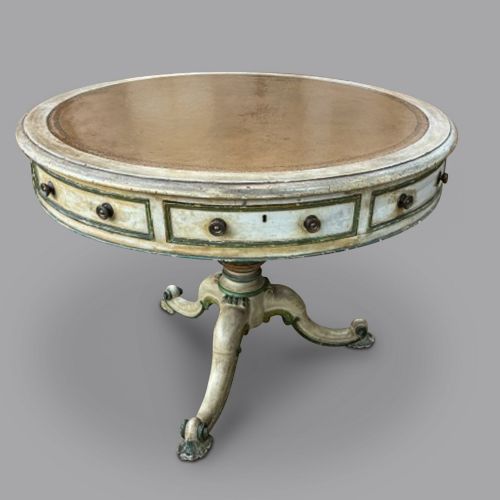
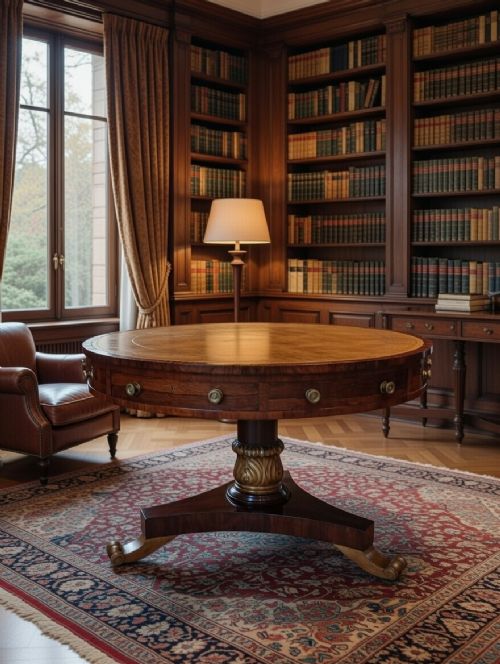
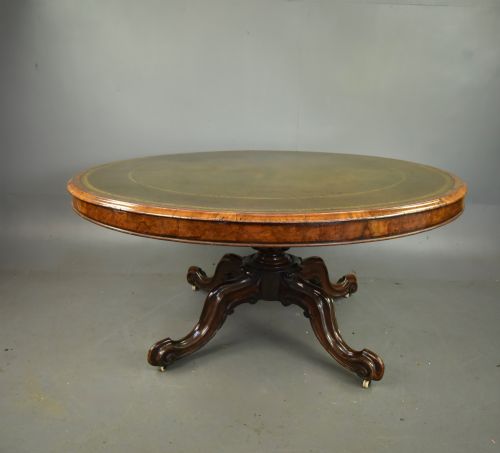
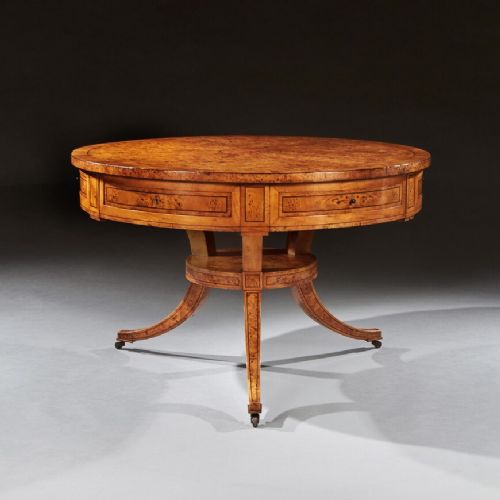
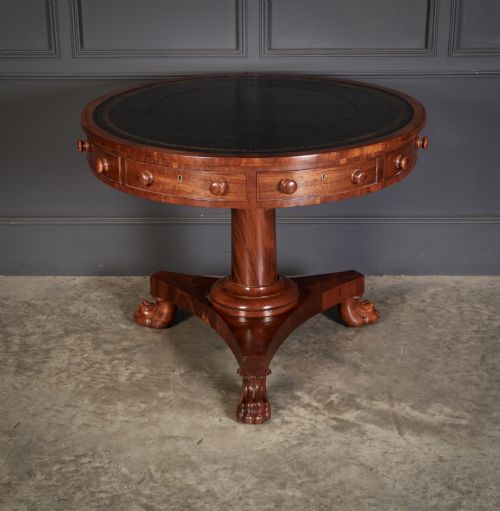
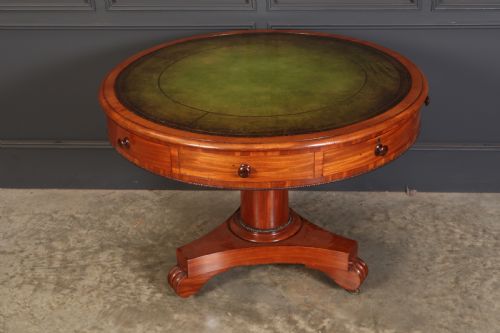
A circular library desk stands as a substantial piece of furniture designed for central placement in a room rather than against a wall. The form typically incorporates a circular top inset with leather, sitting upon a central pillar and a tiered or tripod base.
Most examples found on this page date from the Georgian and Regency periods through to the Victorian era. Mahogany and rosewood remain the dominant timbers across these eras, alongside occasional pieces in oak, walnut, and painted wood.
Variations in nomenclature appear across the listings, with pieces described variously as drum tables, library tables, and revolving rent tables. Despite these differing titles, the underlying form remains a round writing surface housing multiple drawers beneath the top.
Materials and Construction
Cabinet makers utilised dense hardwoods such as mahogany and rosewood to construct the circular carcase and the central pedestal bases. Flame mahogany veneers provide distinct grain patterns across the top surfaces, while burr root maple and oak appear in select regional and period examples.
Writing surfaces are traditionally inset with tooled leather, complemented by brass fittings such as drawer pulls, castors, and occasional inlay work. The internal mechanism often permits the entire top to revolve on its base for ease of access to the stationery drawers.
Listings span multiple eras from the Georgian and Regency periods through the Victorian age up to nineteen twenty.
Craftsmanship and Proportion
Quality reveals itself in the choice of timber veneers, particularly the symmetry of flame mahogany or figured rosewood selected for the circular top. Finer examples display precise brass inlay, well-fitted dovetail drawers, and crisp carving upon the central pillar and feet.
The integration of the revolving mechanism marks the distinction between standard utilitarian items and superior cabinet work. A well-balanced revolving drum table turns smoothly on its axis while maintaining structural rigidity across the pedestal support.
The Circular Library Desk Glossary
- Drum Table
- A circular library table containing a band of drawers around the perimeter of the top. The top is frequently lined with leather for writing.
- Rent Table
- A specialised form of drum table featuring partitioned drawers once used by estate stewards to collect rents. Each drawer corresponds to a different tenant or property.
- Flame Mahogany
- A veneer cut from the branch junction of a mahogany tree, producing a distinctive flickering flame pattern. Cabinet makers utilised this figure for prominent surfaces.
- Regency
- A British design period spanning the early nineteenth century, noted for classical restraint and influences from ancient Greece and Rome. Pieces from this era often feature rosewood and brass detailing.
- Centre Table
- A piece finished on all sides intended to stand free in the middle of a room rather than against a wall. Circular library desks belong to this classification.
Circular Library Desk: Frequently Asked Questions
What is a circular library desk?
A circular library desk is a round freestanding table featuring a ring of drawers beneath the top. It serves as both a writing surface and a central feature for a room.
Most versions incorporate a revolving mechanism, allowing the user to access different drawers simply by turning the top.
How were these tables used?
These pieces served gentlemen and scholars as writing desks and repositories for books, papers, and correspondence. The revolving top allowed quick access to stationery without moving the chair.
In larger country houses, rent tables helped estate managers organise tenant payments within the partitioned drawers.
Where should I place one?
Because these tables are finished on all sides and often feature revolving tops, they suit central placement in a library, study, or large drawing room. They require sufficient floor space to be walked around freely.
Pair the desk with a matching pedestal chair or library armchair to maintain the traditional proportions of the room.
How do I identify the period?
Georgian and Regency examples typically display finer mahogany or rosewood veneers with restrained classical details such as brass inlay. Victorian versions tend to be heavier in proportion and often include elaborate carving.
Examine the secondary woods inside the drawer construction and the style of the central pedestal for further clues regarding age.