



Revolving Writing Table
A revolving writing table brings smooth rotation and practical workspace together in a circular form that sits easily within a room.
How they were made
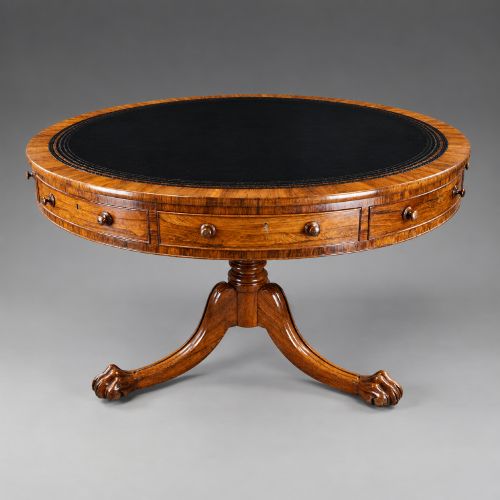
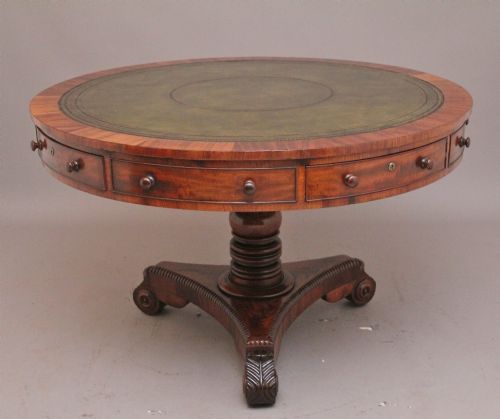
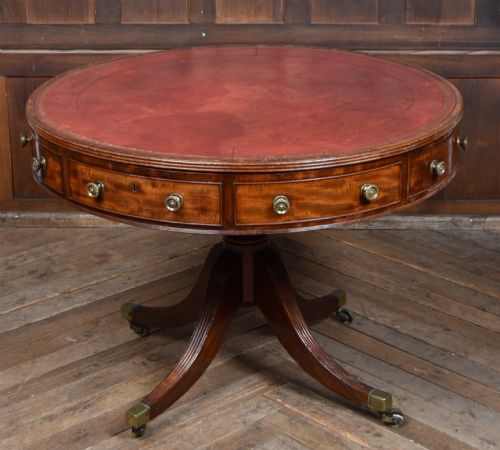
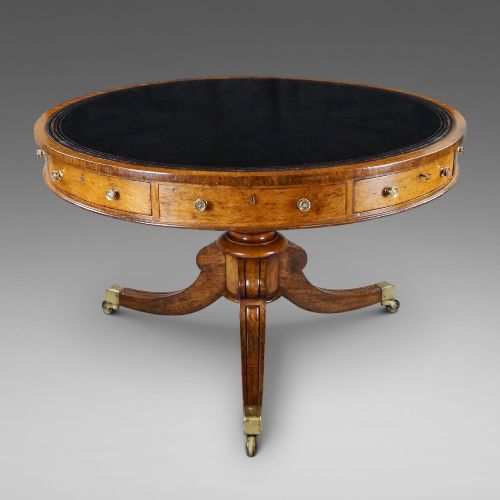
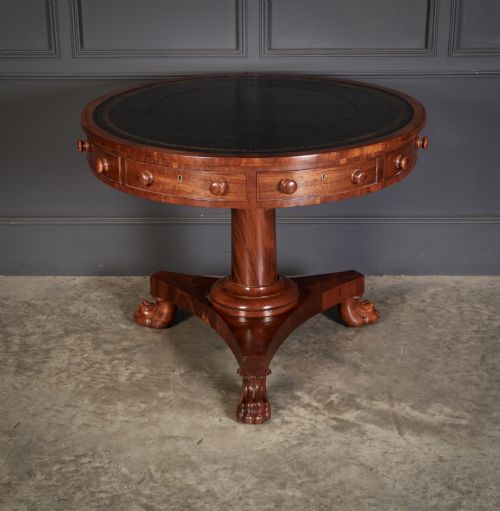
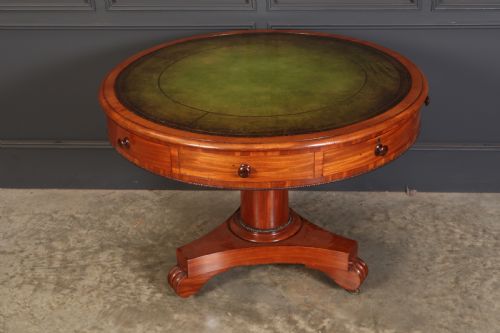
Cabinet-makers constructed these tables using solid timbers and carefully selected veneers, such as flame mahogany and rosewood, applied over secondary woods like pine. The circular tops often feature inset leather surfaces, sometimes accented with gold tooling.
The internal rotating mechanism relies on sturdy wooden or brass assemblies concealed beneath the top, allowing the entire surface to turn smoothly on its pedestal base. Drawers are fitted into the frieze with traditional dovetail joints, matching the curvature of the frame.
What varies in quality
The refinement of the timber selection dictates much of the visual distinction, with highly figured flame mahogany or rich rosewood marking out the superior examples. Expert matching of grain patterns across the rotating top and the frieze drawers requires considerable skill.
The smoothness and stability of the underlying rotating mechanism also separate standard workshop output from finer pieces. A well-engineered pivot allows the top to turn without wobble or friction while maintaining a solid feel when stationary.
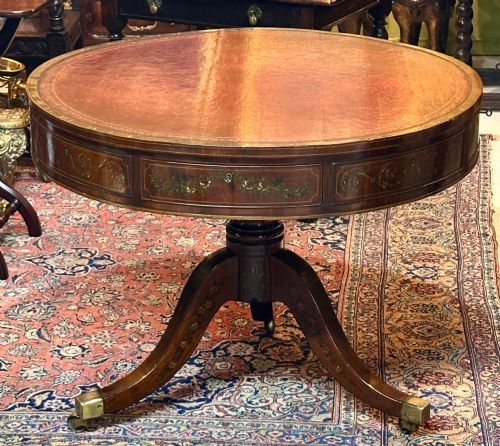
Materials across the selection range from dark mahogany and rosewood to lighter oak and satin birch, occasionally featuring brass inlays.
The Revolving Writing Table Glossary
- Drum table
- A circular library table with a rotating top and multiple frieze drawers arranged around the perimeter. This form became popular during the Georgian and Regency periods for use in studies and libraries.
- Flame mahogany
- A distinct wood veneer featuring a flamelike pattern created by cutting across the branch bifurcations of the mahogany tree. Cabinet-makers utilised this figure on prominent surfaces like table tops.
- Frieze
- The horizontal band situated beneath the top of the table, which houses the drawers in these circular designs. It often displays decorative veneers or brass inlays.
- Pedestal base
- A central column support rising from a platform or branching feet, which holds the rotating mechanism for the table top. This design allows users to sit comfortably without corner legs obstructing the space.
- Tooling
- The decorative impression, often gilded, applied around the outer edge of the inset leather writing surface. Artisans used heated brass rolls to impress these intricate patterns.
Revolving Writing Table: Frequently Asked Questions
What is a revolving writing table?
A revolving writing table is a circular piece of furniture featuring a rotating top that allows a user to access different compartments or books without moving their seat. Most examples incorporate drawers set into the circular rim.
These tables date primarily from the Georgian, Regency, and Victorian eras, serving originally in libraries and private studies as functional desks.
How do I use one in a modern room?
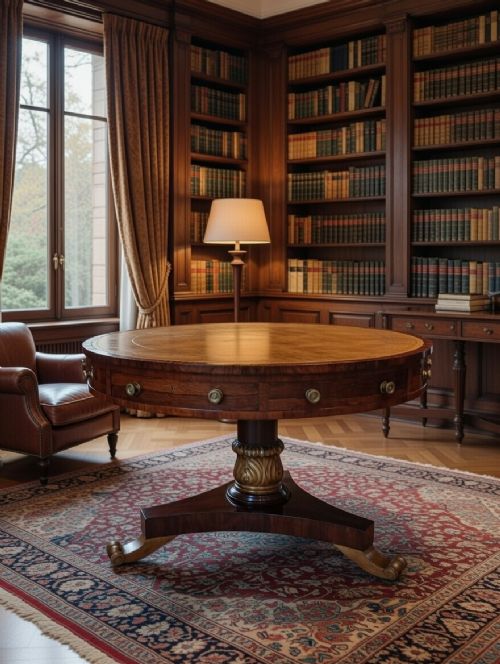
These tables function well as freestanding centre pieces in a room, where their circular shape softens linear architecture. The rotating top provides practical access to surface items from any angle.
They also serve effectively as compact desks or lamp tables, fitting comfortably into corners or middle spaces alike.
How do I tell Regency from Victorian examples?
Regency tables generally display cleaner classical proportions, crisper brass inlays, and simpler pedestals influenced by Sheraton designs. Timbers often include rosewood and finely figured mahogany.
Victorian pieces tend to be heavier in build, sometimes incorporating richer carved details or larger proportions, reflecting the stylistic shifts of the later nineteenth century.
What woods were used to build them?
Mahogany forms the primary material for the majority of these tables, frequently selected in figured variations like flame mahogany. Rosewood also appears regularly, particularly on Regency pieces.
Other materials include oak for library settings and satin birch, while secondary woods like pine support the internal drawer structures.