



Circular Burr Walnut Table
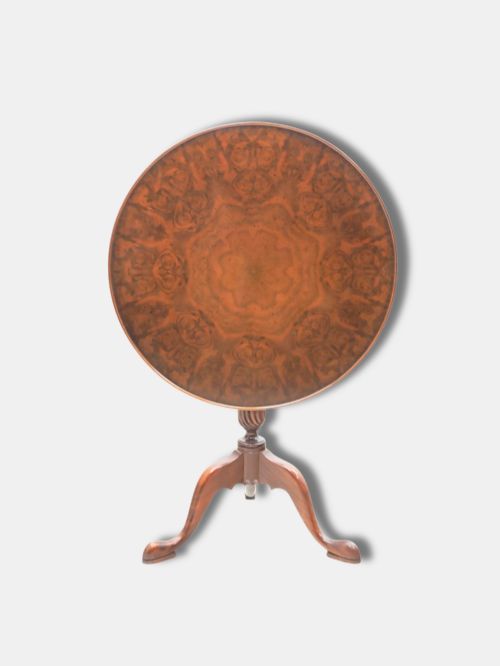
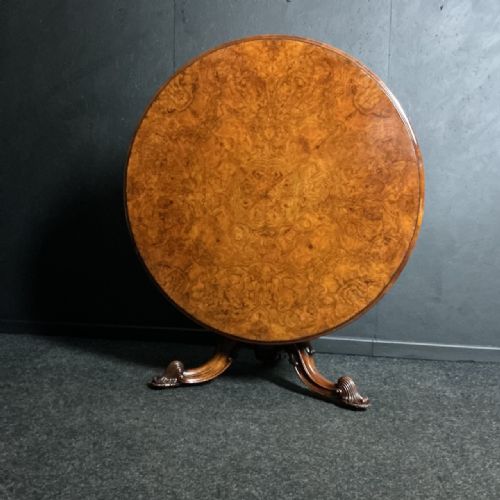
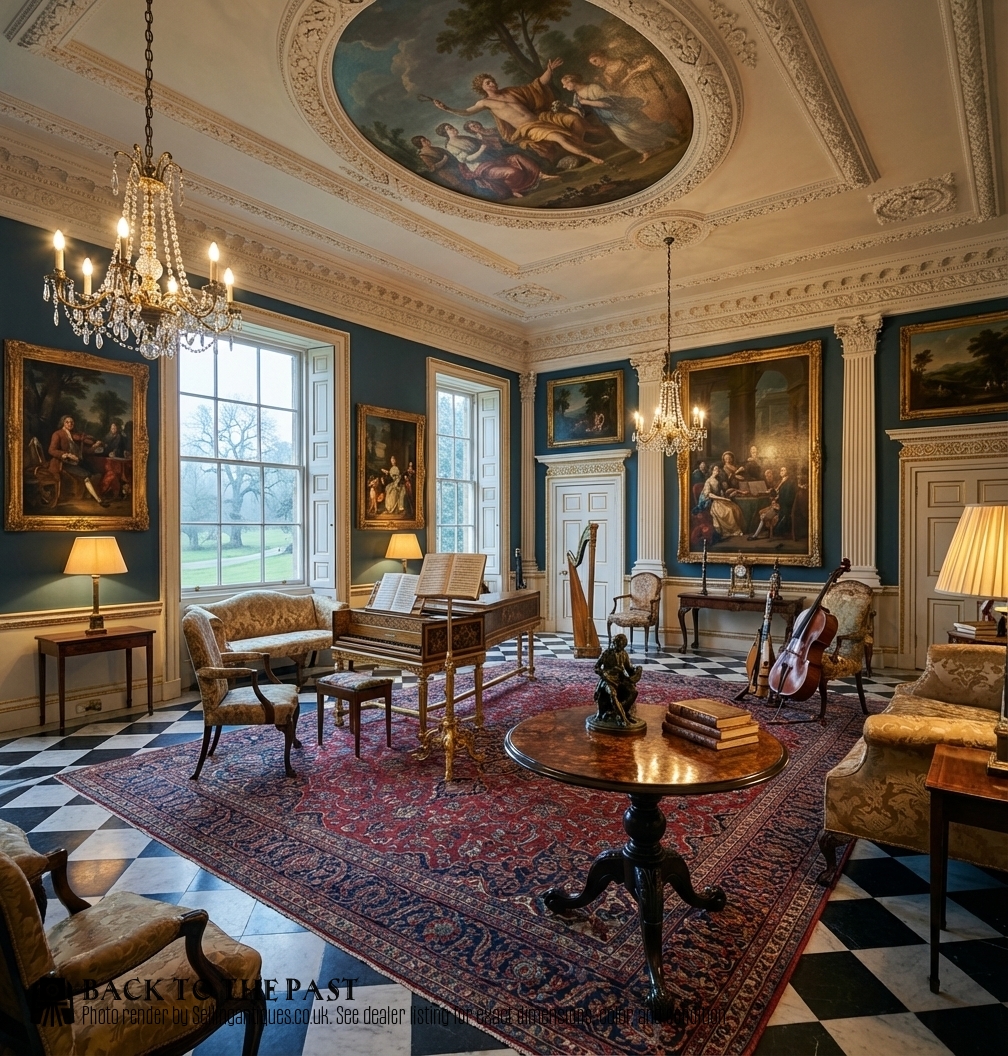
A circular burr walnut table brings rich swirling grain and warm golden tones into a room, serving as a striking centrepiece for lamps, books or morning coffee.
Circular Burr Walnut Table
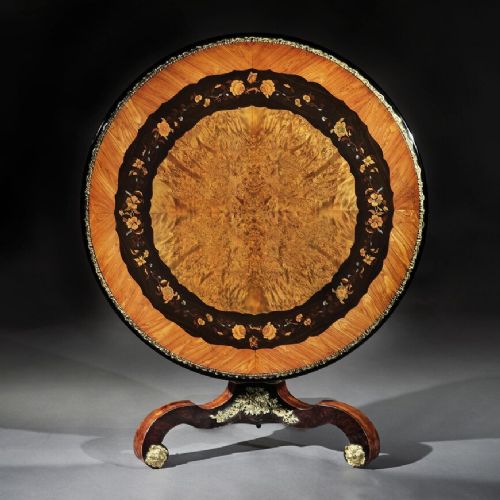
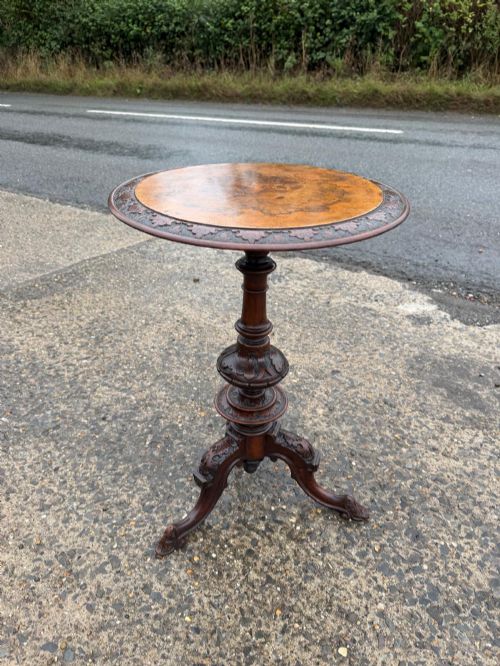
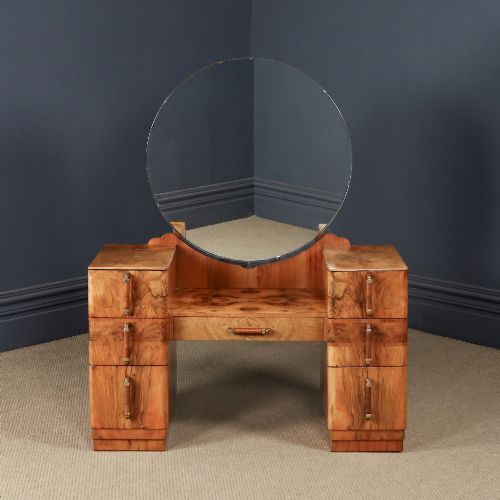
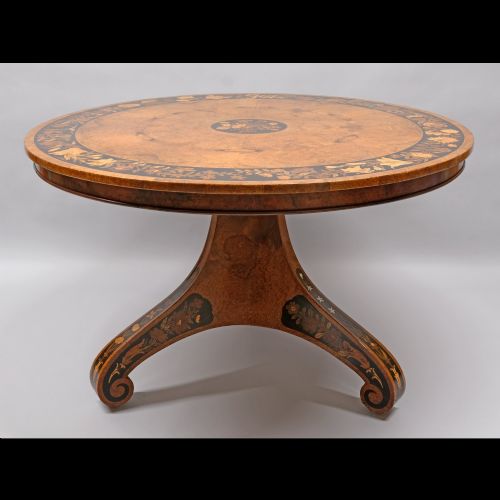
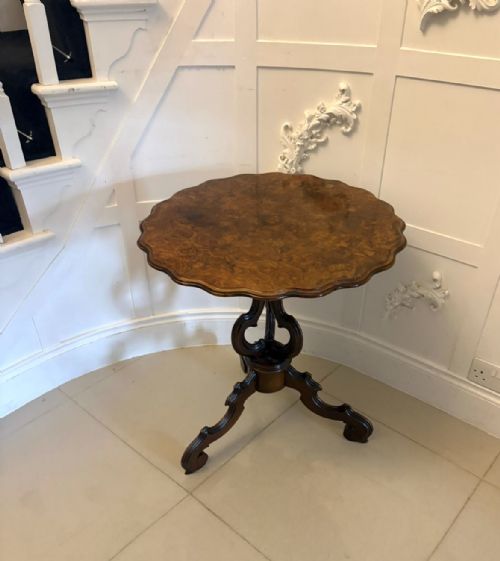
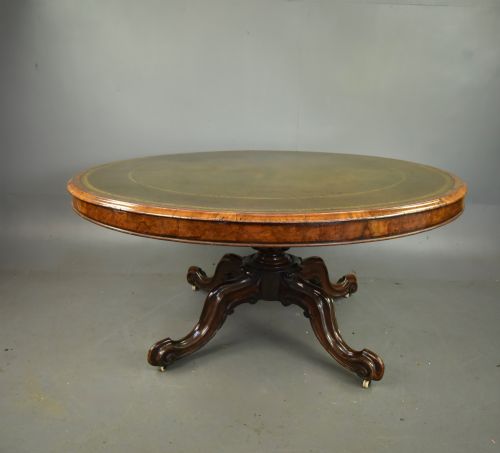
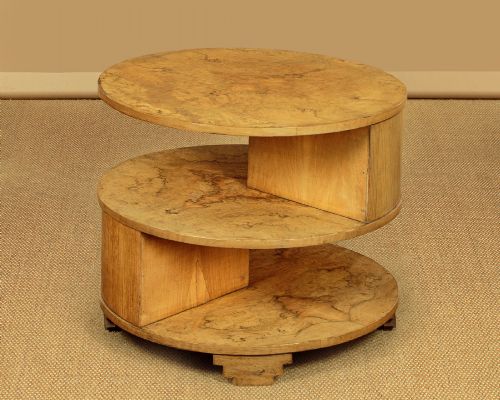
A circular burr walnut table combines the distinct organic patterns of burr timber with a rounded silhouette, spanning compact lamp tables and large dining pieces. The selection includes Victorian pedestal breakfast tables alongside 1930s Art Deco coffee tables and Queen Anne revival occasional pieces.
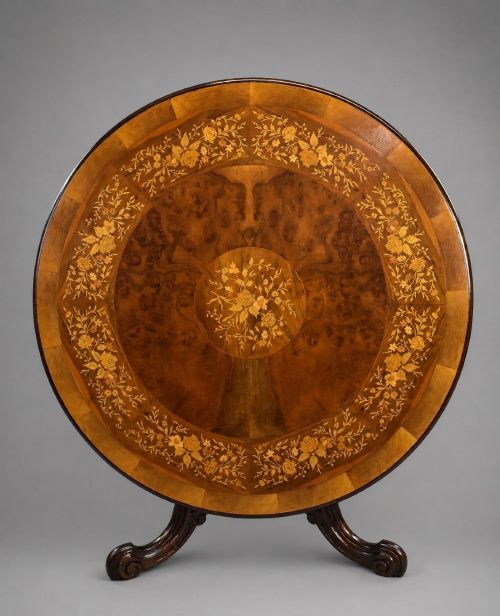
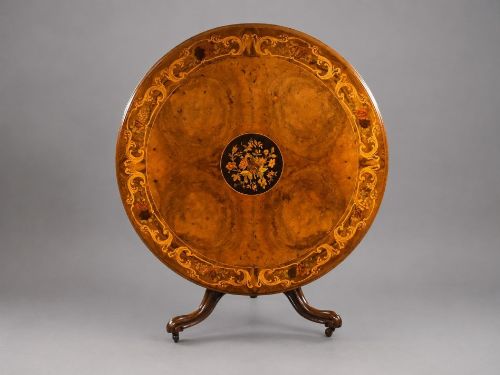
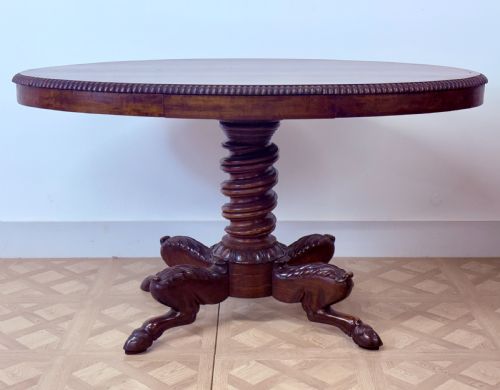
Victorian examples frequently feature tilt tops, carved tripod bases or inlaid marquetry, while later 20th-century iterations lean towards clean geometric lines or low coffee table proportions. Buyers encounter everything from small bedside drum cabinets to extending dining tables designed for larger gatherings.
How They Were Made
Cabinet makers applied thin slices of burr walnut veneer over solid secondary timbers such as mahogany or pine, arranging the swirling grain figures symmetrically across the circular top. Marquetry inlay in lighter woods like satinwood or maple often forms intricate floral borders or geometric centre medallions.
Listings feature circular burr walnut tables spanning the Victorian era, the Aesthetic Movement, and 1930s Art Deco design.
What Varies in Quality
The depth and symmetry of the burr walnut grain dictate the visual impact of the top, with tightly clustered growth rings creating a richer texture than plain timber. Finely executed marquetry inlay and crisp hand-carving on the pedestal or legs distinguish superior workshop output from simpler production.
Structural integrity depends on the stability of the central pillar and the smoothness of any pivoting mechanism or extending leaf system.
Edward Holmes Baldock·Harry and Lou Epstein
The Circular Burr Walnut Table Glossary
- Burr Walnut
- A figured wood taken from the deformed growth or wart on a walnut tree. It produces highly decorative, swirling patterns full of small knots and eyes.
- Marquetry
- The art of applying small pieces of veneer to a structure to form decorative patterns. Craftsmen use contrasting woods like boxwood and satinwood to create detailed floral or geometric motifs.
- Tripod Table
- A small standalone table supported by three legs branching from a central pillar. This form gained popularity during the 18th and 19th centuries for portability and stability on uneven floors.
- Breakfast Table
- A tilt-top table originating in the Georgian and Victorian eras. These items were designed to be tipped upright and stored against a wall when not in use.
Circular Burr Walnut Table: Frequently Asked Questions
How do I care for burr walnut?
Keep the wood away from direct sunlight and strong heat sources to prevent the veneer from drying out or splitting. Polish the surface gently with a quality beeswax to maintain the natural lustre of the grain.
Avoid placing wet glasses or hot mugs directly on the antique polish. Use coasters and mats to protect the delicate surface from rings and moisture marks.
Where should I place a round table?
A circular table works effectively in the middle of a room as a centrepiece or library table. Smaller versions function well beside seating as lamp or wine tables.
The absence of sharp corners allows people to circulate freely around the piece, making these tables practical for narrower hallways or smaller reception spaces.
What is a tilt-top mechanism?
A tilt-top allows the circular surface to pivot vertically on a catch, enabling the table to stand flat against a wall when not in use. This clever design saved valuable floor space in period homes.
Inspect the pivot hinge and brass catch to ensure the top locks securely into both horizontal and vertical positions.