
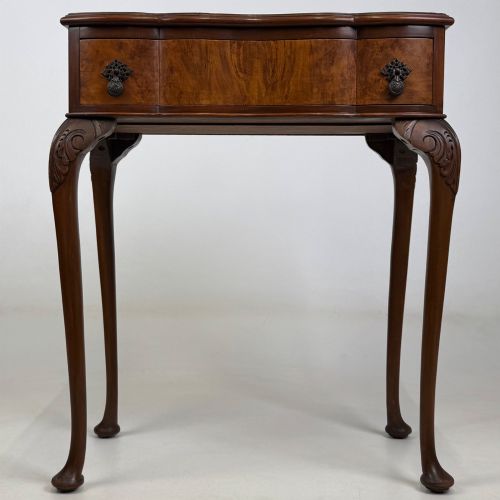


Figured Walnut Lamp Table
A figured walnut lamp table brings rich timber grain and compact elegance to a corner, serving equally well as a bedside stand or a spot for a reading light.
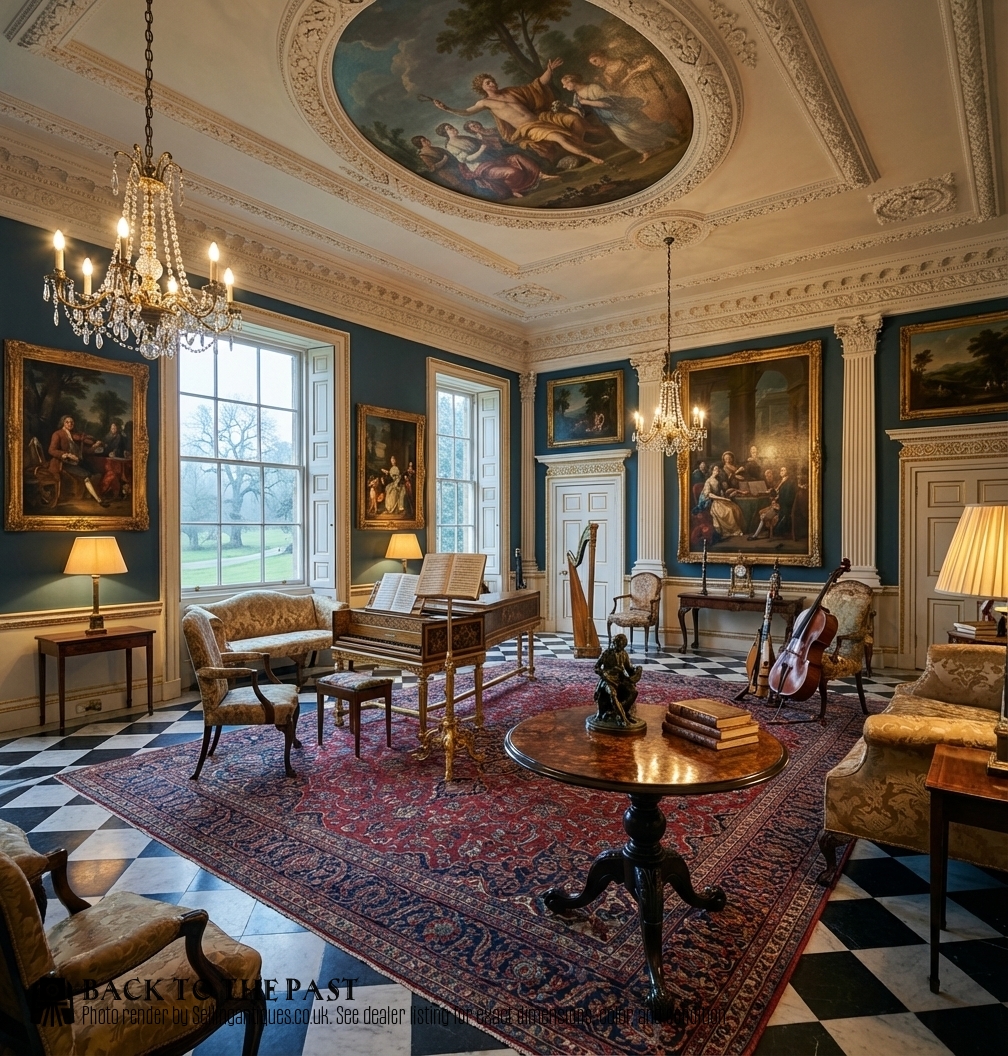
Figured Walnut Lamp Table
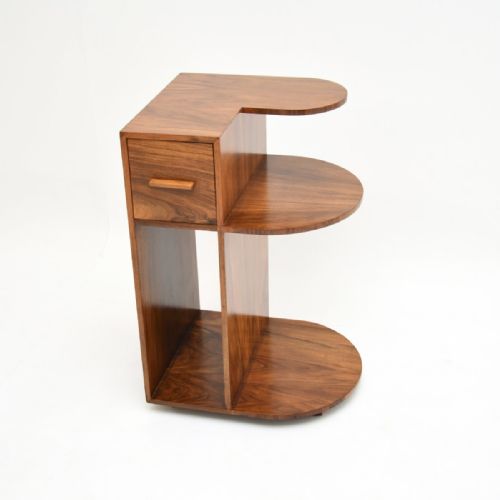
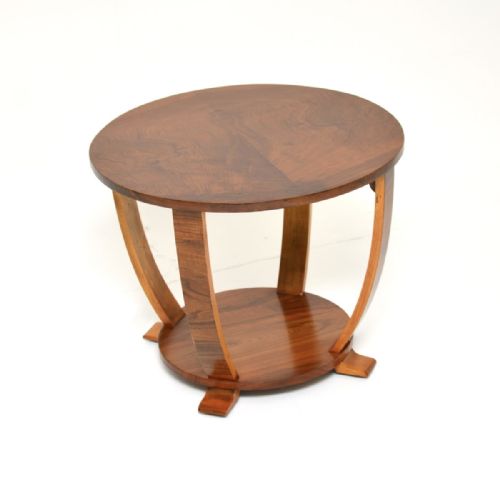
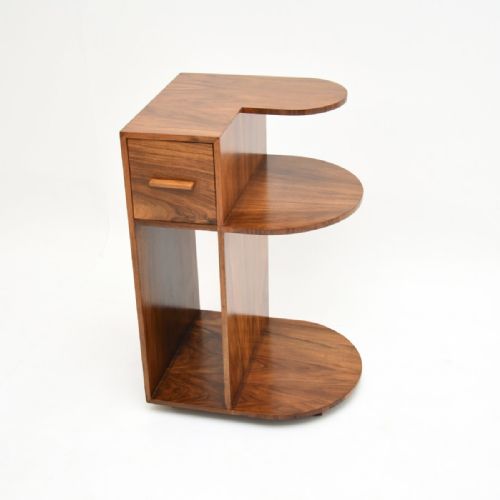
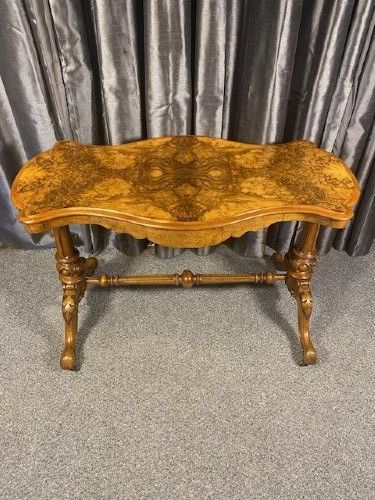
When you search for a figured walnut lamp table, you are looking at small-scale occasional furniture designed to hold a light, book, or bedside cup while displaying exceptional wood figure. The pieces on this page span the Victorian, Edwardian, and Art Deco periods, alongside revival styles from the nineteenth and twentieth centuries.
The forms vary from simple round wine tables and pie crust tops to multi-tiered occasional tables, bedside cabinets, and sofa tables. Side tables and small bedside stands appear frequently, constructed to occupy minimal floor space while making a strong visual impact through their timber.
Origins stretch across English workshops from the mid-nineteenth century through the 1930s. The Art Deco examples favour geometric veneered surfaces, while Victorian and Edwardian pieces lean towards curved cabriole legs, inlaid details, and turned pedestals.
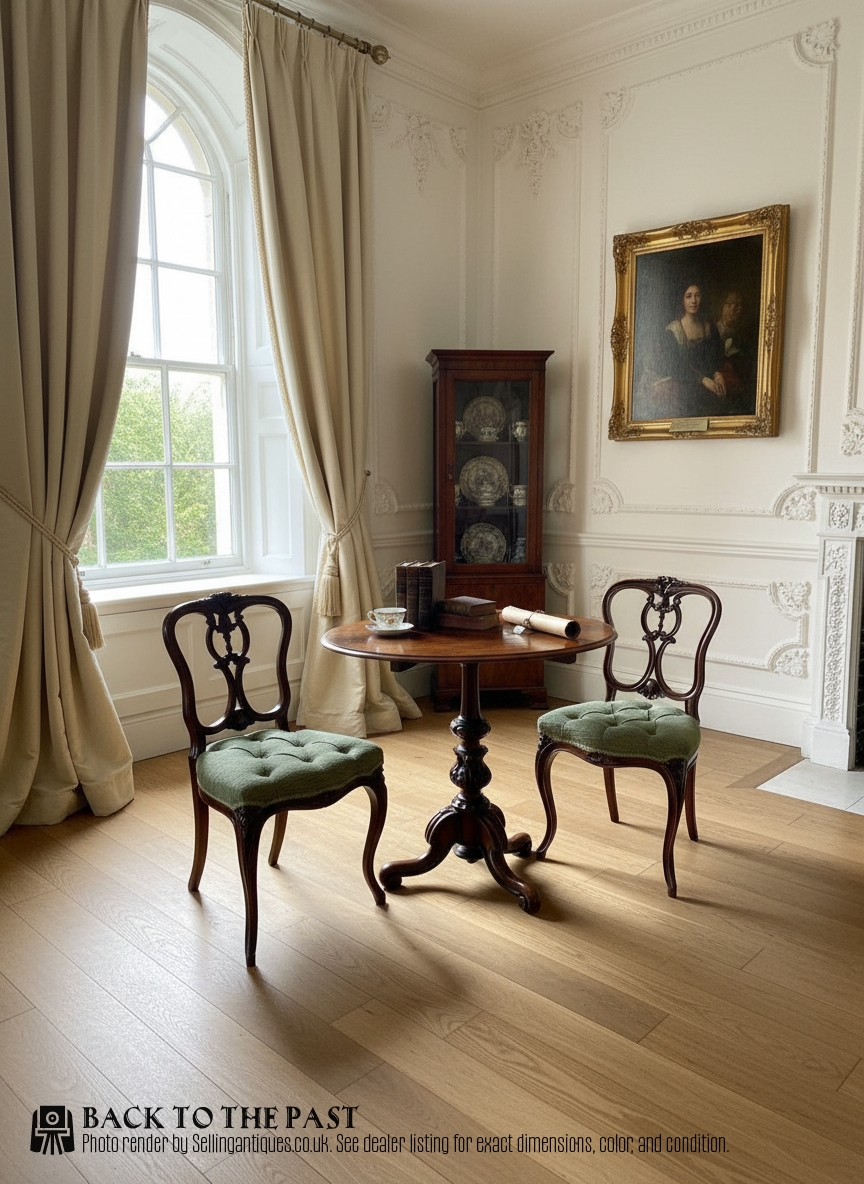
What varies in quality
The distinction between standard pieces and the finest examples lies in the selection and matching of the walnut veneer. Superior tables display bold, harmonious grain patterns that flow evenly across the top, whereas lesser pieces show plain or interrupted timber.
Construction methods also set pieces apart, from the stability of the joints to the precision of inlaid details and turned elements. Finer examples combine robust solid walnut frames with carefully applied burr veneers that endure heavy use without lifting.
Listings feature pieces spanning from the 1850s Victorian era through to Art Deco designs of 1930.
The Figured Walnut Lamp Table Glossary
- Figured walnut
- Timber with an attractive, non-uniform grain pattern resulting from branching, growth stress, or disease in the tree. This grain is sliced into veneers to ornament table tops.
- Burr walnut
- A specific form of figured walnut taken from a tree growth or burr, producing dense, swirling clusters of knots. It creates highly decorative surfaces on Victorian and Art Deco tables.
- Veneer
- A thin slice of superior wood applied over a secondary timber base to create a decorative exterior. Walnut veneer allowed makers to utilise costly grain patterns economically.
- Pie crust edge
- A raised, carved moulding around the rim of a round table top, shaped with decorative scalloped undulations. It appears frequently on wine and occasional tables.
- Cabriole leg
- A furniture leg that curves out and then in, resembling the leg of an animal. This form is common on Queen Anne style and revival pieces.
Figured Walnut Lamp Table: Frequently Asked Questions
What is a figured walnut lamp table used for?
These pieces serve as compact surfaces next to seating or beds, holding reading lamps, drinks, or small decorative items. Their small footprint allows them to fit into tight corners while adding warmth through the wood grain.
Historically, similar tables functioned as wine stands, sewing tables, or bedside cabinets. Today, they remain versatile accents for living rooms and bedrooms.
How do I date a walnut lamp table?
Dating relies on combining the overall style, construction methods, and materials present in the piece. Victorian examples often feature turned pedestals and heavy legs, while Art Deco pieces from the 1930s lean towards geometric veneers and clean lines.
Revival styles can mimic earlier eras, such as Queen Anne, but the secondary timbers and construction details usually reveal the actual period of manufacture.
How do I care for a figured walnut surface?
Polishing with appropriate wax helps maintain the lustre of the timber and protects the veneer from drying out. Avoiding direct sunlight and excessive moisture prevents the wood from fading or warping over time.
Gentle dusting with a soft cloth keeps the grain clear without scratching the polished finish or damaging the antique structure.