




Circular Anglo Indian Table
A circular anglo indian table brings distinctive colonial craftsmanship and rich timber into a room, offering a striking focal point.
Circular Anglo Indian Table
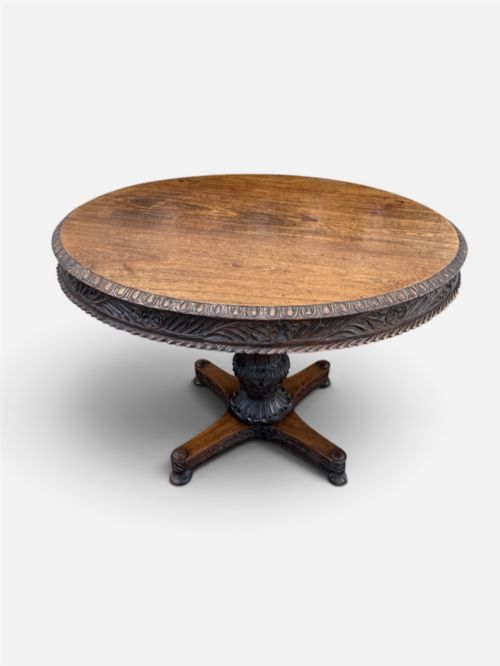
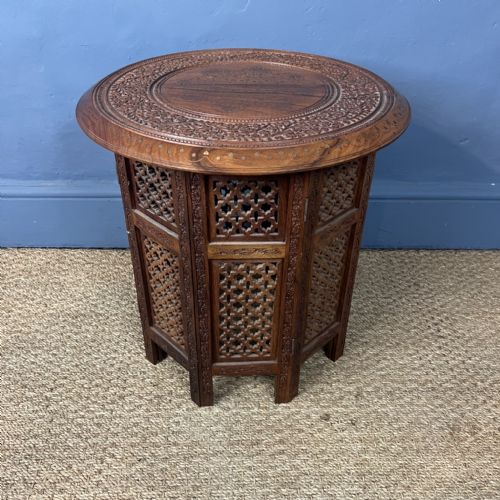
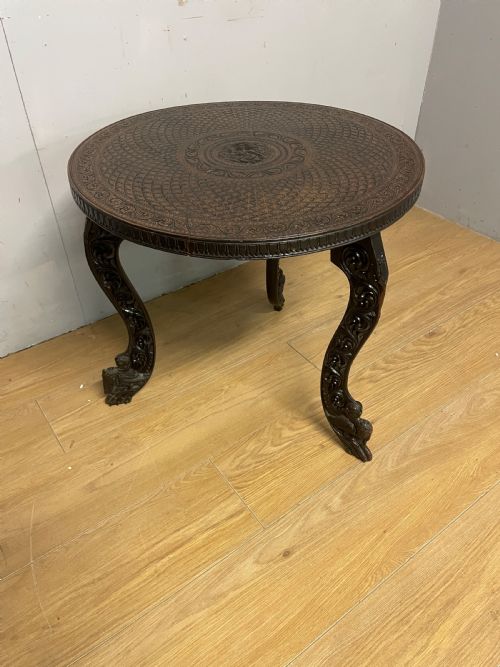
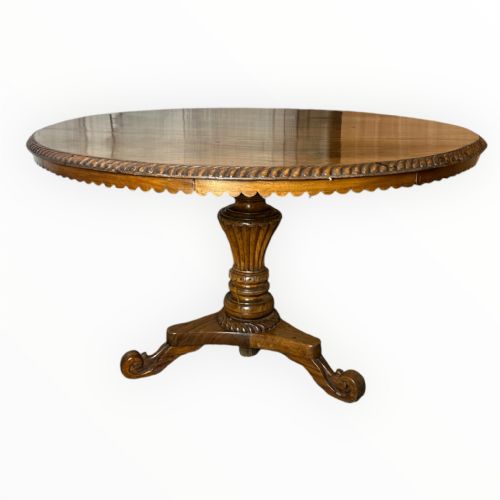
A circular anglo indian table combines traditional Indian woodworking traditions with British furniture forms from the nineteenth century and early twentieth century. These pieces primarily function as centre tables, occasional tables, side tables, and dining tables.
The selection here ranges from heavy pedestal centre tables in padauk and rosewood to intricately carved occasional tables. Examples frequently originate from regional centres such as Bombay and Hoshiarpur.
Buyers encounter smaller lamp and wine tables alongside large dining tables suitable for seating multiple people. The forms span simple tilt-top designs to elaborate platform bases.
Materials and construction
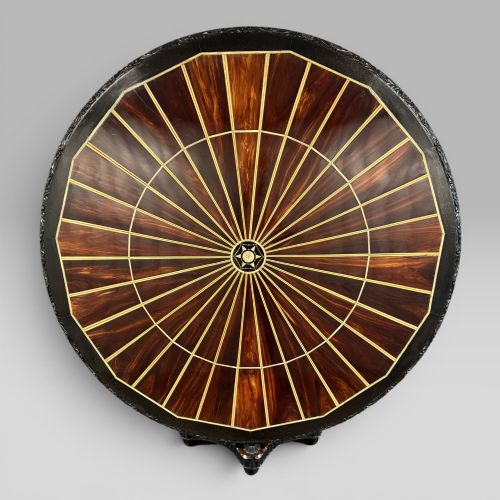
Cabinetmakers utilised dense tropical timbers including padauk, rosewood, teak, shisham, ebony, and satinwood. These heavy woods provided the stable foundation needed for deep relief carving and structural support.
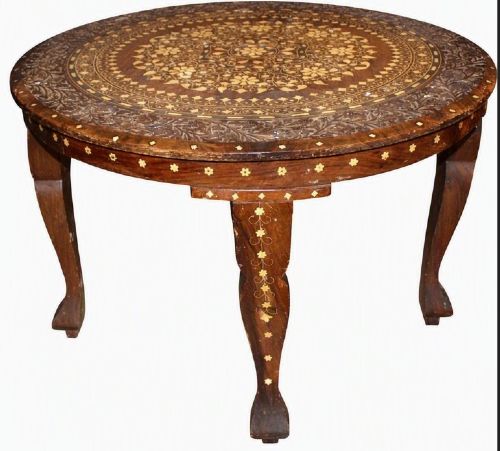
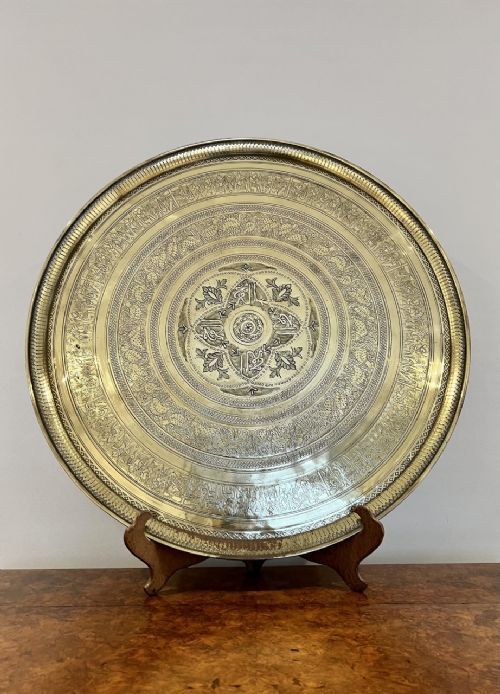
Artisans decorated surfaces using detailed hand carving alongside intricate inlay work in bone and brass. Metal tops engraved with zodiac signs or geometric patterns frequently paired with folding wooden stands.
Several tables feature carved elephants supporting the top, bringing a charming piece of wildlife straight into the colonial parlour.
Quality and execution
The distinction between standard and superior pieces lies in the crispness and depth of the carved foliage, figures, and geometric motifs. Tables originating from recognised workshops or specific regions often display greater precision in their execution.
The choice of timber and the complexity of the inlay work determine the overall refinement of the piece. Solid construction in dense woods like padauk or coromandel signifies higher grade production.
Liberty & Co·Bombay Furniture Company
The Circular Anglo Indian Table Glossary
- Padauk
- A heavy, durable tropical hardwood with a reddish-brown colour commonly found in colonial furniture. It withstands intricate carving exceptionally well.
- Hoshiarpur
- A region in Punjab, India, renowned for its intricate wooden furniture inlaid with bone or brass. Pieces from this area feature dense geometric and floral patterns.
- Tilt-top
- A table mechanism allowing the circular top to pivot vertically for storage or display when not in use. This feature appears frequently on nineteenth-century centre tables.
Circular Anglo Indian Table: Frequently Asked Questions
Where were these tables made?
These tables were produced in various workshops across the Indian subcontinent during the British colonial period. Specific regional styles emerged from areas such as Bombay, Ceylon, and Hoshiarpur.
Craftsmen combined local timber varieties with European furniture forms tailored for colonial administrators and export markets.
How do I care for padauk wood?
Padauk and other dense tropical hardwoods require minimal maintenance to preserve their natural oils and deep colour. Keep them away from direct heat sources and sudden humidity changes to prevent timber movement.
Apply a traditional beeswax polish occasionally and buff gently with a soft cloth to maintain the satin finish.
What is the difference between a centre table and a side table?
Centre tables are designed to stand freestanding in the middle of a room, featuring finished detail around the entire circumference. They often possess sturdy pedestal bases or substantial carved legs.
Side tables generally sit against a wall or beside seating, offering a more compact surface area for lamps and decorative items.
How do I identify a brass top table?
Brass top tables feature a removable sheet of metal, frequently engraved with zodiac symbols, Persian motifs, or intricate foliage. These tops typically rest upon a collapsible wooden folding stand.
Originating from the late nineteenth and early twentieth centuries, these portable pieces offered flexibility for colonial households.