




Church Pricket Candle Stands
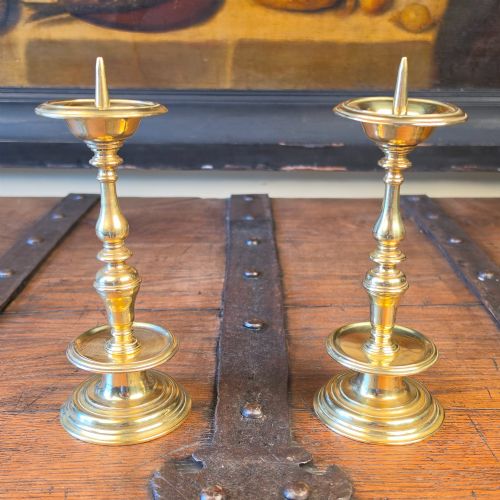
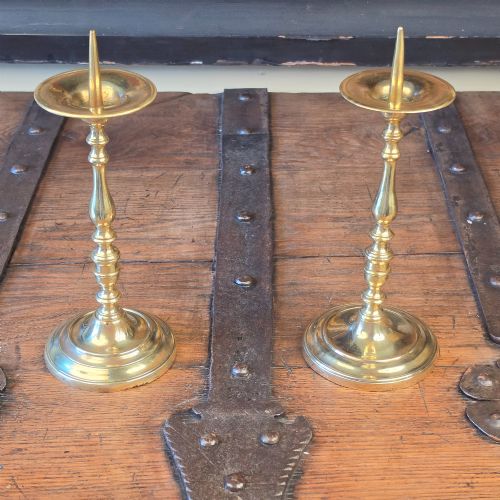
Church pricket candle stands are altar furnishings designed with central spikes to support large tapers, bringing monumental height and ecclesiastical presence into domestic interiors.
Church Pricket Candle Stands
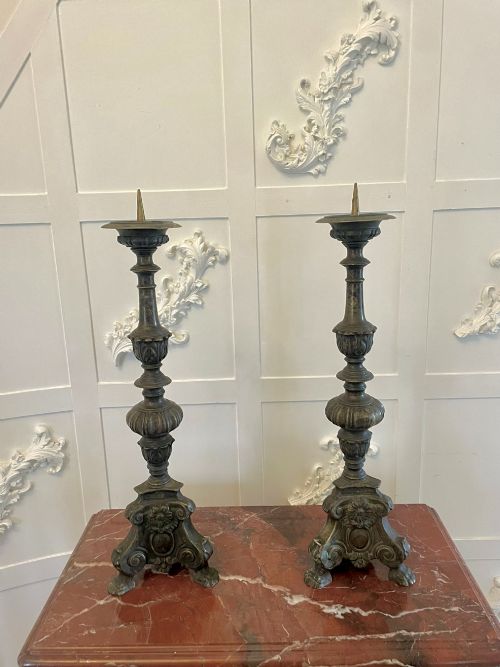
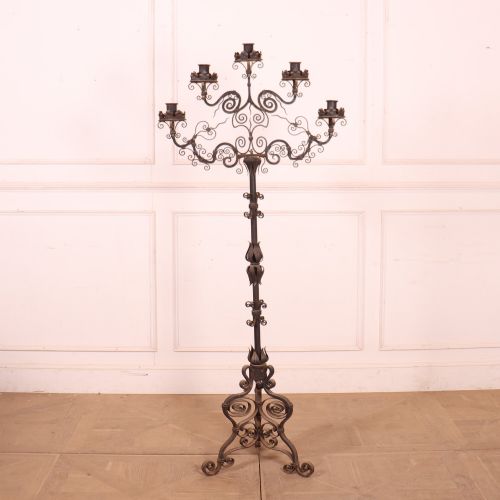
Church pricket candle stands emerge primarily from the nineteenth and eighteenth centuries, drawing on earlier seventeenth-century styles such as Baroque and Gothic Revival. These pieces take the form of tall floor-standing candelabras, altar sticks, and heavy table-standing supports.
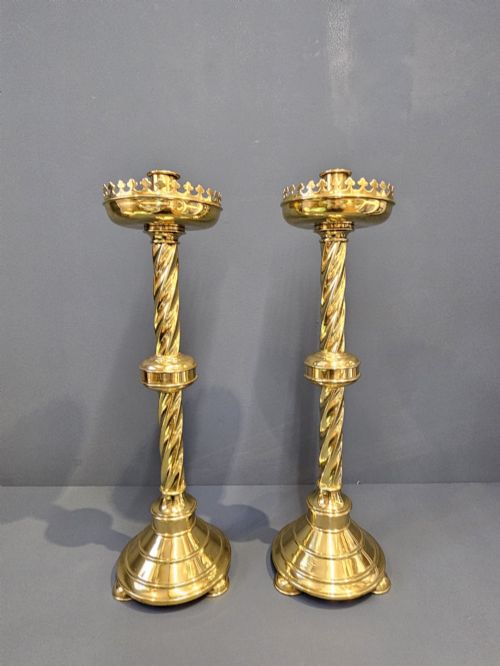
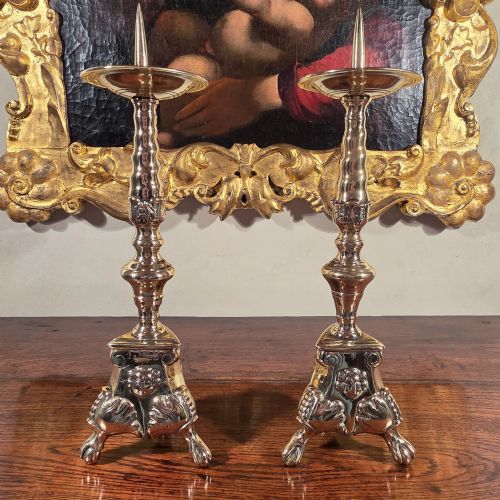
Continental workshops across Italy, France, and the Netherlands produced many of these items, alongside domestic British interpretations from the Victorian era. Buyers frequently encounter matched pairs in brass and carved wood, reflecting their original liturgical deployment on altars and in chancels.
Materials and Construction
Metal examples rely on cast brass, bronze, copper, and wrought iron, often worked to substantial weights for stability on stone floors. Wooden versions utilise carved pinewood, gesso, and timber frameworks finished with giltwood, silver leaf, or polychrome paint.
Joinery and casting techniques vary by period, with nineteenth-century pieces combining traditional foundry work with decorative surface finishes like burnished gold leaf over gesso. Amsterdam School items demonstrate distinctive early twentieth-century metalworking approaches that merge brass and iron elements.
Several stands show stubborn drops of centuries-old church wax still clinging stubbornly beneath their pricket spikes.
Proportion and Finish
Quality rests in the proportional balance of the turned or cast stem and the preservation of original surface treatments, whether patinated brass or aged giltwood. Superior examples retain their original pricket spikes and heavy weighted bases rather than later replacement parts.
The crispness of carved detail in wooden altar sticks and the weight of the metal castings separate robust examples from lighter decorative reproductions. Pieces displaying unified patination across matched pairs command greater interest from collectors.
The Church Pricket Candle Stands Glossary
- Pricket
- A metal spike set into the drip pan of a candlestick to hold a candle in place. This method predates socket candlesticks.
- Giltwood
- Timber coated with gold leaf or gold paint over a prepared gesso ground. It provides a luminous surface for liturgical furnishings.
- Torchere
- A tall ornamental stand originally designed to support a torch or large candle. These pieces function as prominent vertical accents.
- Altar-style
- Descriptive of objects built to stand on or near a church altar. They typically exhibit heavier proportions and more ornate decoration.
- Gesso
- A plaster-like mixture applied to wood as a base for painting or gilding. It allows for intricate moulded relief work.
Church Pricket Candle Stands: Frequently Asked Questions
What is a church pricket candle stand?
A church pricket candle stand is a tall holder featuring a vertical metal spike that impels the base of a large candle to keep it secure. These stands originated in ecclesiastical settings to illuminate altars and chancels.
Today, they serve as striking decorative objects in large rooms, retaining their solemn architectural character and historical presence.
How were these stands used originally?
In ecclesiastical environments, these pieces stood upon altars or directly on stone floors to provide ceremonial lighting during services. Their height ensured that candlelight projected across large sacred spaces.
In modern settings, they function effectively as freestanding sculptural lighting or decorative room accents without requiring active candles.
How do I clean antique brass pricket stands?
Antique brass benefits from gentle dusting with a dry cloth to preserve its accumulated historical patination. Aggressive metal polishes strip away the aged surfaces that collectors value.
For wooden or giltwood stands, avoid moisture entirely and use only a soft brush to clear dust from intricate carved crevices.
How do I date a church candle stand?
Dating relies on examining the materials, casting methods, and stylistic cues such as Gothic Revival or Baroque motifs. Nineteenth-century interpretations often echo seventeenth-century forms closely.
Tool marks on metal, the composition of the underlying gesso on wood, and wear patterns on the base provide further chronological evidence.