





Church Carving on Stand
Church carving on stand brings together ecclesiastical woodwork, altar candlesticks and liturgical reading desks mounted for display.
Church Carving on Stand
A church carving on stand spans functional ecclesiastical furnishings adapted for interior display, ranging from oak reading lecterns and prayer desks to Italian giltwood pricket candlesticks and French missal stands.
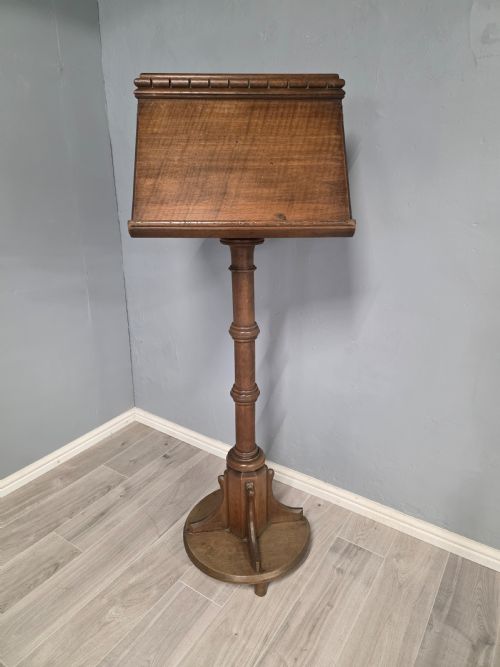
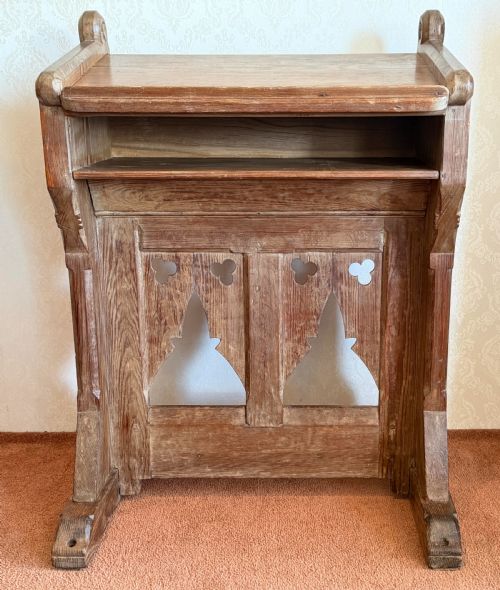
The pieces appearing on this page lean heavily towards nineteenth-century Gothic Revival oak lecterns alongside eighteenth-century baroque candle holders mounted on stands.
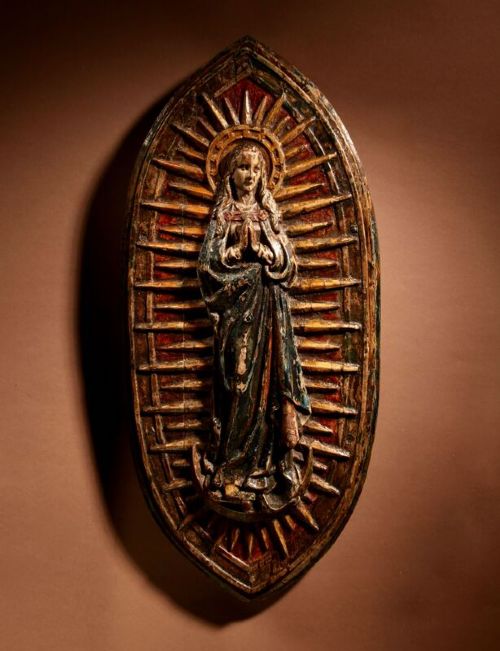
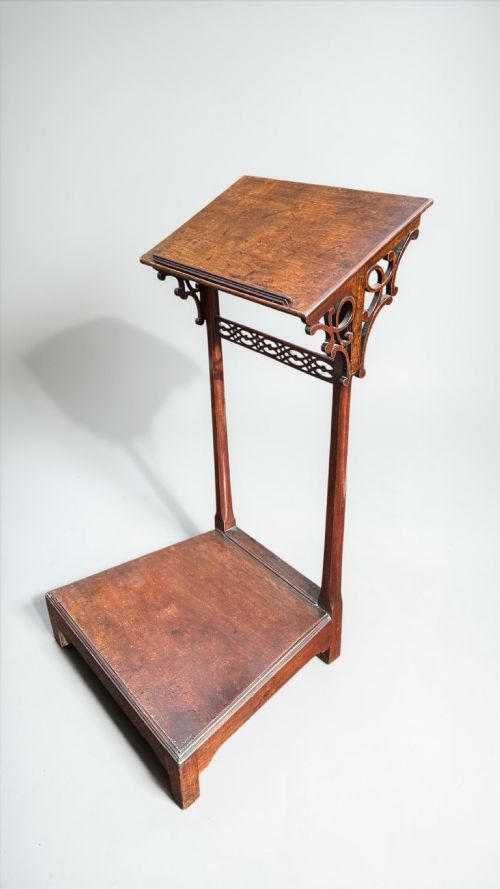
Forms include eagle desk stands, folding bible rests, prayer kneelers, and altarpiece fragments originating from English, French, and Italian religious contexts.
Materials and Technique
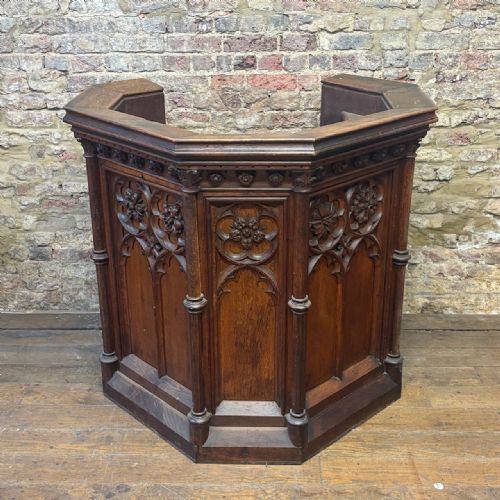
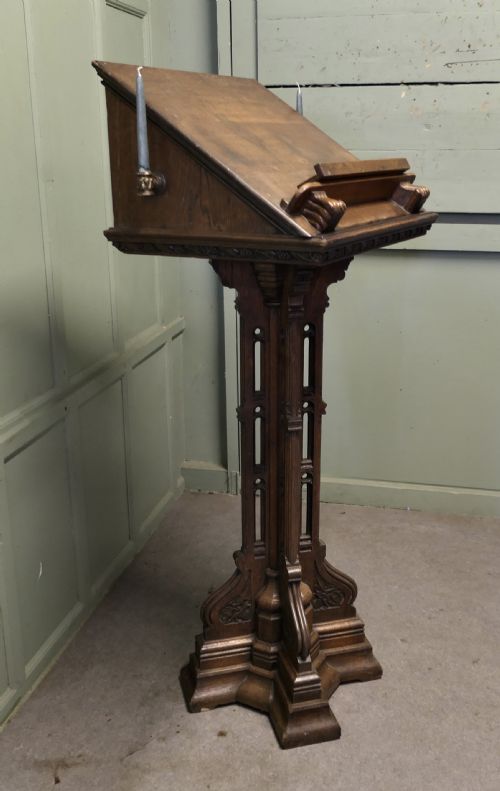
Carved oak forms the structural core for most desks, pulpits, and lecterns, shaped with hand chisels in both plain timber and heavily articulated Gothic Revival styles.
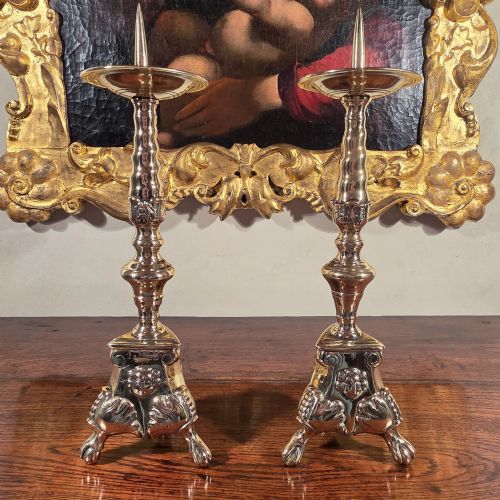
Giltwood, gesso, and gold leaf finish many of the Italian and French candle holders, providing reflective surfaces designed for candlelight within dim sanctuaries.
Secondary elements incorporate brass hardware and iron fittings to secure folding book rests, adjustable reading stands, and structural joints.
Several eighteenth-century eagle lecterns feature outstretched wings wide enough to command an entire sanctuary.
Distinctions in Execution
Depth and crispness of the hand carving separate mass-produced nineteenth-century ecclesiastical catalogue pieces from deeply articulated seventeenth and eighteenth-century sculptural work.
The integrity of original gilded or polychrome surfaces dictates the finish quality, distinguishing untouched historic patination from later overpainting or stripped timber.
Architectural proportion and structural stability on the mounting stand determine whether a liturgical fragment retains its intended presence as a decorative object.
The Church Carving on Stand Glossary
- Pricket candlestick
- A candle holder featuring a central metal spike to secure a large wax taper rather than a socket. These sit atop altar-style candle-holders.
- Prie-dieu
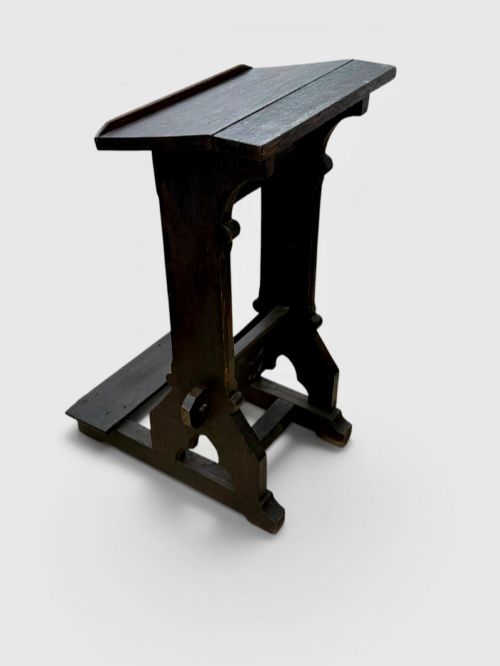
- A prayer desk designed for kneeling during devotions, typically fitted with an inclined shelf for a prayer book and a padded kneeler.
- Missal stand
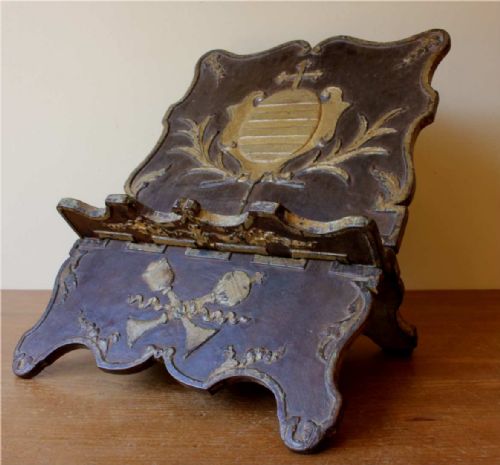
- A folding wooden rest or desk used to hold service books on an altar or pulpit. Examples frequently incorporate adjustable struts.
- Giltwood
- Timber coated with gold leaf over a prepared gesso and bole ground. This technique creates a luminous surface common on baroque altar fittings.
- Gothic Revival
- An architectural and decorative style prevalent during the Victorian era. It revives medieval pointed arches, tracery, and heavy oak construction.
Church Carving on Stand: Frequently Asked Questions
What is a church carving on stand?
These items comprise ecclesiastical timberwork, reading lecterns, and altar candlesticks mounted for interior display rather than active church use.
They reflect centuries of liturgical design, utilising oak, pine, and giltwood to support sacred books or illuminate spaces.
How were these pieces used originally?
Lecterns and reading desks held heavy missals and bibles for clergy during services, while pricket sticks illuminated altars with thick wax tapers.
Pdf-sized prayer desks and kneelers served individual private devotion within chapels or domestic religious rooms.
How do I identify Gothic Revival pieces?
Victorian Gothic Revival works display pointed arches, quatrefoil tracery, and robust oak construction modelled closely on medieval church architecture.
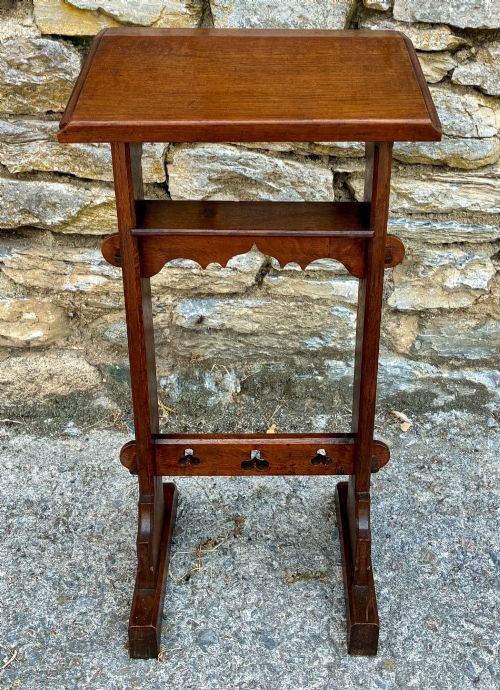
They often appear alongside Arts and Crafts reception desks and simpler nineteenth-century utilitarian church furnishings.
Are these objects suitable for modern homes?
Their substantial forms and carved wooden details make them well-suited as focal reading stands, display podiums, or decorative lamp bases.
They integrate into interiors by combining historic patination with practical surfaces for books, menus, or reception halls.