



Chippendale Sofa
A chippendale sofa brings architectural proportion and carved timber frames to a formal interior, uniting eighteenth-century heritage with later revival craftsmanship.
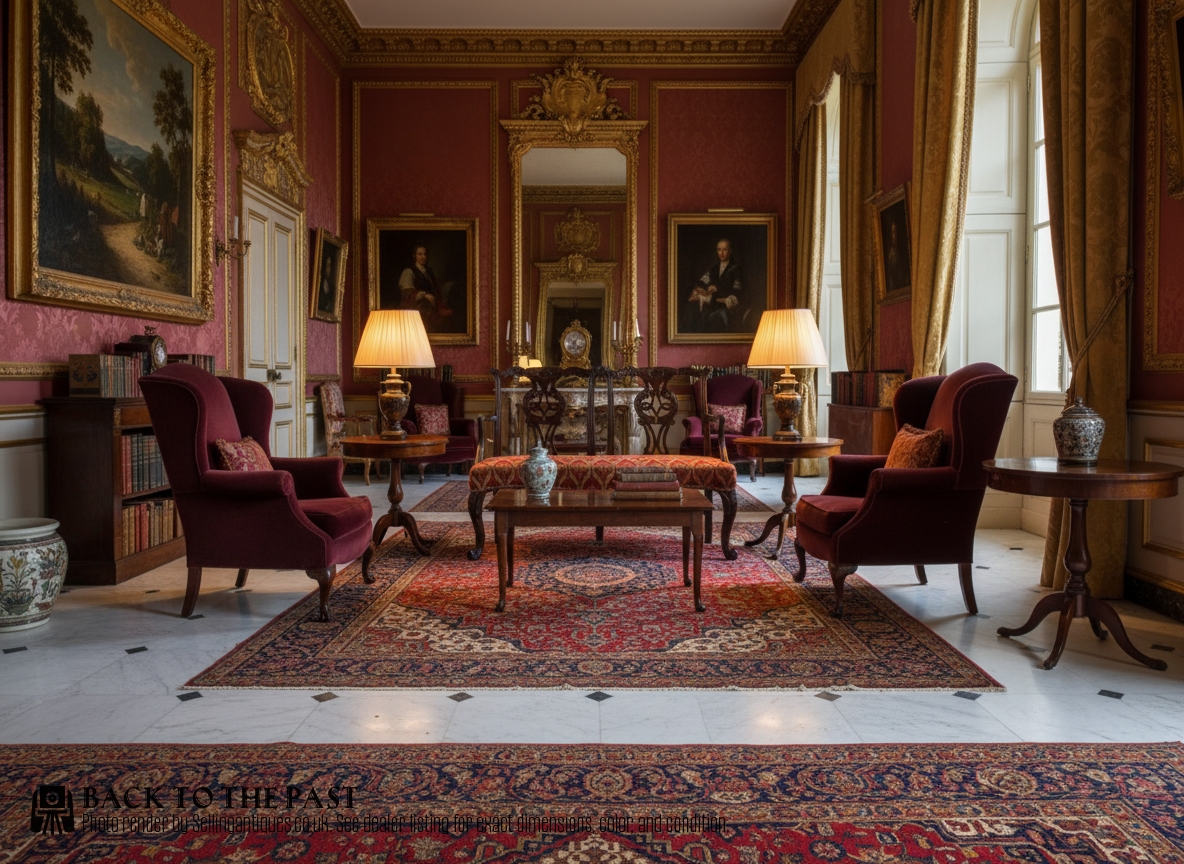
Chippendale Sofa
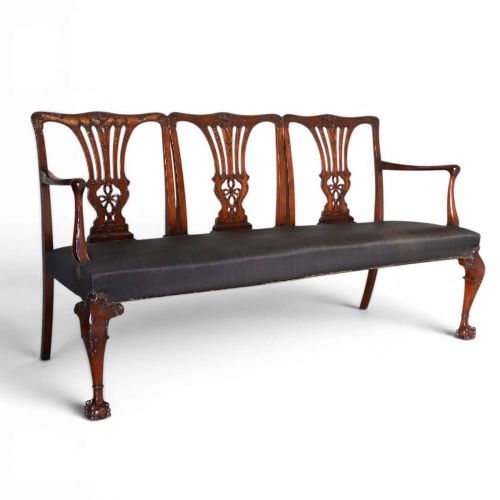
When you search for a chippendale sofa, you encounter seating built across several centuries, ranging from eighteenth-century originals to nineteenth- and twentieth-century revivals. The listings here include camelback settees, triple chair-back forms, and large country house seating variants.
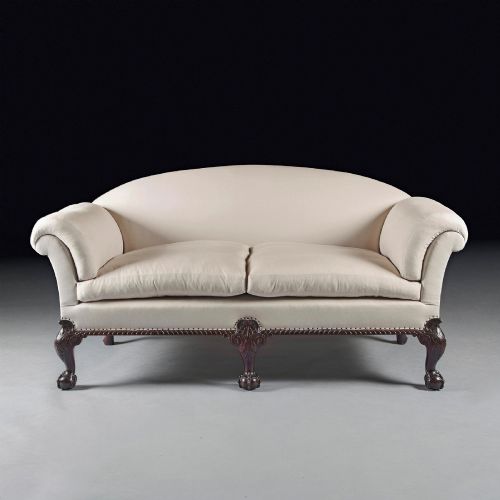
The most common form you will meet on this page is the Chippendale revival sofa, produced in large numbers during the Edwardian era and the late nineteenth century. These pieces interpret earlier Georgian proportions through the lens of later Victorian and Edwardian cabinet-making.
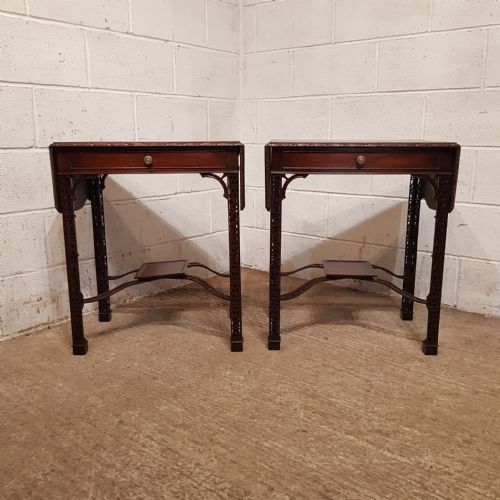
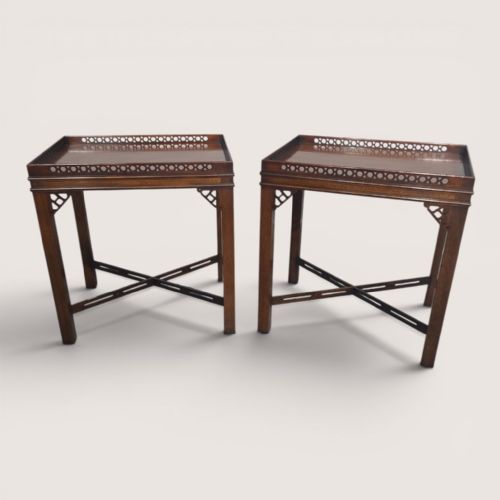
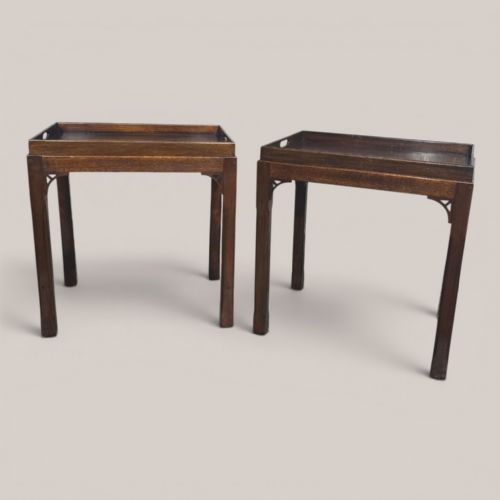
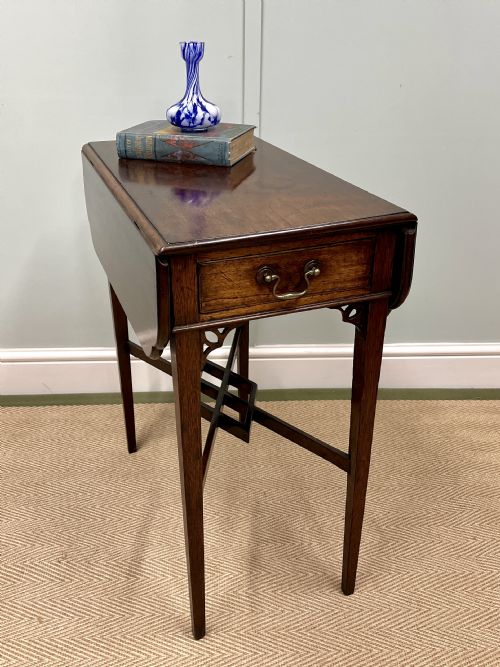
Makers and workshops constructed these settees using sturdy timber frames, often pairing serpentine fronts with distinct carved woodwork. Alongside standard sofas, the category occasionally encompasses chair-back seats and related companion items like side and lamp tables.
How They Were Made
Cabinet-makers relied heavily on solid mahogany for the primary structural frames and exposed woodwork, ensuring durability alongside a rich timber grain. Workshops supplemented this foundational wood with applied details such as brass fittings and occasional uses of gold leaf.
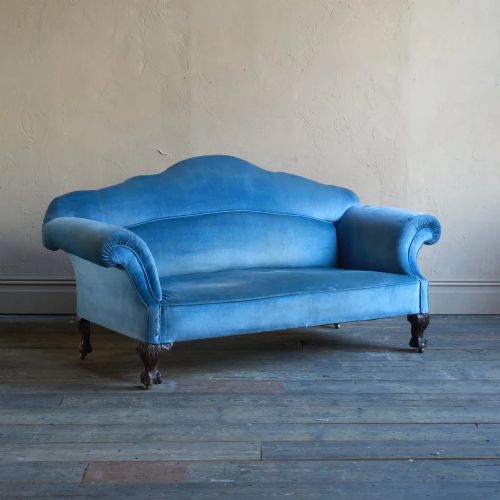
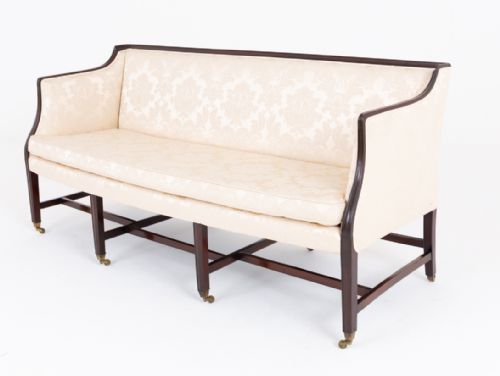
Upholstery techniques defined the comfort and profile of each settee, utilising traditional textiles including fabric, velvet, damask, and leather over sprung or padded foundations. Craftspeople shaped the silhouette through camelback curves, serpentine front rails, and meticulous hand-carved elements.
What Varies in Quality
Quality rests in the crispness and depth of the hand-carved woodwork, distinguishing sharply defined ball and claw feet or pierced splats from softer, machine-milled imitations. The integrity of the timber frame dictates longevity, separating robustly joined foundational structures from compromised or overly repaired joints.
The choice of covering material and the fidelity of the period proportions also dictate the upper tier of the market. Pieces retaining balanced camelback profiles and high-grade textiles like damask or leather demonstrate superior workshop origins compared to utilitarian adaptations.
Howard and Sons·Butlers of Dublin·J. S. Kinsey
The Chippendale Sofa Glossary
- Chippendale Style
- A decorative design vocabulary drawn from the pattern books of Thomas Chippendale, featuring distinct Gothic, Chinese, and French Rococo influences. It guides the carved mahogany details seen on revival seating.
- Camelback
- A sofa back featuring a graceful, continuous upward curve resembling the hump of a camel. This profile provides architectural tension to the upholstery line.
- Chair-Back Settee
- A form of seating where the back is constructed as a series of joined chair frames, often featuring pierced splats and wooden top rails. It mimics the look of several dining chairs arranged contiguously.
- Serpentine
- A curved line that undulates outward in the centre and recesses inward toward the ends, frequently seen along the front rail of a settee. This shaping softens rectangular timber volumes.
- Ball and Claw
- A furniture foot carved to represent a bird's talon clutching a spherical ball. It appears frequently on the cabriole legs of eighteenth-century and revival pieces.
Chippendale Sofa: Frequently Asked Questions
How do I identify a revival piece?
Revival pieces date primarily from the late nineteenth and early twentieth centuries rather than the eighteenth century. They adopt historical Georgian proportions while utilising manufacturing methods typical of the Victorian and Edwardian eras.
Examining the interior timber and the wear patterns helps distinguish an original period piece from a later copy. Most examples on the market belong to these later revival periods.
Where were these settees used?
These settees served as principal seating furniture in formal drawing rooms, libraries, and grand country houses. Their substantial timber frames and upholstered surfaces provided both comfort and a display of household status.
Smaller variants also functioned as window seats or end-of-bed furnishings. Their versatile forms allowed them to anchor diverse domestic interiors.
How do I care for mahogany frames?
Mahogany frames require minimal intervention, benefiting chiefly from regular dusting with a dry, soft cloth. Avoiding direct sunlight and extreme humidity changes protects the wood and the underlying structure from warping.
Applying wax polish occasionally helps preserve the natural lustre of the timber. Upholstery care should follow the specific requirements of the fabric or leather covering.