
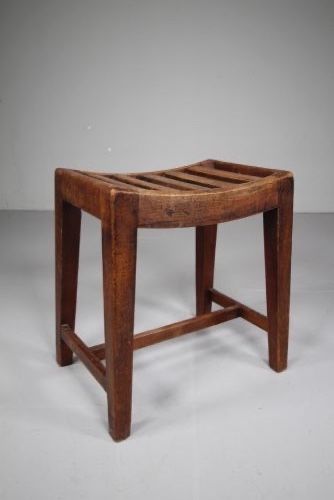


18th Century Mahogany Bench
An 18th century mahogany bench is a substantial seating form built from dense timbers that carry the distinctive grain and deep colour typical of the period.
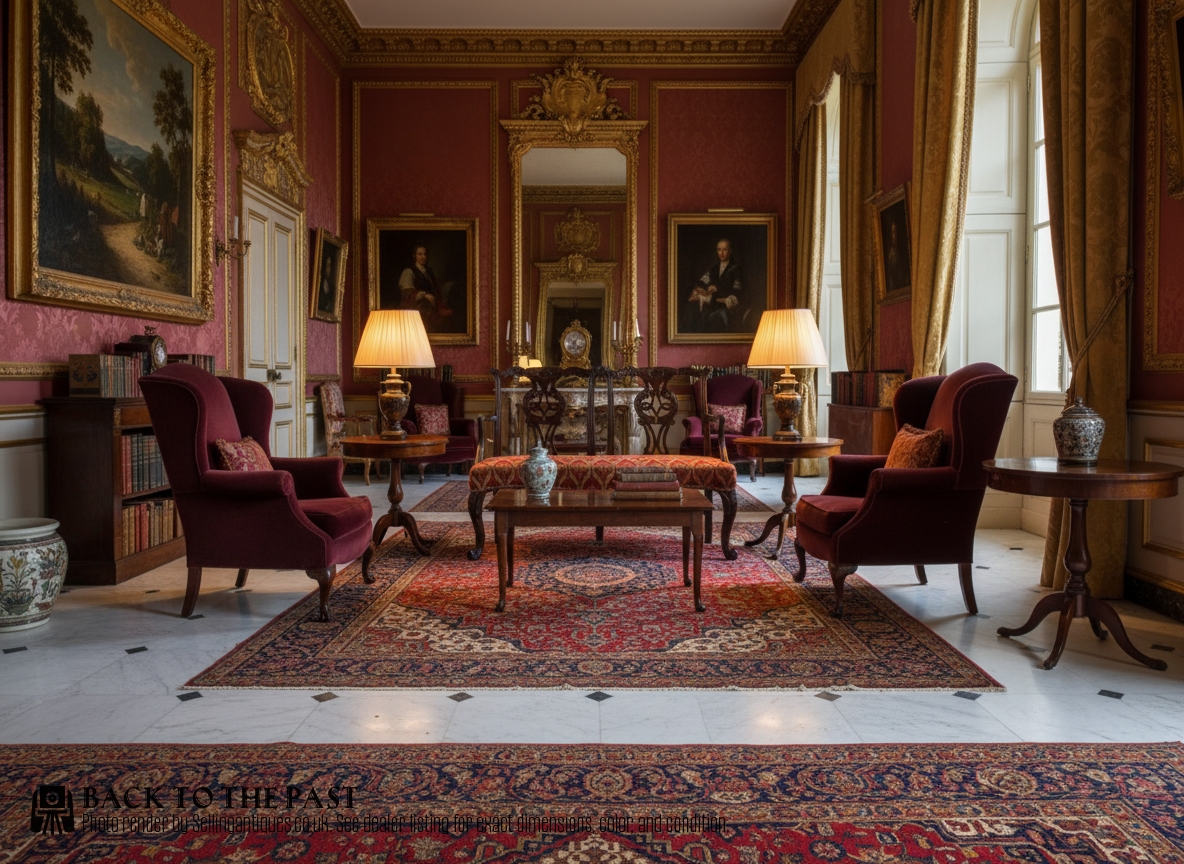
18th Century Mahogany Bench
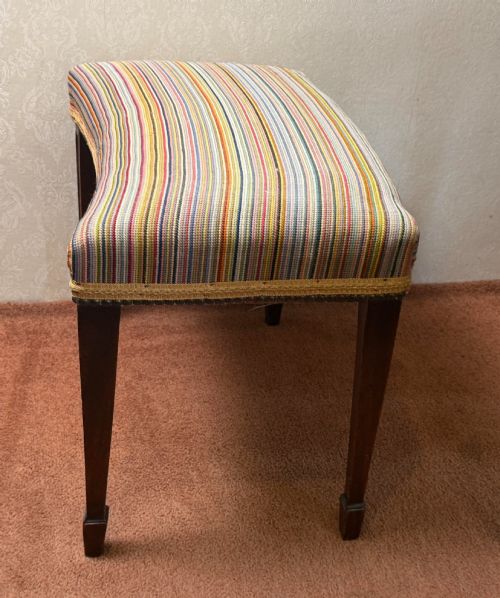
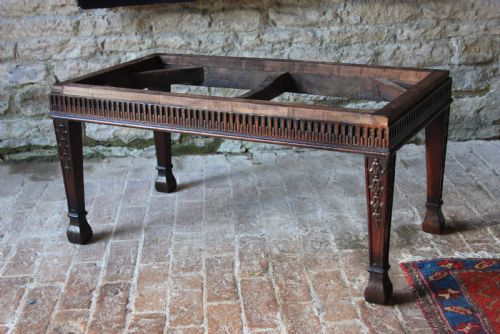
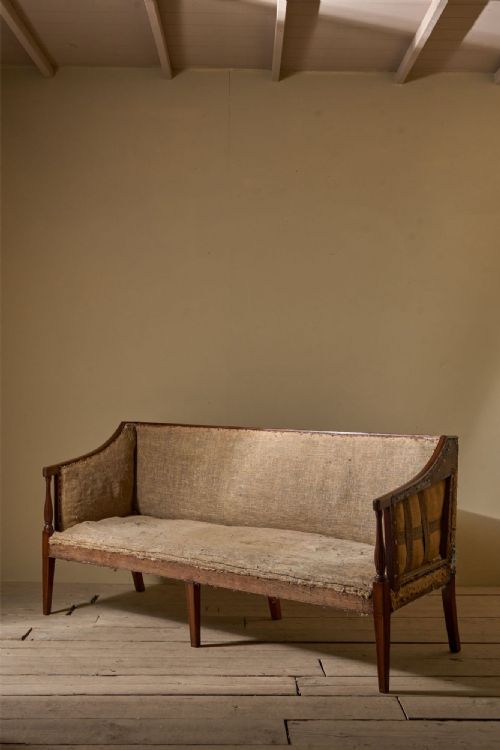
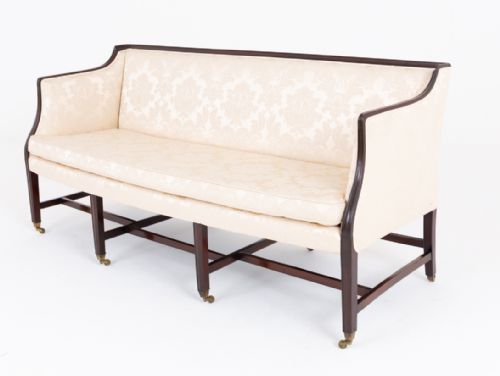
An 18th century mahogany bench encompasses a varied group of seating furniture, including large settees, window seats, and individual stools. The listings on this page span several forms such as long settees designed for multiple occupants and compact footstools or carriage stools intended for specific interior uses.
Georgian and George III examples dominate the selection, alongside items produced in the Adam or Chippendale styles. Makers applied these distinct stylistic vocabularies to forms ranging from triple-back settees down to small, low footrests.
Origin details in the evidence point to English and Irish workshops working across the eighteenth century, with occasional nineteenth-century interpretations built in earlier styles.
How they were made
The primary material across the pieces is mahogany, often shaped into structural frames, cabriole legs, or square tapering supports. Secondary woods provide internal framing where visible.
Upholstery relies on a variety of fabrics including damask, hessian, textile, and tweed, secured with brass fixings to support the functional role of seats, settees, and footrests.
One listed item doubles as a carriage stool and fireside rest, ready for travel or staying put.
What varies in quality
The sophistication of carved decoration dictates much of the distinction between simpler vernacular items and higher-status seating. Elements such as shaped and slatted frames or well-drawn proportions show greater attention to design in the workshop.
The handling of structural elements like cabriole legs or square tapering supports reveals the skill of the maker in balancing weight against elegance in heavy mahogany timber.
I.M. Gillows of Lancaster
The 18th Century Mahogany Bench Glossary
- Cabriole leg
- A furniture leg that curves outward at the knee and tapers inward toward the foot, inspired by animal limbs. This form appears frequently on eighteenth-century seating.
- Damask
- A reversible figured fabric traditionally woven with patterns visible on both sides. It frequently appears as upholstery on formal period settees.
- Hessian
- A coarse woven fabric typically utilised as underlying support in traditional upholstery work. It provides a durable base beneath decorative top covers.
- Window seat
- A long, narrow form of stool designed to fit into the recess of a domestic window. These pieces often feature upholstered tops and refined leg joinery.
18th Century Mahogany Bench: Frequently Asked Questions
What is an 18th century mahogany bench used for?
These forms served various domestic functions ranging from grand room seating on large settees to fireside rests and footstools. Their robust mahogany construction supported daily use in halls, drawing rooms, and bedrooms.
Shorter stool variations often functioned as window seats or bed foot stands, accommodating the specific architectural layouts of period interiors.
How can I tell a Georgian piece from a later style?
Georgian and George III pieces rely on period-specific design vocabulary such as Chippendale carving, Hepplewhite lines, or Adam neoclassical motifs. The integration of solid mahogany framing and traditional upholstery materials helps distinguish them.
Later interpretations built in the nineteenth century often replicate George II or George III styles while exhibiting different secondary woods and construction methods.
What fabrics are used on these benches?
Upholstered examples utilise traditional textiles including damask, tweed, and general upholstery fabric. These are frequently secured with brass elements to complete the edges.
Plain wooden slats or carved mahogany surfaces appear on un-upholstered forms like slatted stools and hall benches.
Where were these pieces made?
The available examples originate from English and Irish workshops operating during the eighteenth and nineteenth centuries. Regional centres produced distinct variations in leg forms and carving depth.
Maker attribution occasionally connects specific pieces to established workshops such as those in Lancaster.