




Chippendale China Cabinet
A chippendale china cabinet brings architectural mahogany framing and delicate glass display to a room, offering a disciplined way to showcase porcelain.
Chippendale China Cabinet
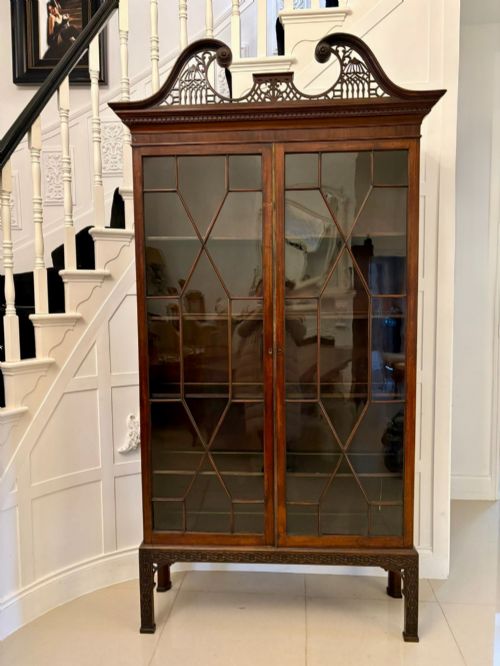
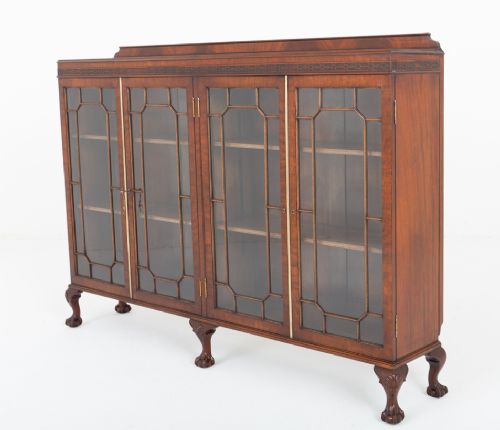
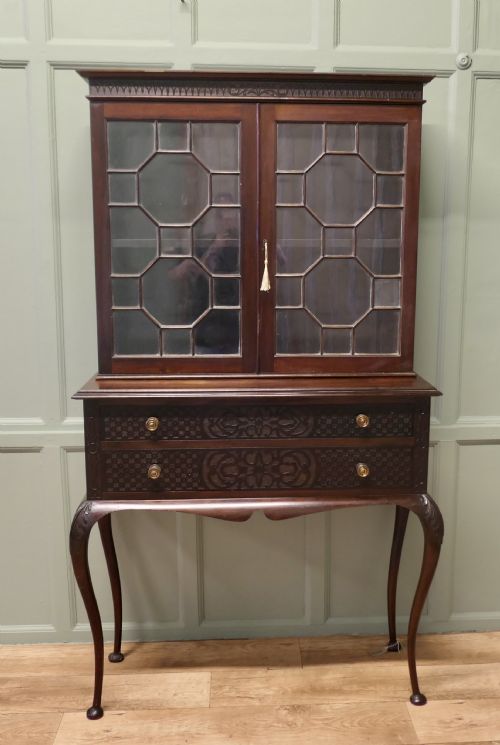
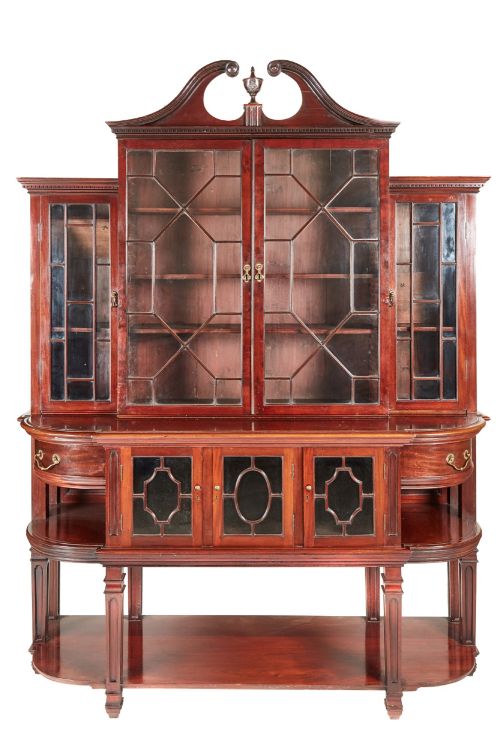
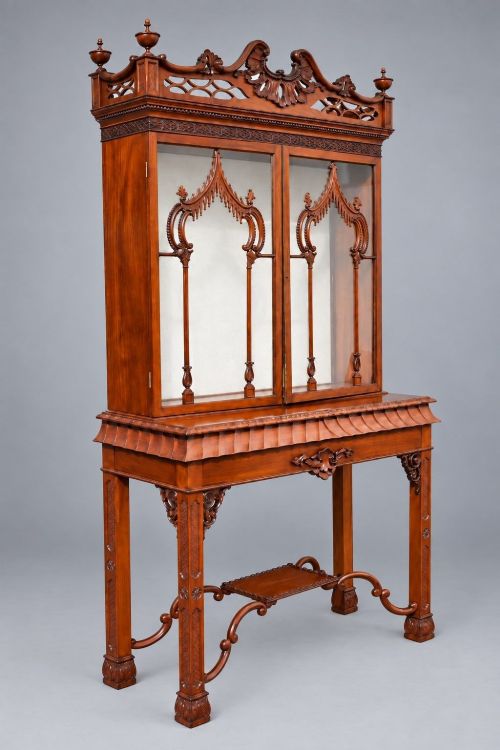
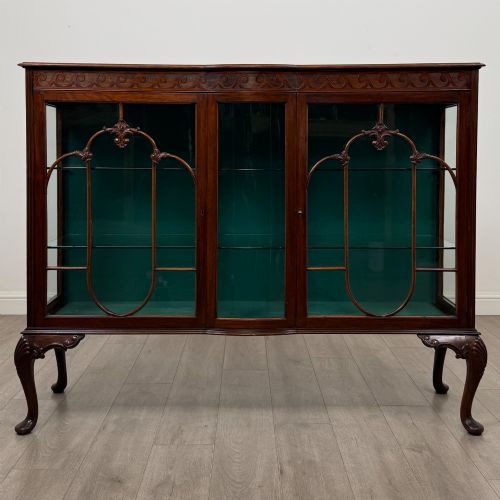
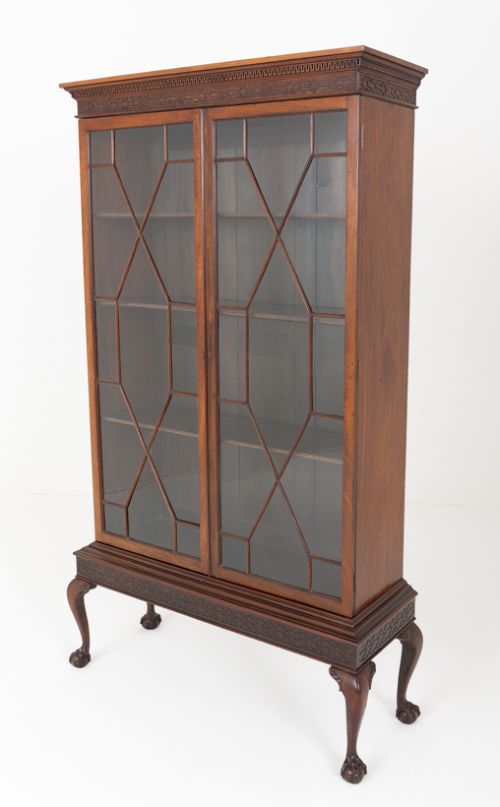
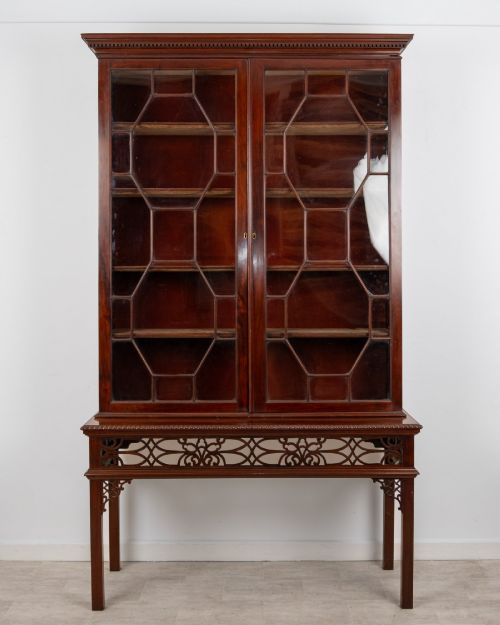
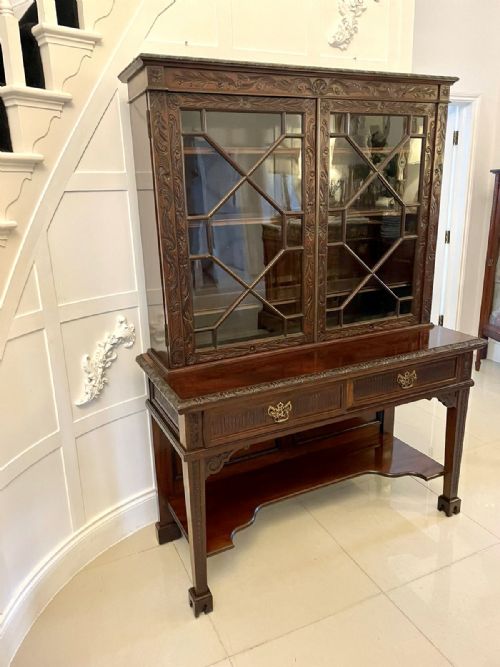
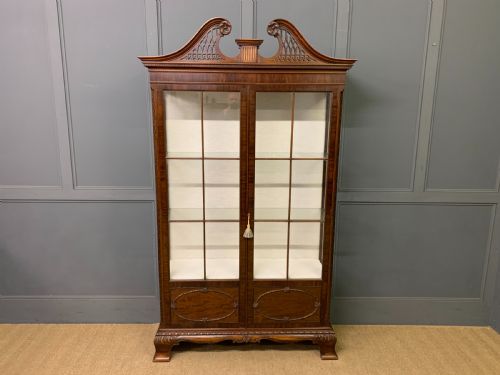
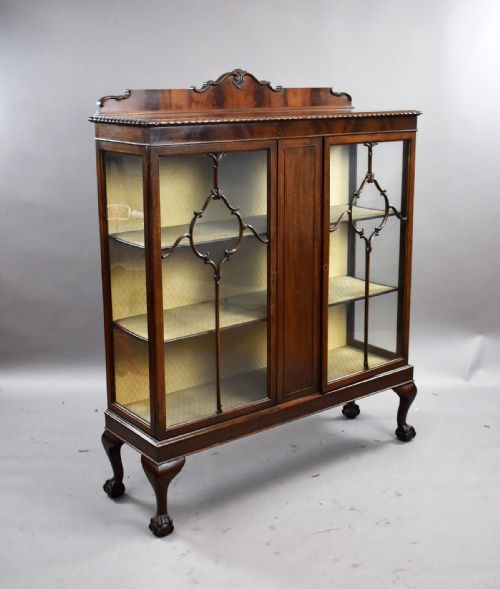
When searching for a chippendale china cabinet, a buyer looks at tall display pieces, breakfront bookcases, and cabinets on stands designed to show porcelain and books. These forms span the Georgian period, the Victorian era, and later Edwardian revivals up to the twentieth century.
The most common examples met on this page are revival pieces from the late nineteenth and early twentieth centuries, constructed in mahogany with glazed doors and stylistic nods to eighteenth-century models.
How they were made
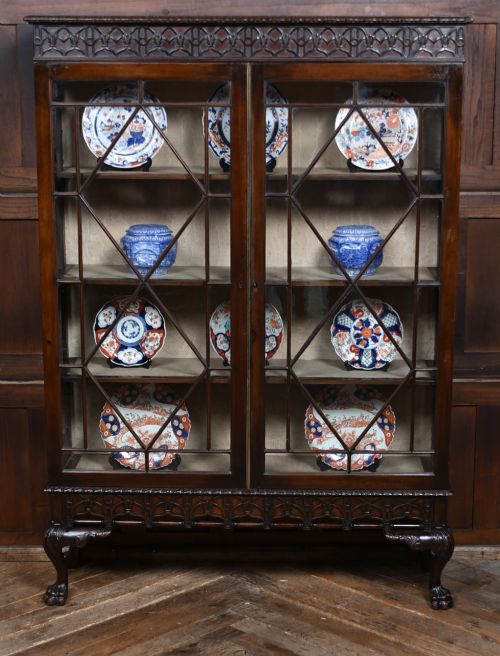
Cabinet makers relied primarily on mahogany timber, sometimes accented with satinwood or oak internals, joined with traditional cabinet-making techniques. Glass panes are set within astragal bars, and brass hardware secures doors and drawers.
Carving defines the ornamentation, ranging from subtle moulded cornices to elaborate Chinese Chippendale fretwork and pierced galleries. Surfaces receive polish or paint finishes that accentuate the grain of the wood.
Several cabinets spent their youth guarding porcelain cups before retiring to hold modern paperback collections.
What varies in quality
The distinction between ordinary and exceptional cabinets lies in the crispness of the timber carving and the architectural proportion of the glazing bars. Superior pieces display thoughtful grain matching across large surfaces and meticulous joinery that withstands centuries of climate shift.
Lesser items rely on cast composition ornaments rather than hand-carved mahogany, showing mechanical uniformity where individuality should reside. The weight and clarity of the glass and the stability of the stand further separate standard production from master workshops.
James Winter & Sons·Edwards & Roberts·Warings
The Chippendale China Cabinet Glossary
- Astragal
- Moulding used to hold glass panes in place within a door frame. These narrow wooden divisions create geometric patterns across display cabinets.
- Breakfront
- A piece of furniture where the central section projects forward from the flanking wings. This architectural arrangement adds depth and formal presence.
- Chinoiserie
- European interpretation of Chinese decorative motifs, popular in Chinese Chippendale furniture. It incorporates fretwork, pagodas, and asymmetrical detailing.
- Demi-lune
- Half-moon shape used for the footprint of specific console and cabinet designs. This curved form fits neatly against flat walls.
- Satinwood
- A lustrous yellow timber utilised for inlay and banding on premium cabinets. It provides a bright contrast against darker mahogany.
Chippendale China Cabinet: Frequently Asked Questions
How do I date a Chippendale cabinet?
Dating relies on timber characteristics, construction methods, and hardware style. Georgian originals show eighteenth-century joinery marks, whereas revival pieces from the Victorian and Edwardian eras utilise machine-sawn framing components.
Secondary woods inside drawers also help determine age. Oak or pine linings point toward specific manufacturing decades rather than eighteenth-century origins.
Where should I place a cabinet?
These cabinets require stable interior environments away from direct sunlight and strong heat sources. Mahogany timbers react poorly to sudden humidity shifts, which can warp doors or crack glass settings.
Positioning them against interior walls protects the structural joinery and ensures the heavy glass doors remain properly aligned on their hinges.
How are breakfront cabinets different?
Breakfront cabinets feature a projecting central section that creates visual depth and breaks up a flat wall line. Standard display cabinets usually maintain a flat or curved front without this stepped architectural facade.
This layout allowed cabinet makers to create grander proportions suited for large dining rooms and formal libraries.