



Georgian Style Display Case
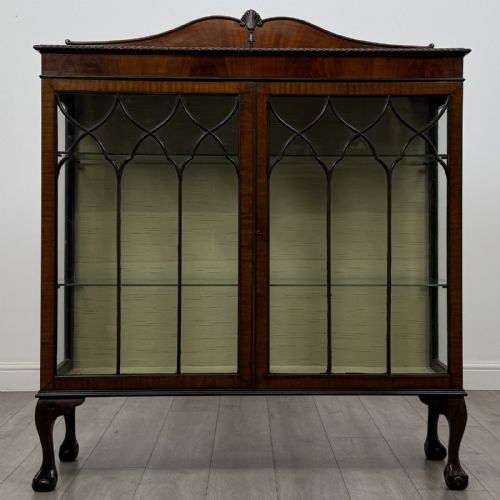
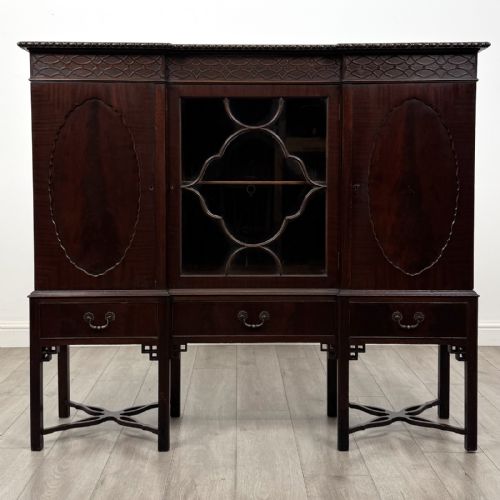
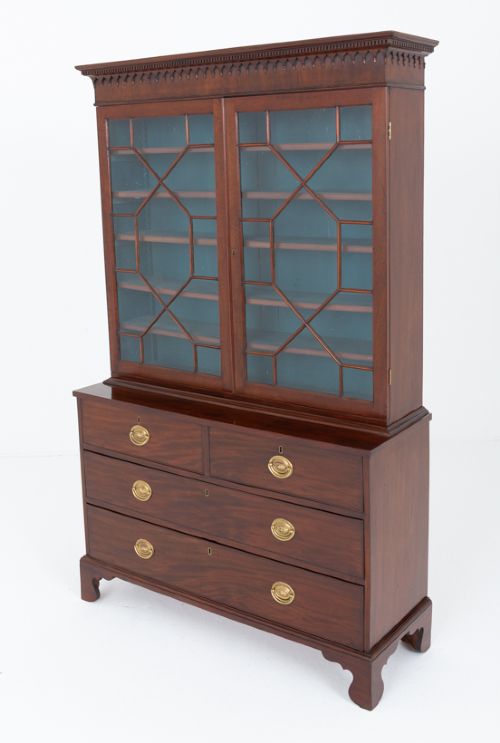
These georgian style display case pieces combine classic proportions with glass panels to show off collections safely.
Georgian Style Display Case
Most examples on this page date from later revival periods such as the Edwardian era and the early twentieth century. These pieces often feature mahogany timbers, brass hardware, and dedicated shelving designed for showing ceramics or glassware.
How they were made
Makers built these cabinets using solid wood and veneers, predominantly mahogany, alongside supporting elements of oak and walnut. Glass panels were glazed into wooden doors to protect contents while maintaining visibility from multiple angles.
Decorative surface work relied on satinwood inlay and fine brass fittings. Carved details such as claw feet or Chinese Chippendale motifs appear across several revival pieces.
Georgian Style Display Case Retail Price Guide 2026
Typical asking prices for georgian style display case among the pieces listed under this phrase on Sellingantiques today, from the lower quarter to the upper quarter. They describe what is for sale here now, not the wider market.
Listings span multiple decades, incorporating Edwardian Edwardian, Georgian, and various twentieth-century revival periods alongside classical mahogany and satinwood inlay materials.
What varies in quality
Quality separates cabinets by the crispness of their carving and the selection of figured timber veneers. Superior examples display balanced proportions, precise inlay work, and robust internal shelving.
Construction methods also dictate grade, where tight joinery and original glass panes elevate a piece above standard mass-produced revival furniture.
The Georgian Style Display Case Glossary
- Breakfront
- A cabinet design where the central section projects forward from the flanking wings. This architectural layout creates visual depth in large bookcases.
- Chippendale Style
- Furniture influenced by the designs of Thomas Chippendale, featuring carved details and classical motifs. Pieces often incorporate ball-and-claw feet or intricate fretwork.
- Bijouterie Cabinet
- A glazed display table or cabinet designed specifically for small valuables and trinkets. These items often feature velvet-lined interiors to protect delicate objects.
- Sheraton Revival
- A late nineteenth or early twentieth-century style emulating the neoclassical designs of George Sheraton. It typically utilises satinwood inlay and symmetrical geometry.
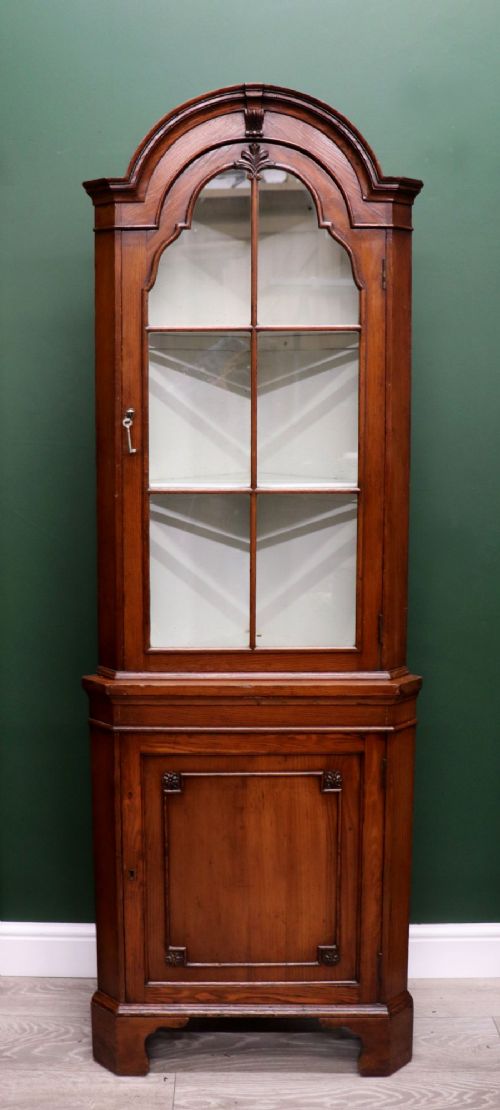
- Corner Cabinet
- A specialised storage unit constructed with an angled back to fit directly into room corners. These units maximise floor space while offering display shelving.
Georgian Style Display Case: Frequently Asked Questions
Where should I place a corner cabinet?
Corner cabinets suit empty room angles where standard rectangular furniture creates awkward gaps. They utilise vertical space efficiently without dominating the floor plan.
Position them away from direct sunlight to protect internal collections and polished wood surfaces from fading.
How do I identify a revival piece?
Revival pieces combine eighteenth-century stylistic motifs with construction methods typical of the Victorian, Edwardian, or later twentieth-century eras. Look at the timber backing, screw types, and secondary woods to determine the actual manufacturing date.
Many listings on this page date from these later revival periods while emulating earlier Georgian aesthetics.
How do I care for mahogany cabinetry?
Maintain mahogany surfaces by dusting regularly with a dry cloth and avoiding silicone-based polishes. Keep the timber away from direct heat sources and sudden humidity changes to prevent wood splitting.
Inspect brass hardware and glass glazing periodically to ensure structural stability.