




Chippendale Revival Bookcase
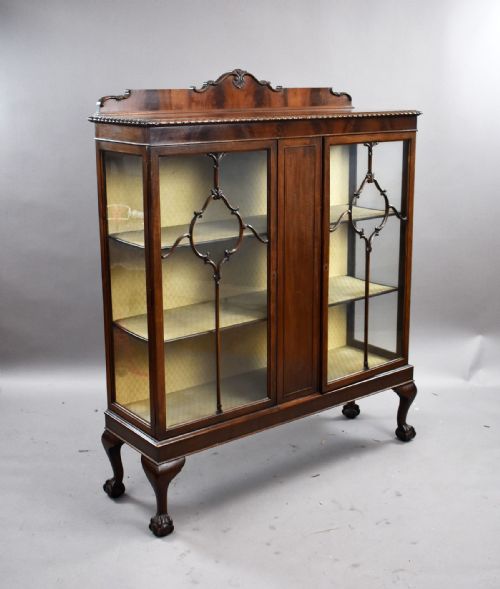
A chippendale revival bookcase brings grand eighteenth-century proportions and carved fretwork into later domestic spaces using rich mahogany.
Chippendale Revival Bookcase
A chippendale revival bookcase draws on eighteenth-century design vocabulary, emerging through the nineteenth century and into the edwardian period as cabinetmakers reinterpreted classical forms for contemporary homes.
The pieces appearing most frequently span late-nineteenth-century iterations, edwardian examples, and early-twentieth-century workshop productions in solid mahogany and veneers.
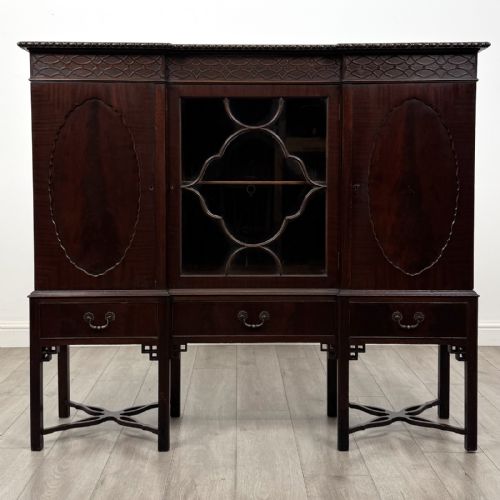
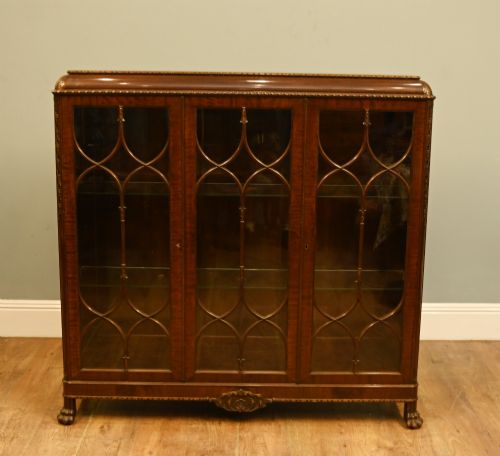
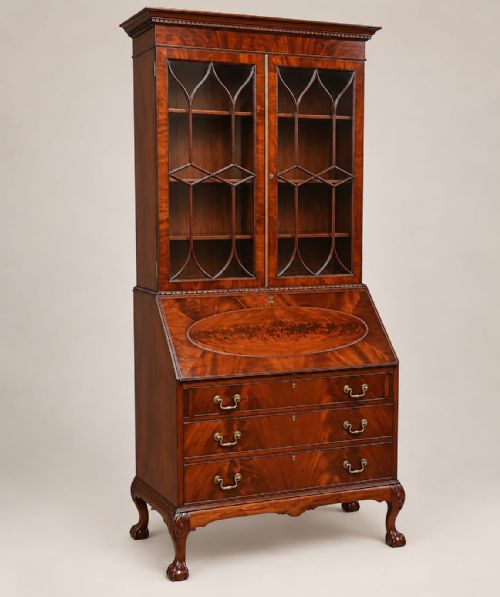
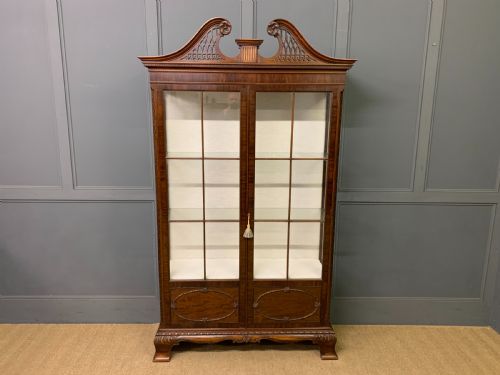
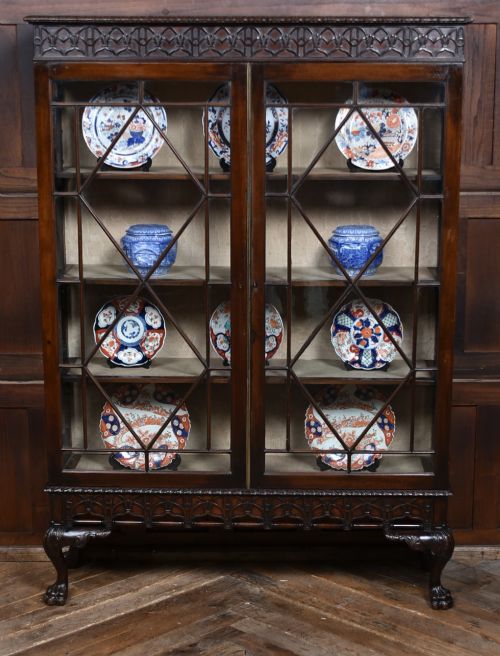
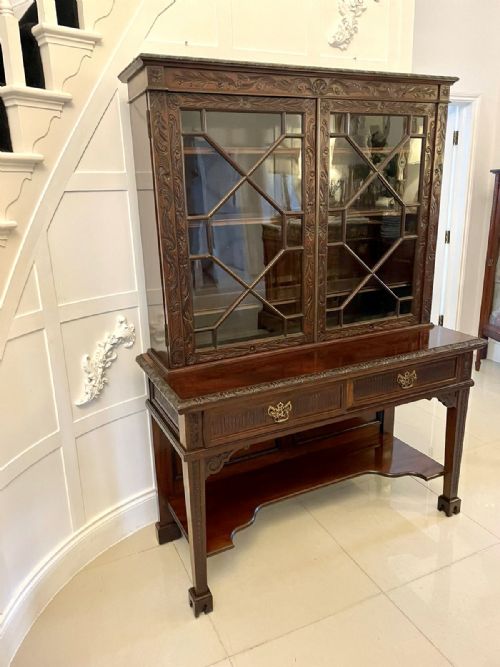
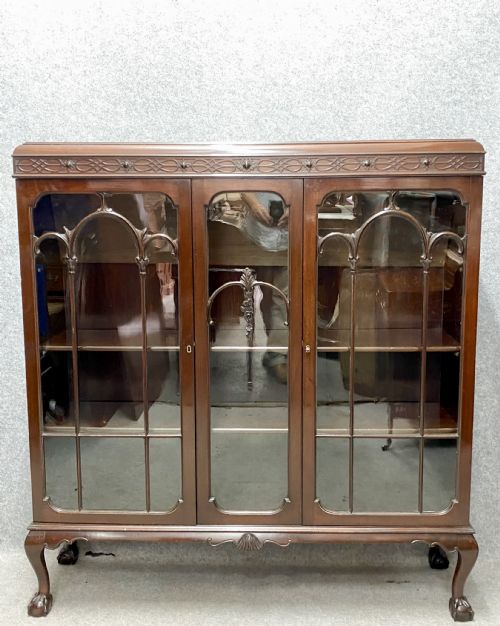
Formats range from tall breakfront bookcases and bureau bookcases with fitted writing slopes to glazed display cabinets and smaller cabinets on stands designed to showcase collections.
Materials and construction
Cabinetmakers relied heavily on mahogany, selecting dense timber for structural frames and figured veneers for drawer fronts and panel surfaces.
Glazing typically involves delicate wooden astragal bars forming geometric or Gothic-inspired lattices, enclosing display spaces fitted with adjustable wooden shelves.
Carved ornament such as blind fretwork, ribbon motifs, and acanthus leaves is executed directly into the solid mahogany framing or applied as separate carved mouldings.
Chippendale Revival Bookcase Retail Price Guide 2026
Typical asking prices for chippendale revival bookcase among the pieces listed under this phrase on Sellingantiques today, from the lower quarter to the upper quarter. They describe what is for sale here now, not the wider market.
Listings demonstrate a strong representation of late nineteenth-century and Edwardian pieces, dominated by mahogany construction and glazed display formats.
Judging execution and finish
Quality rests on the crispness of the carved details and the architectural integrity of the overall form, distinguishing workshop pieces from mass-produced furniture.
The selection of timber grain on primary surfaces and the precision of the glazed astragal joints reveal the care taken by the original cabinetmaker.
Internal elements such as oak drawer linings, original brass hardware, and fine locking mechanisms indicate a higher standard of production.
James Winter and Sons·Edwards and Roberts·Warings·Waring and Gillows·Maple and Co
The Chippendale Revival Bookcase Glossary
- Astragal glazed
- A method of framing glass panels with narrow moulded wooden bars that divide the door into distinct geometric panes. This technique creates a lighter visual appearance on large bookcase doors.
- Breakfront
- A cabinet design where the central section projects forward from the flanking wings. This architectural arrangement adds depth and shadow to large library bookcases.
- Blind fretwork
- Carved ornamentation applied in low relief to a solid background, resembling Chinese or Gothic lattice patterns. It is frequently seen along the cornices and stiles of revival furniture.
- Bureau bookcase
- A combination form featuring a sloping fall-front desk compartment above lower shelving or drawers, surmounted by a glazed upper bookcase section.
- Cabinet on stand
- A freestanding display or storage cabinet elevated on a distinct supporting frame with legs. This configuration lifts the main body off the floor for a lighter silhouette.
Chippendale Revival Bookcase: Frequently Asked Questions
What is a chippendale revival bookcase?
These pieces are later nineteenth and early twentieth century furniture items inspired by the eighteenth-century designs associated with Thomas Chippendale. They adapt classical proportions, carved fretwork, and astragal glazing for Victorian and Edwardian interiors.
Cabinetmakers utilised solid mahogany and figured veneers to recreate the elegance of earlier library furniture while accommodating modern domestic storage needs.
How do I date a bookcase?
Dating relies on combining stylistic clues with construction methods, wood types, and secondary timbers used inside drawers and back panels. Edwardian examples often feature lighter framing and specific hardware compared to heavier late-Victorian pieces.
Makers' stamps, trade labels, or workshop signatures found on drawers can also narrow down the production era to a specific decade.
How were these bookcases used?
Original owners used them primarily in libraries, studies, and formal reception rooms to house leather-bound book collections and display porcelain or glassware. Bureau versions provided a private writing space alongside open shelving.
Today, they serve the same dual purpose of book storage and curated display within domestic living spaces.
How do I care for mahogany?
Mahogany benefits from stable room humidity and protection from direct sunlight to prevent the rich reddish-brown wood from fading or drying out. Gentle dusting with a dry, soft cloth preserves the polished surface without building up residue.
Applying occasional specialist wax feeds the timber and maintains the natural lustre of the polished finish.