


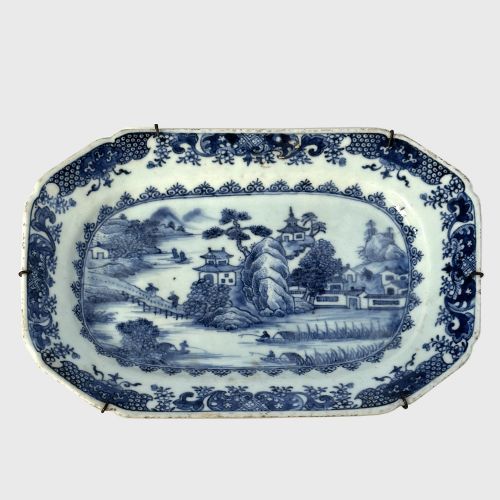
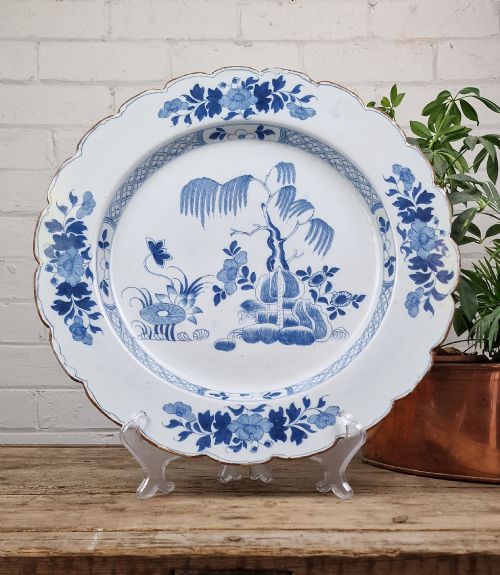


Chinoiserie Wall Platter
A chinoiserie wall platter brings together European forms and painted East Asian motifs from centuries past.

Chinoiserie Wall Platter
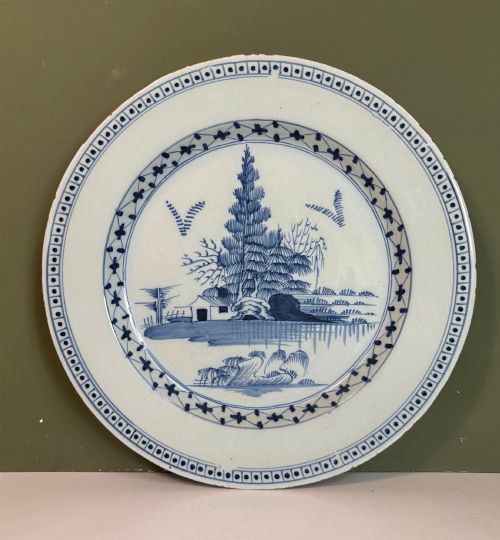
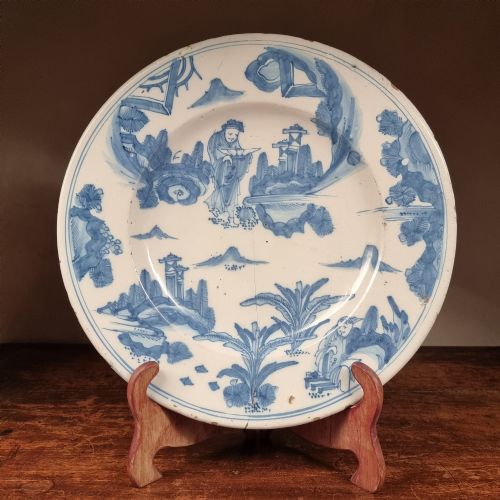
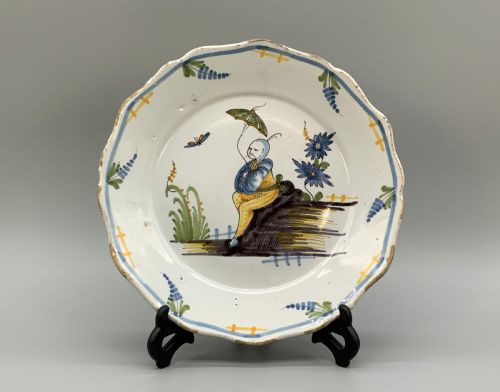
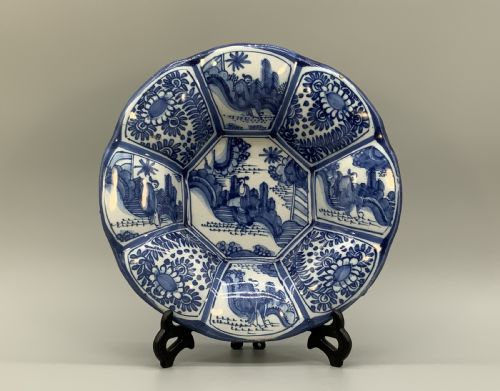
When you search for a chinoiserie wall platter, you encounter large decorative plates and chargers intended for display on walls or sideboards. The selection spans the seventeenth, eighteenth, and nineteenth centuries, taking in periods from Dutch Baroque and Georgian to Victorian production.
The most common examples on this page are tin-glazed earthenware and delft chargers originating from English, French, and Dutch potteries. Alongside these tin-glazed pieces appear porcelain plates from Chinese export workshops, Japanese Arita kilns, and ironstone chargers from English factories.
Forms range from deep circular chargers and lobed dishes to large platters and meat plates. Makers such as Caughley, Mason's, Minton, and John Ridgway contribute stoneware, pearlware, and ironstone variations to the mix.
Materials and production methods
Potters shaped these large chargers and platters from earthenware, stoneware, pearlware, and porcelain, applying tin glaze to create a smooth white ground for painting. Cobalt pigment and enamel colours provided the blue, manganese, yellow, and orange tones found across the designs.
The decorative schemes rely on cobalt pigment under the glaze or enamel colours applied above it, often depicting figures, landscapes, and exotic birds in the Chinese taste. Workshops utilised traditional kiln firing to fuse the glazes and pigments to the ceramic body.
Assessing quality and execution
Quality rests upon the crispness of the painted chinoiserie motifs and the control shown during the high-temperature firing of the glaze. Finer pieces display confident brushwork in the cobalt pigment or enamel, while simpler items show looser, more hurried execution.
The stability of the ceramic body and the uniformity of the tin glaze or ironstone surface also set examples apart. Heavier chargers with well-preserved coloured grounds and minimal distortion from the kiln represent the upper tier of the range.
John Ridgway·Mason·Caughley·Minton
The Chinoiserie Wall Platter Glossary
- Chinoiserie
- European decorative art reflecting Chinese artistic influences, typically featuring imaginative landscapes, pavilions, and figures. This style dominated much of the pottery production seen on this page.
- Tin Glaze
- An opaque white glaze containing tin oxide, applied to earthenware to provide a smooth ground for painted decoration. It is characteristic of delftware and faience production.
- Charger
- A large decorative or serving plate, usually measuring over twelve inches across, intended for display on walls or tables. These form the majority of the platters listed here.
- Pearlware
- A fine earthenware developed in England during the late eighteenth century, featuring a clear glaze with a faint bluish tinge over a white body. It bridged the gap between creamware and porcelain.
- Ironstone
- A heavy, durable type of stoneware patented in England, designed to resist chipping while mimicking oriental porcelain. It forms the body of many nineteenth-century chargers.
Chinoiserie Wall Platter: Frequently Asked Questions
What is a chinoiserie wall platter?
A chinoiserie wall platter is a large decorative plate or charger adorned with European interpretations of Chinese motifs. These pieces were designed to hang on walls or stand on sideboards in grand rooms.
Pots of this type include tin-glazed delftware, Chinese export porcelain, and nineteenth-century ironstone chargers featuring landscapes, exotic birds, and pavilions.
How do I hang a heavy charger?
Hanging a large ceramic charger requires a robust, adjustable wire wall hanger that grips the rim securely without placing undue stress on the body. Ensure the fixture is anchored directly into a wall stud or uses a proper masonry plug.
Due to the weight of seventeenth and eighteenth-century earthenware and ironstone chargers, verify the load-bearing capacity of both the wall fixing and the hanger before display.
Were these platters used for food?
Many large chargers and platters served a dual purpose, functioning as dining table centerpieces for meat or fruit before being displayed on walls. Some nineteenth-century examples specifically functioned as large meat plates.
Tin-glazed earthenware chargers from earlier centuries were more commonly decorative items due to the softer nature of the glaze and body.