


Masons Chinoiserie Pottery
Masons chinoiserie pottery brings striking eastern-inspired motifs and rich ceramic forms directly into your home.

Masons Chinoiserie Pottery
When you search for masons chinoiserie pottery, you encounter a distinctive group of ceramics spanning the Regency, Victorian, and Edwardian periods.
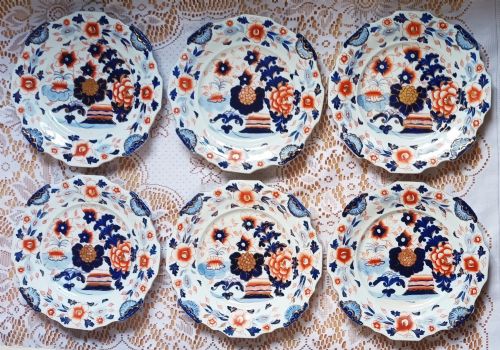
The objects available on this page include plates, vases, comports, footed bowls, jugs, urns, chargers, and cheese dishes featuring oriental-style patterns.
These pieces showcase intricate designs such as Japan patterns, exotic birds, and pagoda motifs executed on durable ironstone bodies.
How these ceramics were made
Potters utilised ironstone china as the primary ceramic body, providing a robust foundation decorated with detailed enamel colours and glaze.
Artisans applied hand-finishing techniques incorporating gold leaf and gilding to highlight the elaborate chinoiserie patterns across vases and plates.
Listings feature ironstone china, enamel, glaze, and gold leaf across four distinct periods from Regency to Edwardian times.
What varies in quality
Quality differentiates by the crispness of the enamel painting and the complexity of the oriental-style design applied to the ironstone body.
Scale and form dictate distinction, separating standard utility tableware from exceptionally large hall vases and graduated hydra jugs.
Miles Mason
The Masons Chinoiserie Pottery Glossary
- Ironstone
- A dense, durable type of ceramic patented in the nineteenth century that resists chipping while supporting vibrant enamel decoration.
- Chinoiserie
- A European artistic style reflecting Chinese and East Asian motifs, prominent in decorative ceramics throughout the Regency and Victorian eras.
- Comport
- A decorative footed bowl or dish raised on a pedestal, traditionally used for serving fruit or sweets at formal dining tables.
- Hydra jug
- A distinctive pitcher featuring a serpent-form handle, produced in ironstone with classical or oriental patterns.
Masons Chinoiserie Pottery: Frequently Asked Questions
What periods do these pieces date from?
The selection spans from the Regency era through the Victorian period and into the Edwardian years. Most examples originate in the nineteenth century.
Production methods and stylistic details evolved across these decades, shifting from early Regency patterns to later Victorian interpretations.
How do I identify a Japan pattern?
Japan patterns draw inspiration from traditional Imari and East Asian export porcelains, typically combining cobalt blue, iron red, and gilding.
These designs frequently feature stylized floral and landscape elements executed on sturdy ironstone china.
How should I display ironstone vases?
Ironstone vessels possess substantial weight and robust ceramic bodies, making them stable centerpieces for mantelpieces or sideboards.
Their vivid enamel decoration and gilded highlights pair effectively with neutral backgrounds that allow the intricate patterns to stand out.