
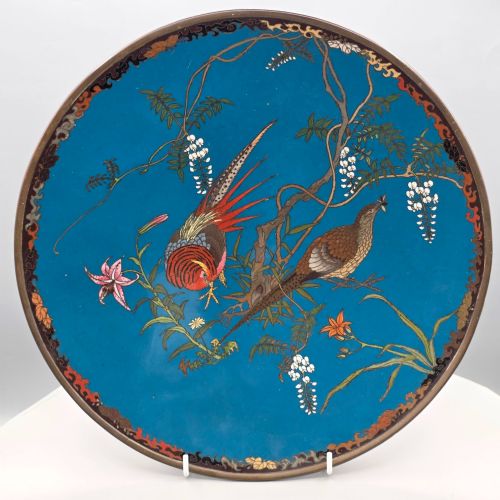
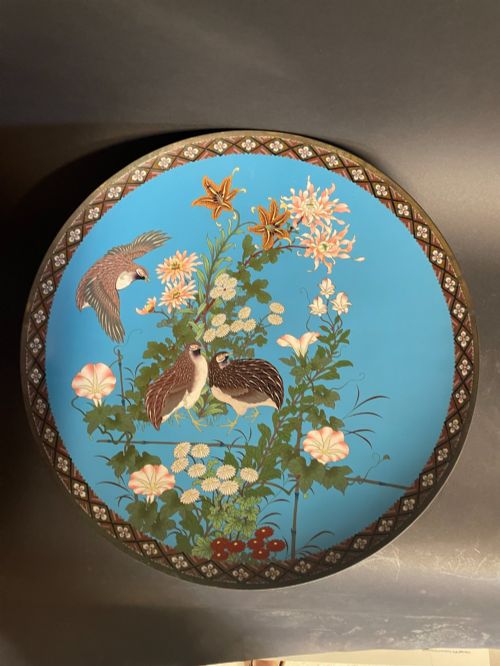


Bird Motif Wall Plate
These bird motif wall plate examples bring avian subjects to walls from diverse global traditions.

Bird Motif Wall Plate
A bird motif wall plate unites decorative arts with avian imagery across ceramic, metal, and lacquer mediums. These objects serve primarily as wall decoration or cabinet display rather than everyday tableware.
Makers utilised distinct forms including chargers, shallow bowls, and decorative plaques to display detailed bird subjects. Buyers encounter both blue and white designs and brightly coloured polychrome finishes.
Materials and construction methods
Makers applied enamel, glaze, and hand-painted pigments to ceramic, bone china, and porcelain surfaces to render avian subjects. Metalwork items utilise brass, copper, and bronze, often combined with cloisonne wirework.
Japanese pieces from the Meiji and Edo periods demonstrate precise cloisonne and hand-painted techniques. European manufacturers like Wedgwood and Mason's employ traditional ceramic moulding and transfer or hand-painting.
House sparrows and ibises appear frozen in enamel and paint across these antique walls.
Evaluating workmanship and finish
Execution of the painted or enamelled bird subject dictates the visual success of each item. Finer examples display meticulous brushwork or precise wire placement in cloisonne work.
The weight and stability of the material, whether heavy bronze or delicate bone china, influences the character of the piece. Signatures or specific stylistic markers also distinguish individual workshops.
Wedgwood·Mason's·Shozo
The Bird Motif Wall Plate Glossary
- Cloisonne
- Enamelling technique where thin metal wires form compartments on a metal base. Artisans fill these cells with coloured paste before firing.
- Imari
- Traditional Japanese porcelain style originating in Arita. These items typically feature cobalt blue and iron red underglazes.
- Majolica
- Pottery type characterised by colourful lead glazes applied over an earthenware body. Austrian makers utilised this for dimensional natural scenes.
- Charger
- Large ornamental plate intended for display rather than service. These pieces frequently hang on walls or rest on sideboards.
- Bone china
- Ceramic material incorporating animal bone ash. This composition allows for thin, durable tableware and decorative plates.
Bird Motif Wall Plate: Frequently Asked Questions
How do I hang a heavy charger safely?
Heavy chargers and bronze centrepieces require robust wall fixings designed to support substantial weight without slipping. Use adjustable spring-loaded plate hangers with protective coated tips to secure the rim.
Ensure the wall anchor engages solidly with masonry or a stud behind plasterboard. Inspect the wire or mounting bracket periodically to maintain secure placement.
What is Japanese Meiji period cloisonne?
Meiji period cloisonne involves intricate metalwork where fine wires create detailed cells on a copper or brass body. Artisans fill these partitions with enamel paste and fire the piece repeatedly.
Birds and natural motifs appear frequently in these works, rendered with high technical precision during this era of Japanese manufacturing.
How do I clean antique enamel and ceramic plates?
Dust these decorative items gently with a dry, soft brush or microfiber cloth to remove surface particles. Avoid submerging antique enamel, lacquer, or ironstone pieces in water.
Chemical cleaners and abrasive cloths damage delicate painted surfaces and glazes. Professional conservation advice remains necessary for heavily soiled or damaged items.
Are these plates meant for food use?
These decorative plates and chargers serve as display objects rather than functional tableware. Many antique pieces feature metalwork, delicate glazes, or historical enamels unsuitable for contact with food.
Displaying them on walls or cabinets preserves the painted bird motifs and structural integrity of the materials.