



Chinoiserie Serving Dish
Chinoiserie serving dish pieces bring fantastical garden scenes and architectural motifs to the table, uniting European form with Eastern imagery.
Chinoiserie Serving Dish
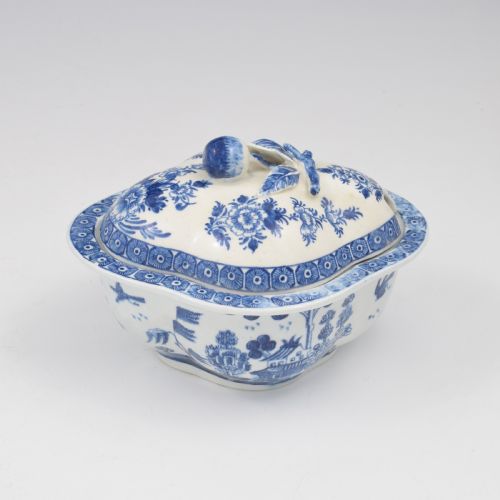
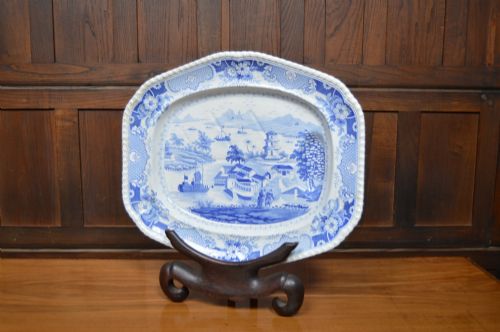
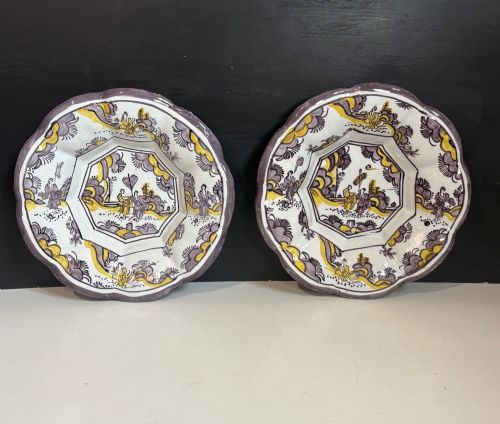
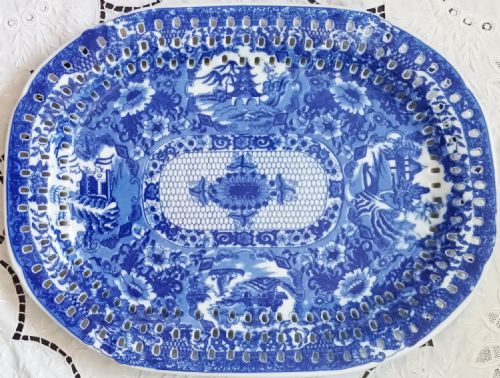
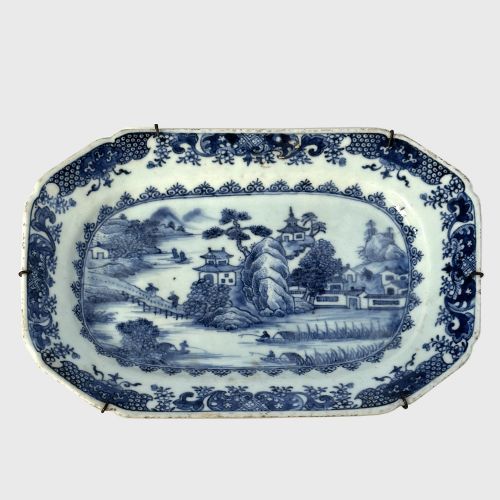
A chinoiserie serving dish serves as a dramatic centrepiece for grand meals, taking the form of massive meat platters, deep tureens, and broad chargers. These vessels carry painted or transfer-printed depictions of pagodas, exotic birds, and imaginary landscapes that reflect European fascination with Asian aesthetics.
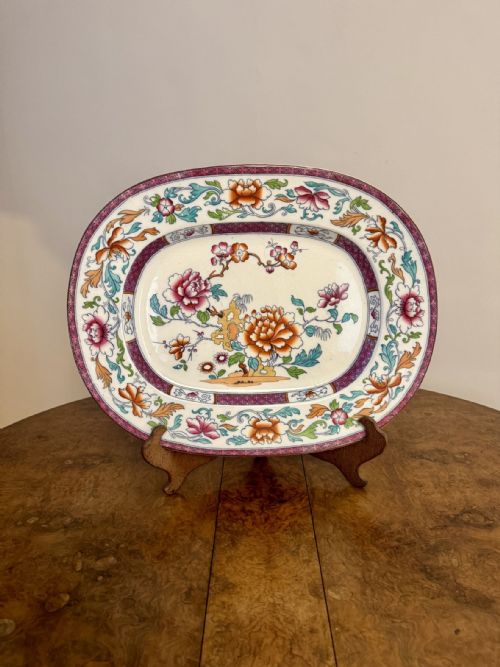
The pieces on this page span the eighteenth and nineteenth centuries, reaching from early Georgian earthenware to heavy Victorian ironstone and fine porcelain. Buyers will frequently encounter blue and white transfer-printed platters alongside polychrome ironstone tureens bearing mandarin or pagoda patterns.
How they were made
Potters shaped these items from earthenware, ironstone, pearlware, and porcelain, applying tin glazes or cobalt pigment beneath a clear coat to achieve deep, lasting blue tones. Enamel colours and gold leaf were often added over the glaze for certain porcelain and ironstone editions, requiring multiple firings in the kiln.
Transfer printing revolutionized production by allowing intricate scenes like the India Temple or Chinese Tree pattern to be stamped onto the ceramic surface from engraved copper plates before glazing. Hand-painting remained essential for finer porcelain wares, such as those originating from Derby or Bow, ensuring individual artistic detail on every piece.
Several platters incorporate secretive drainage wells designed exclusively to trap escaping gravy from roaming Victorian game.
What varies in quality
Quality rests upon the crispness of the transfer print or the skill of the brushwork, alongside the weight and refinement of the ceramic body itself. Ironstone examples offer heavy, durable utility, while porcelain variants demonstrate a thinner, translucent body with meticulous hand-gilding.
The complexity of the form also dictates standing, with pierced drainers, complex trefoil or quatrefoil shapes, and matching covers demanding greater technical mastery from the potter than a standard rectangular platter.
Derby Porcelain·Bow Porcelain·Mason’s Ironstone·Minton·Copeland and Garrett·Coalport·John Rogers and Son·Elkin Knight and Bridgwood
The Chinoiserie Serving Dish Glossary
- Transferware
- Pottery decorated by pressing a printed paper design from an engraved copper plate onto the unglazed or bisque ceramic body. This technique allowed intricate pictorial patterns to be reproduced consistently across large series of tableware.
- Ironstone
- A dense, durable type of heavy earthenware patented in the nineteenth century to rival true porcelain. It resists chipping well and forms the sturdy base for many large meat platters and soup tureens.
- Tin glaze
- An opaque white glaze containing tin oxide, applied to earthenware during the eighteenth century before painting. It provides a smooth, chalky white background for cobalt and enamel pigments.
- Well and tree
- A platter design featuring carved channels and a small reservoir at one end to catch meat juices during carving. This practical innovation kept joints elevated and the surrounding table clean.
- Pearlware
- A refined earthenware developed in the late eighteenth century featuring a faint bluish tint in the glaze. It served as a popular transition material between creamware and later white ironstone.
Chinoiserie Serving Dish: Frequently Asked Questions
How were these dishes used originally?
Large platters and tureens occupied the centre of the dining table during communal service, holding substantial joints of meat, game, or soup.
Servants would present the laden vessels to diners or place them centrally for guests to help themselves before individual plates were distributed.
Can I use an antique serving dish today?
While these ceramics remain structurally sound for presenting dry foods or cold meats, their age and historical value suggest careful handling.
Hand washing is strongly advised to protect fragile glazes, delicate enamels, and nineteenth-century gold leaf from modern dishwasher detergents.
How do I distinguish ironstone from porcelain?
Ironstone yields a heavy, opaque body with a dense feel that resists chipping and rings dully when tapped. Porcelain appears thinner, often showing translucency when held to the light, and rings with a clear, high-pitched tone.
Porcelain also tends to feature finer, more delicate painted details, whereas ironstone typically bears robust transfer printing.
What is the difference between a charger and a platter?
A charger is a large, decorative plate historically used either as an under-plate for other courses or displayed upright on a sideboard. Platters are functional, often elongated serving dishes designed specifically to hold meat, fish, or fowl during a meal.