




Chinoiserie Ceramic Lamp
A chinoiserie ceramic lamp brings centuries of decorative art into a room through converted porcelain, pottery, and bronze mounts.
Chinoiserie Ceramic Lamp
When someone searches for a chinoiserie ceramic lamp, they encounter decorative vessels transformed into lighting fixtures across various historic periods. These pieces include vases, ginger jars, and lidded containers adapted from earlier porcelain and ceramic wares.
Origins span Chinese export porcelain, Japanese wares, Dutch delftware, and European interpretations like Paris porcelain. These forms frequently combine ceramic bodies with metal mounts in brass, gilt bronze, or ormolu.
How they were made
Makers utilised high-fired porcelain, ironstone, and earthenware bodies decorated with hand-painted underglaze blue, enamel colours, and gilt accents. Potters shaped these ceramic forms before applying intricate botanical, figurative, and geometric designs.
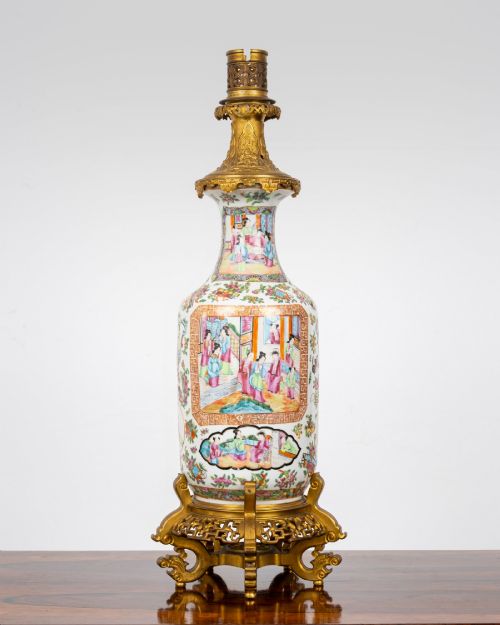
Metalworkers added structural stability and decorative enrichment through cast brass, gilt bronze, and ormolu mounts fitted to the bases and rims. Workshops often converted existing antique vases and jars into lamps by drilling the ceramic bases and adding electrical fittings or retaining oil burners.
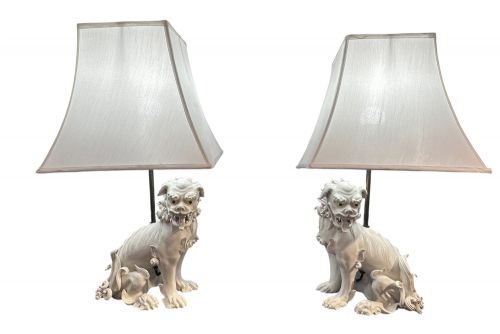
Shi Lions, also known as Dogs of Fo, stand guard over ceramic lamp bases to ward off stray interior decorators.
What varies in quality
The distinction between standard and superior pieces rests on the precision of the hand-painting, the weight of the porcelain, and the quality of the metal mounts. Finer examples display crisp enamel work, detailed figurative scenes, and heavy, well-chased ormolu or brass fittings.
Proportion and conversion methods also dictate standard variations across the range. Superior conversions integrate the electrical wiring and metal components carefully without compromising the integrity of the original ceramic vessel.
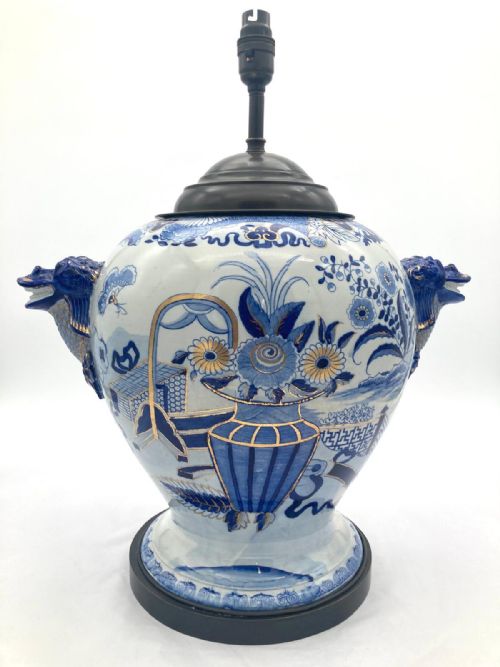
Hicks and Meigh·Samson Porcelain
The Chinoiserie Ceramic Lamp Glossary
- Famille Verte
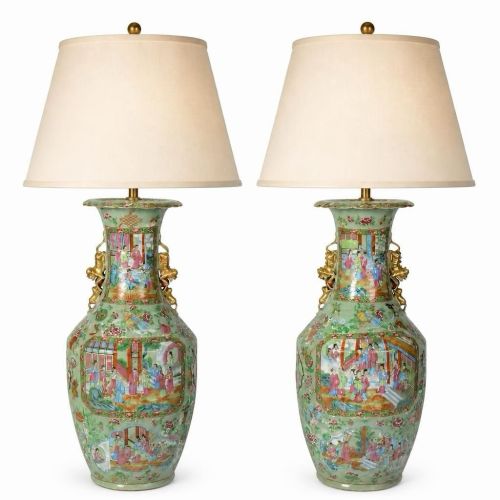
- A porcelain palette dominated by green enamel colours, developed during the Qing dynasty. This style often depicts floral and natural scenes across nineteenth-century vases and lamps.
- Ormolu
- Finely ground high-carat gold applied to a bronze base, commonly used for decorative mounts on nineteenth-century porcelain lamps. It provides a bright golden finish that complements the ceramic body.
- Rose Medallion
- A distinct style of nineteenth-century Cantonese porcelain decoration featuring segmented panels of figures, birds, and flowers in pink and contrasting enamels. These heavily decorated pieces make substantial table lamps.
- Delftware
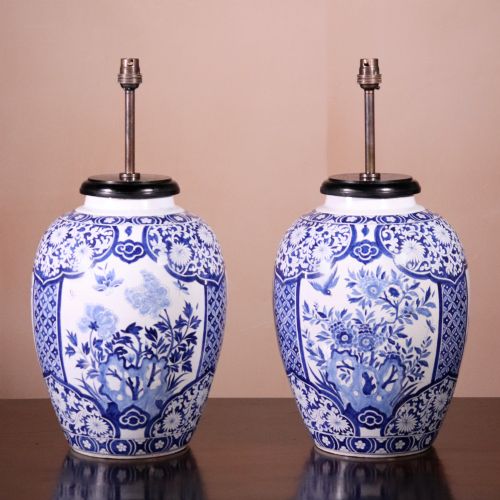
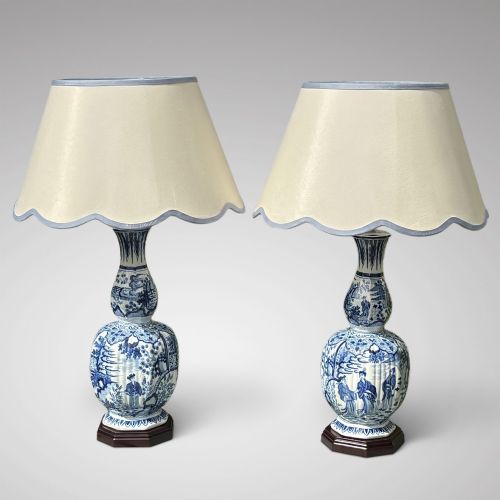
- Tin-glazed earthenware originating from the Netherlands and England, typically decorated in blue and white. Eighteenth-century examples converted into lamps often exhibit soft, porous bodies and hand-painted coastal or floral motifs.
- Ginger Jar
- A broad-shouldered ceramic storage vessel with a domed lid, originally used for spices. These jars frequently appear converted into lamp bases with handmade fabric shades.
Chinoiserie Ceramic Lamp: Frequently Asked Questions
What is a chinoiserie ceramic lamp?
A chinoiserie ceramic lamp is a lighting fixture created from a decorative ceramic vessel, such as a Chinese porcelain vase, ginger jar, or European imitation ware.
These objects combine historic ceramic traditions with functional lighting, often resting on brass or gilt bronze bases paired with handmade fabric shades.
How do I identify eighteenth-century lamps?
Eighteenth-century examples typically feature hand-thrown ceramic bodies with characteristic potting irregularities, traditional blue and white painting, or early delftware glazes.
Examination of the foot rim, glaze crazing, and the nature of the metal mounts helps determine the period and origin of the piece.
Can I use these lamps with modern shades?
Modern shades can be fitted to these lamps provided the harp and shade fitter match the existing wiring and structural proportions.
Many listings already include handmade fabric or silk shades designed to complement the scale and colour palette of the ceramic base.
What does converted mean for a lamp?
Conversion means an antique decorative object, such as a vase or lidded jar, has been adapted into a functional table lamp.
This process involves adding internal wiring and electrical components, sometimes requiring a discreet hole drilled through the ceramic or securing the vessel within metal mounts.