







Chinese Rosewood Stand
When you trace the lineage of a Chinese rosewood stand, you find dense timber and marble set to hold heavy porcelain and bronze.
Chinese Rosewood Stand
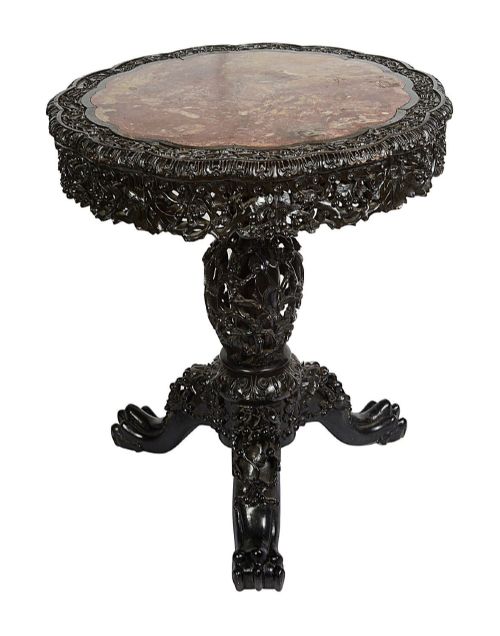
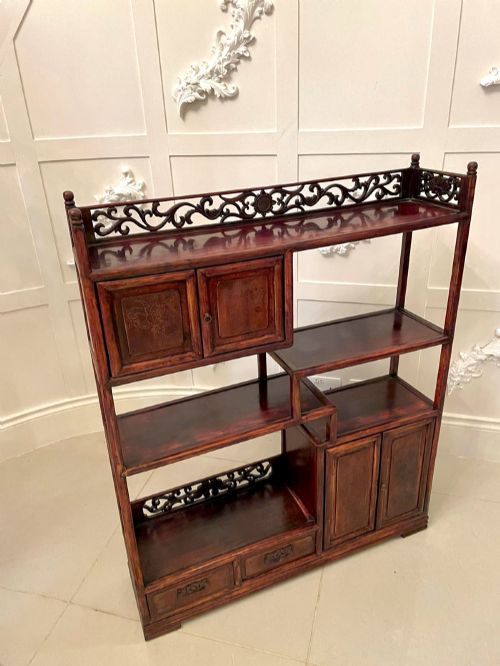
A chinese rosewood stand serves as a raised platform for heavy vases, urns, planters, and decorative sculptures within traditional and export interiors.
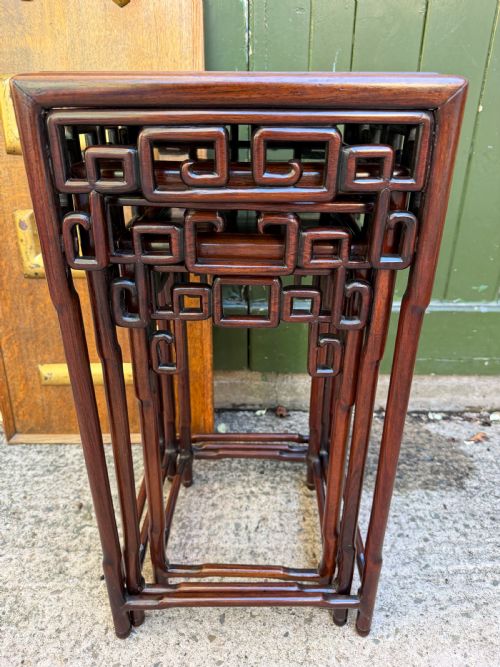
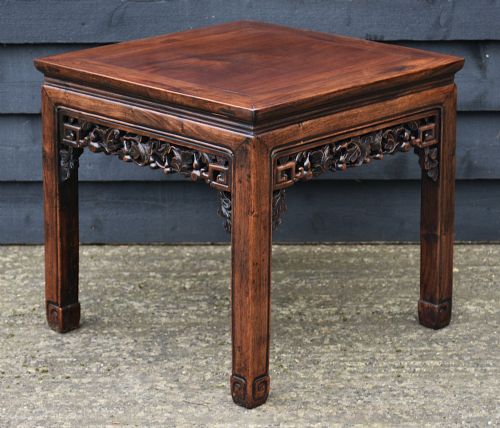
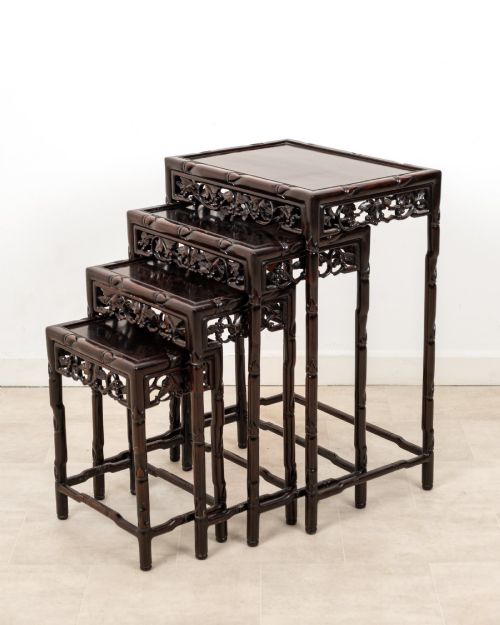
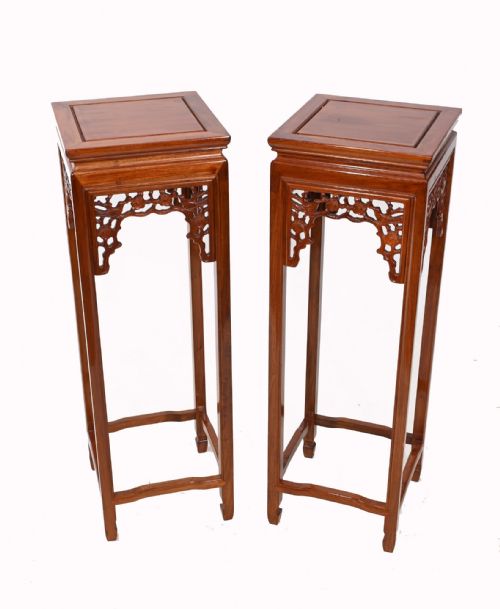
The selections span low tables, plant stands, jardiniere supports, and tall pedestals designed to elevate objects of weight and visual importance.
Most examples originate from the nineteenth century, including Qing dynasty pieces, Victorian imports, and Edwardian variations.
How they were made
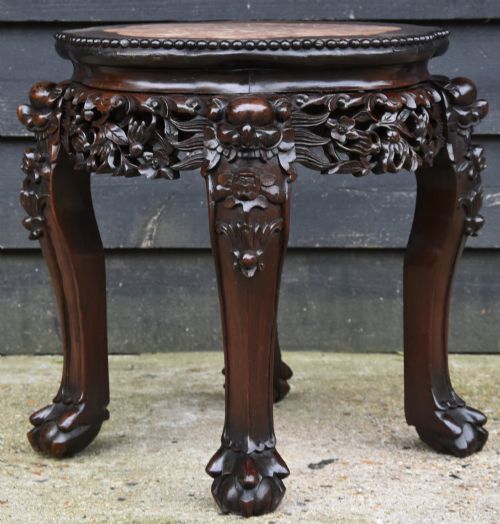
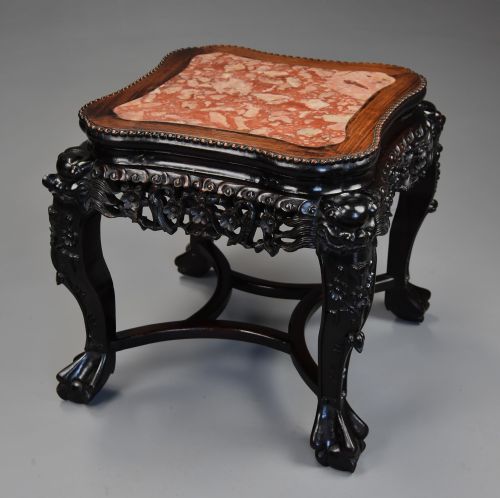
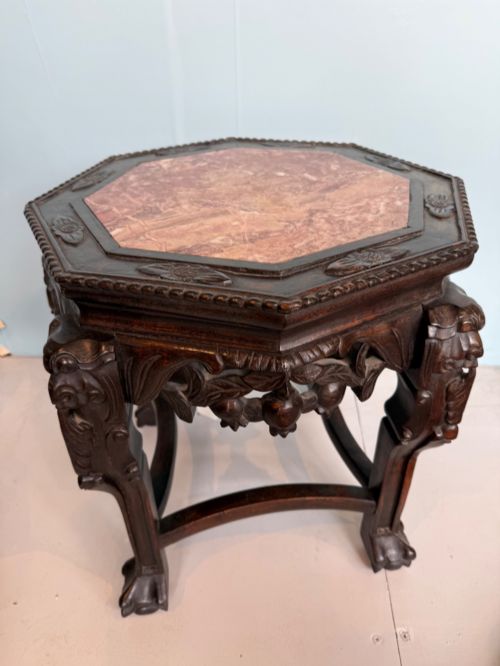
Cabinetmakers utilised dense timbers including rosewood, hongmu, and padouk, often combined with inset marble panels, mother-of-pearl inlay, or porcelain inserts.
Joinery relied on traditional framing and mortise-and-tenon construction to support heavy stone tops without metal fasteners.
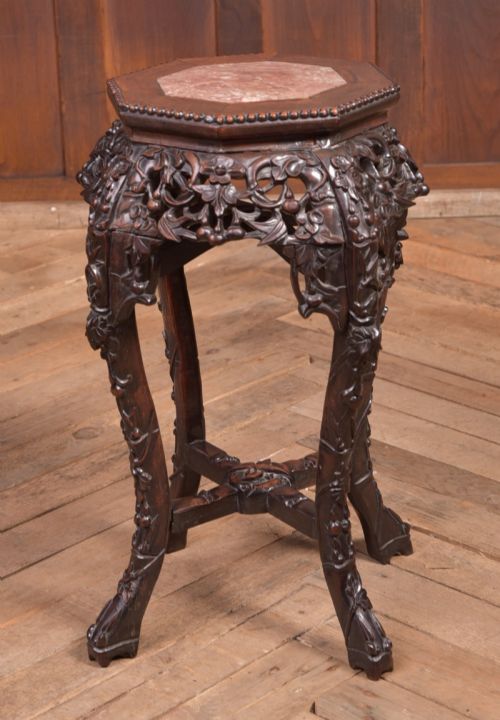
Carving was executed by hand to render detailed foliage, dragons, and shaped aprons around the perimeter of each platform.
Chinese Rosewood Stand Retail Price Guide 2026
Typical asking prices for chinese rosewood stand among the pieces listed under this phrase on Sellingantiques today, from the lower quarter to the upper quarter. They describe what is for sale here now, not the wider market.
Several stands double as homes for carved wooden elephants.
What varies in quality
The depth and crispness of the hand carving distinguish standard production from exceptional examples, where undercut foliage remains sharp and defined.
The selection of the timber and the figure of the rosewood or hongmu grain alter the visual weight of the furniture.
The integration of the inset marble, whether rouge or grey veined, dictates the harmony and structural integrity of the upper surface.
The Chinese Rosewood Stand Glossary
- Hongmu
- A dense, heavy tropical hardwood used in traditional Chinese furniture construction. It translates literally to red wood and patinas richly over time.
- Padouk
- A durable, heavy timber with reddish-brown tones frequently employed in nineteenth-century carved stands. It resists warping under heavy stone inserts.
- Jardiniere
- A large ornamental pot or planter designed to hold growing plants. Stands built for these vessels require exceptionally robust frames.
- Torchere
- A tall stand or pedestal originally intended to hold a candle or lamp. In these listings, the form functions as a display column for sculpture.
- Qing Dynasty
- The final imperial dynasty of China, spanning from sixteen-forty-four to nineteen-twelve. Many pieces reflect the traditional aesthetics of this period.
Chinese Rosewood Stand: Frequently Asked Questions
What were Chinese rosewood stands used for?
These pieces were built to elevate heavy items such as porcelain vases, bronze urns, and large plant pots off the floor.
By raising the object, makers protected delicate surfaces and showcased prized decorative items at eye level.
How do I identify a Qing dynasty stand?
Look for dense tropical hardwoods like hongmu or rosewood combined with traditional joinery methods that avoid modern metal screws.
Intricate hand carving depicting flora or dragons and the presence of inset marble panels typically point toward nineteenth-century manufacture.
Can these stands support heavy table lamps?
The dense construction and robust hardwood frames make these stands exceptionally strong and stable for modern electrical lighting.
Marble-topped versions also offer a cool, heat-resistant surface that easily accommodates heavy objects without sustaining damage.
Why do some stands feature inset marble?
Marble inserts provided a cool, flat, and stable surface that remained unaffected by moisture leaking from plant pots or heavy ceramic urns.
This stone also added contrasting texture and visual weight to the polished rosewood and hongmu frames.