



Chinese Barrel Stool
These Chinese barrel stool examples are sturdy ceramic and hardwood garden seats and plant stands that bring enduring character to porch or parlour.
Chinese Barrel Stool
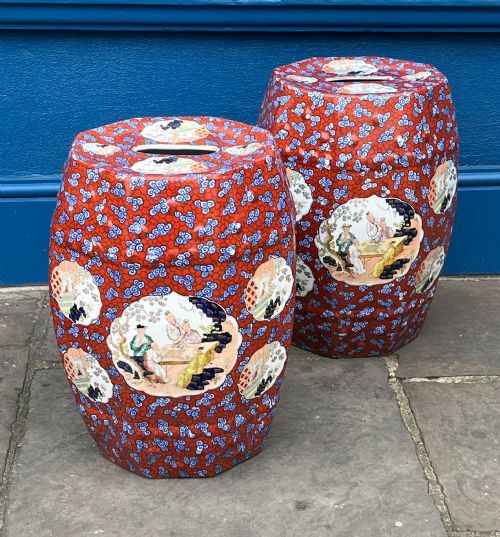
A Chinese barrel stool takes the drum-like silhouette of a traditional garden seat and adapts it for seating, plant display or occasional placement. Buyers searching for a Chinese barrel stool will encounter sturdy forms originating from the Qing Dynasty, Chinese Republic Period and regional workshops, alongside occasional Victorian and Regency chinoiserie interpretations. Most pieces on this page take the form of glazed porcelain or ceramic garden seats, while others appear in carved hardwoods such as hongmu and teak.
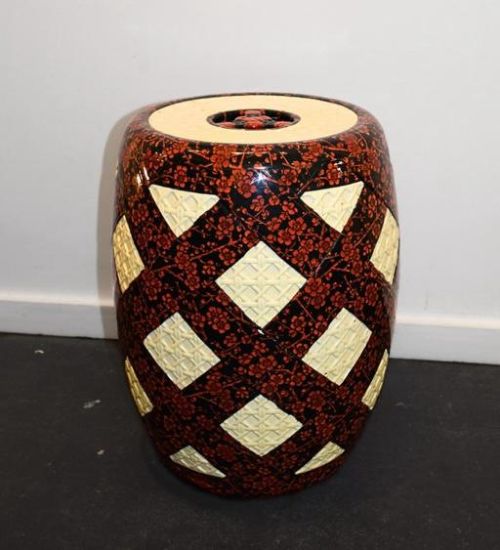
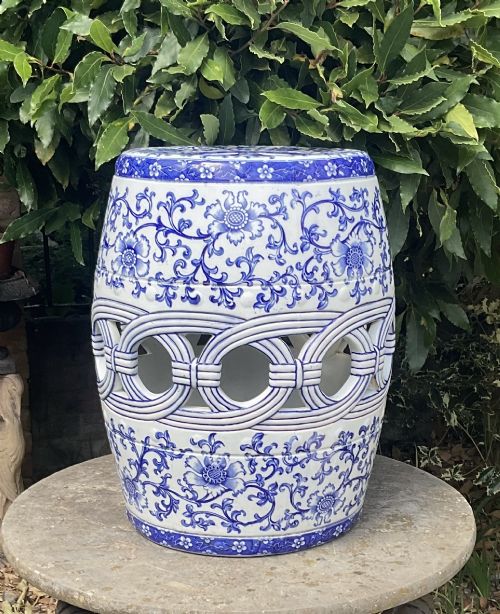
The category spans diverse surface treatments including famille rose porcelain, Canton enamels, blue and white glazes, red lacquer, and burr wood accents. Forms function interchangeably as garden seats, stools, plant stands, and low occasional tables. Nineteenth century examples sit alongside pieces from the early twentieth century, reflecting both traditional domestic manufacture and export production.
Materials and construction
Ceramic and porcelain barrel stools employ thrown or moulded clay bodies finished with coloured glazes, enamel pigments, or blue and white underglaze decoration. These pieces often feature pierced coin or handle motifs in the body to assist with lifting.
Hardwood examples utilise dense timbers such as hongmu, teak, and burr wood, joined with traditional framing and carving techniques. Inlaid mother-of-pearl, painted lacquer surfaces, and inset porcelain panels frequently embellish the wooden variants.
Chinese Barrel Stool Retail Price Guide 2026
Typical asking prices for chinese barrel stool among the pieces listed under this phrase on Sellingantiques today, from the lower quarter to the upper quarter. They describe what is for sale here now, not the wider market.
Materials span glazed earthenware, porcelain, enamel, teak, hongmu, and burr wood.
Factors determining quality
The refinement of the carving or the precision of the ceramic glaze dictates the standing of each piece. Hardwood examples demonstrate quality through the depth of the carved detailing and the figuring of the timber, such as burr wood or hongmu. Ceramic pieces rely on the crispness of the enamel painting and the vibrancy of famille rose or blue and white pigments.
Structural integrity across both timber and ceramic forms marks the finer specimens. Intact joinery in wooden frames and well-fired glazes without excessive surface wear separate high-grade items from heavier utilitarian counterparts.
The Chinese Barrel Stool Glossary
- Famille rose
- A palette of opaque enamels dominated by pink or rose colours, widely used on Chinese porcelain during the Qing Dynasty. It allows for subtle shading and detailed floral rendering.
- Hongmu
- A traditional Chinese term for dense hardwoods, often translated as red wood. It encompasses heavy, dark timbers used for fine furniture and decorative objects.
- Canton
- A style of Chinese export porcelain decorated in colourful enamels, typically featuring figural scenes and floral borders. Production centred on the port city of Guangzhou.
- Clobbered
- A process where older blue and white porcelain is decorated with additional overglaze colours and re-fired in a kiln. This practice altered imported wares for Western markets.
- Ironstone
- A type of durable, heavy ceramic developed in Europe as a robust alternative to porcelain. It takes thick glazes well and mimics oriental forms.
Chinese Barrel Stool: Frequently Asked Questions
Where were these barrel stools used?
These barrel stools served as portable seating and plant stands in courtyards, gardens, and principal rooms. Their sturdy construction allowed for both indoor and outdoor placement.
In domestic settings, they functioned as low tables, side stands, or casual seats. Their drum shape provided stability on both paved ground and interior flooring.
How do I care for a hardwood stool?
Hardwood stools require simple dusting with a dry cloth to protect the polished timber surfaces. Keep them away from direct heat sources and extreme moisture.
Applying occasional natural wax helps nourish dense woods like hongmu and teak. Avoid harsh chemical cleaners that might strip the original lacquer or finish.
Can ceramic garden seats stay outside?
Ceramic and porcelain garden seats withstand mild outdoor conditions during temperate months. However, freezing temperatures can cause trapped moisture in the ceramic body to expand and crack the glaze.
Storing ceramic stools indoors during winter prevents frost damage. Placing them on protective pads also guards the base against damp ground.
How do I distinguish Qing Dynasty pieces?
Qing Dynasty pieces display traditional decorative motifs, hand-mixed glazes, and construction methods characteristic of imperial or regional kilns. Stylistic details often align with specific nineteenth century manufacturing periods.
Examination of the foot ring, glaze pooling, and wear patterns helps identify age. Material weight and potting thickness also offer clues to the era of manufacture.