



Chinese Garden Stool
A chinese garden stool brings architectural form and practical surface space to a room, drawing the eye with patterned ceramic or carved hardwood.
Chinese Garden Stool
A chinese garden stool is typically encountered in ceramic, porcelain, or dense hardwoods such as hongmu and teak, shaped into traditional barrel or drum forms. These versatile objects function as garden seats, side tables, plant stands, and low occasional tables.
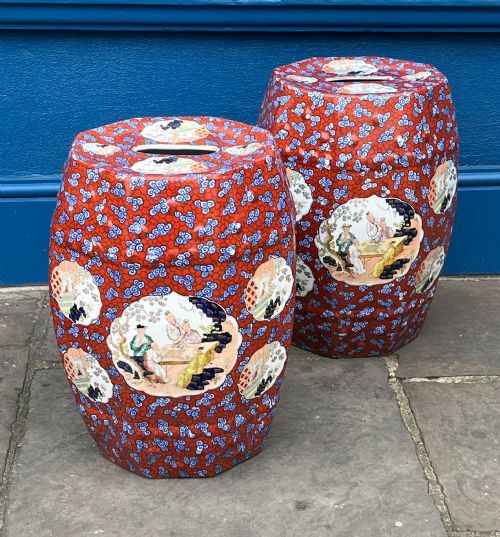
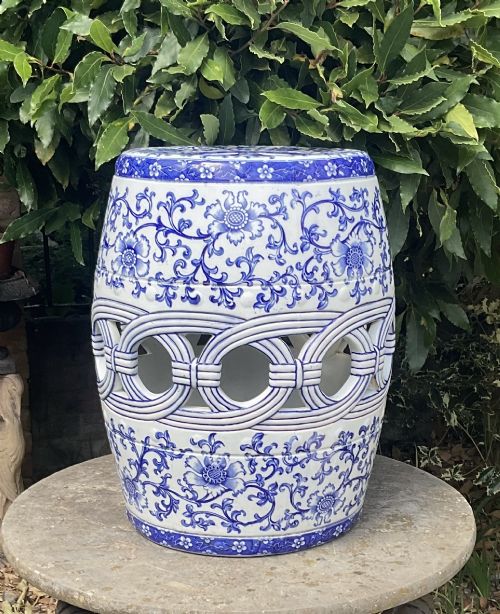
The selections span the nineteenth century through the early twentieth century, incorporating Qing Dynasty, Republic Period, and Chinoiserie styles. Buyers frequently find blue and white porcelain, famille rose, and rose medallion designs alongside carved wooden barrel stools.
Materials and construction
Ceramic and porcelain examples rely on kiln-fired clay finished with glazes, enamels, and hand-painted motifs, while earthenware variants sometimes feature clobbered ironstone decoration. These ceramic pieces utilise traditional potting methods to create sturdy hollow cylinders designed for indoor or outdoor placement.
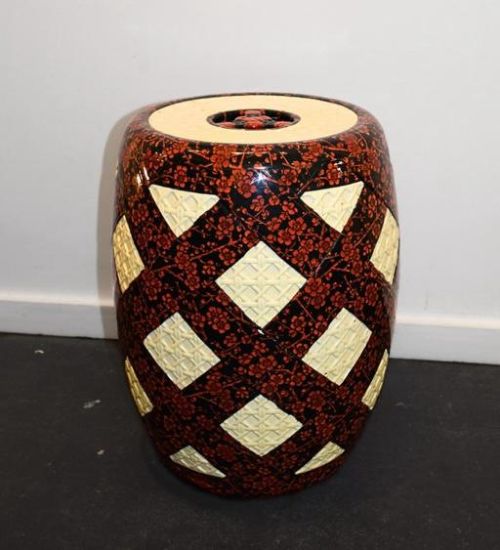
Wooden versions are constructed from hardwoods like hongmu, teak, and burr wood, often employing joinery, lacquer, paint, and mother-of-pearl inlay. Carved wooden barrel tables demonstrate precision woodworking techniques applied to solid timber.
Chinese Garden Stool Retail Price Guide 2026
Typical asking prices for chinese garden stool among the pieces listed under this phrase on Sellingantiques today, from the lower quarter to the upper quarter. They describe what is for sale here now, not the wider market.
Some nineteenth-century makers cleverly disguised heavy timber as ceramic barrels, complete with painted or carved mock nail heads.
Factors of quality
Quality rests in the crispness of the carving on wooden pieces or the clarity and complexity of the hand-painted enamels on porcelain examples. Finer specimens display meticulous detailing, whether in the depth of mother-of-pearl inlay or the vibrancy of famille rose palettes.
Structural integrity and the preservation of original surfaces distinguish superior examples from heavily restored or later pieces. The weight of the porcelain or the density of the hardwood dictates the substantial feel expected in authentic period items.
The Chinese Garden Stool Glossary
- Famille rose
- A major palette of Chinese ceramic glazes introduced in the Qing Dynasty, distinguished by opaque pink or rose enamels. This coloration allows for nuanced shading and detailed pictorial scenes.
- Hongmu
- A modern trade term for various dense, fragrant tropical hardwoods used in traditional Chinese furniture making. It translates literally as red wood.
- Clobbered
- A term describing European overpainting applied to earlier blue and white ceramics, typically adding colourful enamel details to alter the original appearance.
- Chinoiserie
- A European artistic style reflecting Chinese motifs and decorative techniques, popular during periods such as the Regency and Victorian eras.
Chinese Garden Stool: Frequently Asked Questions
Can these stools be used outdoors?
Ceramic and porcelain garden seats are traditionally suited for garden environments, withstand weathering well, and easily transition to patio spaces.
Wooden or lacquered variants, however, benefit from indoor placement where humidity and temperature remain stable to protect the timber and inlays.
How are wooden and ceramic stools used indoors?
These barrel-shaped objects function flexibly as side tables next to seating, plant stands in corners, or standalone accent stools.
Their flat tops provide convenient surfaces for lamps, books, or decorative objects while adding sculptural form to a room.
What is rose medallion porcelain?
Rose medallion is a distinct style of Chinese porcelain featuring segmented panels filled with figures, birds, and flowers, unified by green and pink enamel work.
It gained popularity during the nineteenth century and appears frequently on barrel-shaped garden seats from that era.
How do I date a Chinese garden stool?
Dating relies on assessing the material characteristics, painting style, and construction methods associated with periods such as the Qing Dynasty or the nineteenth century.
Wear patterns on the base and the formulation of the glazes or hardwoods provide further indicators of age.