


Brown Hardwood Stool
These brown hardwood stool pieces offer solid timber construction and rich grain, making them enduring seats and tables for traditional and eclectic interiors.
Brown Hardwood Stool
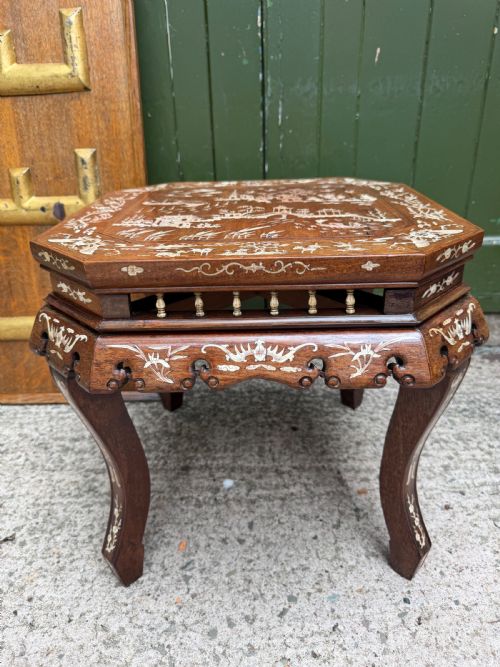
A brown hardwood stool represents a sturdy seating option or low surface shaped by regional craftsmanship across the nineteenth and early twentieth centuries. When searching for a brown hardwood stool, buyers encounter items ranging from barrel forms and low window seats to piano stools and occasional tables.
The selections on this page span several distinct geographical and stylistic traditions, including Chinese regional pieces, Victorian designs, and colonial furniture from India and Burma. Most items originate from the nineteenth century or the decades leading up to 1930, utilising dense timbers that have survived decades of daily use.
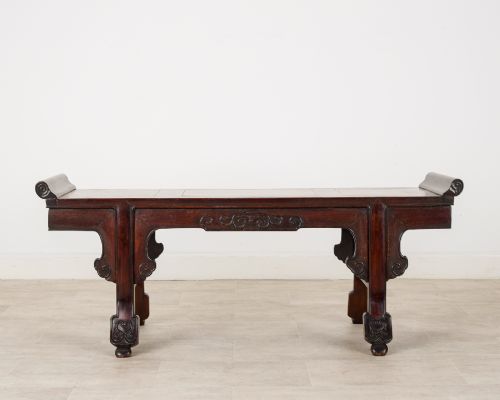
Forms vary significantly, encompassing barrel-shaped stands, carved piano seats, altar benches, and low tables that double as low seating. Buyers find that these versatile items function equally well as standalone decorative accents or practical seats in hallways and living rooms.
Materials and construction methods
Makers utilised dense timbers such as teak, hongmu, elm, and burr wood, often combining the main hardwood structure with contrasting inserts of bone or iron fixings. These woods provided the necessary strength for intricate hand-carved details on legs, aprons, and seat surfaces without compromising structural integrity.
Joinery techniques relied on traditional framing methods suited to heavy tropical hardwoods, allowing woodworkers to build weight-bearing seats and tables designed to withstand humid climates and heavy wear.
Several pieces feature carved elephant motifs, bringing a distinct nineteenth-century colonial menagerie right into your front hallway.
Judging quality in construction and detail
Quality rests upon the crispness of the hand-carving and the natural figuring of the timber, particularly where burr wood or hongmu is employed. Superior examples display balanced proportions, tight joinery, and well-executed surface detailing that remains sharp across the legs and seat edges.
The weight of the timber and the complexity of regional styles, such as Batavian baroque or Anglo-Indian carving, distinguish finer production from simpler utility pieces. Pieces featuring integrated adjustments, such as piano stools, rely on the precise fit of their mechanical elements for their standing.
The Brown Hardwood Stool Glossary
- Hongmu
- A dense, dark tropical hardwood used in traditional Chinese furniture making. It translates literally to red wood and develops a deep patina over time.
- Burr wood
- A tree growth where the grain has grown in a deformed manner, resulting in intricate swirled patterns. It provides highly decorative veneers and solid panels on quality furniture.
- Occasional table
- A small table designed for flexible placement around a room, often serving as a stand for lamps or decorative objects. These pieces match the height and scale of companion stools.
Brown Hardwood Stool: Frequently Asked Questions
How do I use a brown hardwood stool at home?
These pieces function well as extra seating, low bedside surfaces, or plant stands in living areas. Their compact scale allows them to move easily between rooms as needs change.
Heavier structural timbers mean they support daily use reliably while adding rich wood tones to traditional or modern interiors.
What periods do these stools come from?
The available selection primarily spans the nineteenth century through to the early decades of the twentieth century, specifically around 1900 to 1930.
Stylistic influences reflect Victorian, Qing Dynasty, and colonial workmanship from regions including India, Burma, and China.
How do I care for hardwood furniture surfaces?
Maintain the timber by keeping pieces away from direct heat sources and sudden humidity changes to prevent wood movement. Regular dusting with a dry cloth preserves the natural finish and grain.
Applying occasional appropriate wax feeds the dense hardwoods like teak and hongmu without buildup.
What is the difference between a stool and a low table?
While both share similar heights and proportions, stools feature flat or recessed tops designed primarily for sitting. Low tables often incorporate surface framing or stands meant for display rather than weight.
Many antique examples crossover in function, serving interchangeably as low seats or occasional display stands.