
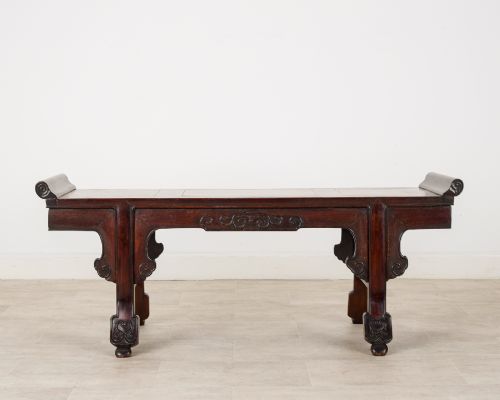


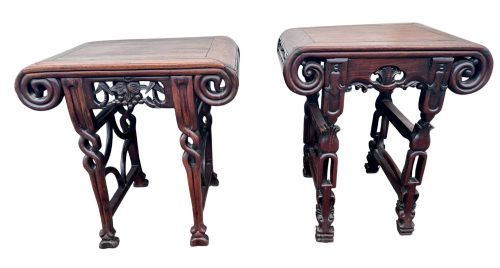


19th Century Chinese Stool
These 19th century chinese stool examples range from ceramic garden seats to carved hardwood benches, offering versatile seating and display surfaces for any interior.
19th Century Chinese Stool
A 19th century chinese stool search reveals an array of functional forms spanning seating and display, including ceramic garden seats, low hardwood stools, and robust benches. These items were created across the Qing dynasty, bringing traditional utilitarian craftsmanship into domestic spaces.
The selection you encounter most often comprises carved hardwood stands, elm side tables, and barrel-shaped garden seats made of porcelain. These pieces move easily between roles as plant stands, occasional tables, and extra seating in modern rooms.
Origins stretch from provincial workshops producing rustic elm furniture to metropolitan makers fashioning dense hongmu and rosewood tables. This variety reflects the diverse domestic and garden requirements of nineteenth-century China.
Materials and construction methods
Carpenters utilised dense tropical hardwoods such as hongmu and rosewood alongside domestic elm and rootwood for structural framework. Many pieces incorporate inset panels of rouge marble, quartz, or blue and white porcelain within carved wooden frames.
Ceramic garden seats rely on high-fired porcelain and earthenware, decorated with famille rose enamel or traditional blue and white glazes. Surface enrichment also appears in the form of mother-of-pearl inlay set into ebonised timber.
Joinery techniques prioritised traditional frame and panel construction, allowing dense timbers to adjust to environmental changes without splitting. Carving ranges from restrained rustic finishes to intricate floral and geometric Qing dynasty motifs.
Listings feature woods like elm, rosewood, and hongmu alongside ceramics with blue and white or famille rose decoration.
Distinctions in quality
The hierarchy of quality rests primarily on the choice of material and the depth of the carving. Dense timbers like hongmu command greater appreciation than softer elm, while well-defined relief carving elevates simple structural forms.
Integration of secondary materials dictates refinement, seen clearly in how cleanly a rouge marble top or a porcelain panel fits within its wooden rebate. Intricate mother-of-pearl inlay requires precision to ensure the shell remains flush with the surrounding dark wood.
Ceramic quality is judged by the crispness of the underglaze blue or the vibrancy and preservation of the famille rose enamel overglaze. Balance of form, whether in a drum-shaped garden seat or a low occasional table, separates standard utility pieces from exceptional workshop output.
The 19th Century Chinese Stool Glossary
- Hongmu
- A dense, dark tropical hardwood favoured in Chinese furniture making for its strength and rich grain. It translates literally to red wood and takes a high natural polish.
- Famille Rose
- A palette of opaque enamel colours dominated by pink, introduced to Chinese porcelain decoration in the eighteenth century and continuing through the nineteenth. The style allows for subtle shading and intricate floral depictions.
- Qing Dynasty
- The final imperial dynasty of China, ruling from sixteen-forty-four until nineteen-twelve. Furniture and ceramics from this era display both refined court aesthetics and robust provincial traditions.
- Rose Medallion
- A distinct style of Chinese porcelain decoration featuring panelled compartments filled with birds, butterflies, and figures enclosed by floral borders. The palette relies heavily on green and pink enamels.
19th Century Chinese Stool: Frequently Asked Questions
How were ceramic garden seats used?
Ceramic garden seats served primarily as portable seating or decorative supports in courtyards and verandas during warmer months. Their hollow barrel construction made them easy to move between indoor reception rooms and outdoor gardens.
Today, they function well as compact side tables next to armchairs or as display pedestals for indoor plants.
Can these stools be used as tables?
Many items categorized as stools or stands possess flat wooden tops suitable for holding lamps, books, or decorative objects. Low occasional tables and barrel forms share similar proportions and function interchangeably in contemporary layouts.
Their sturdy construction ensures they support weight reliably whether deployed for seating or display.
How do I care for marble inset tops?
Marble inset tops require simple dusting with a dry cloth and immediate wiping of any liquid spills to prevent surface staining. Avoid using harsh chemical cleaners that can dull the polished stone or seep into the surrounding wooden rebate.
Applying a neutral wax to the timber frame protects the junction between the wood and the stone.