

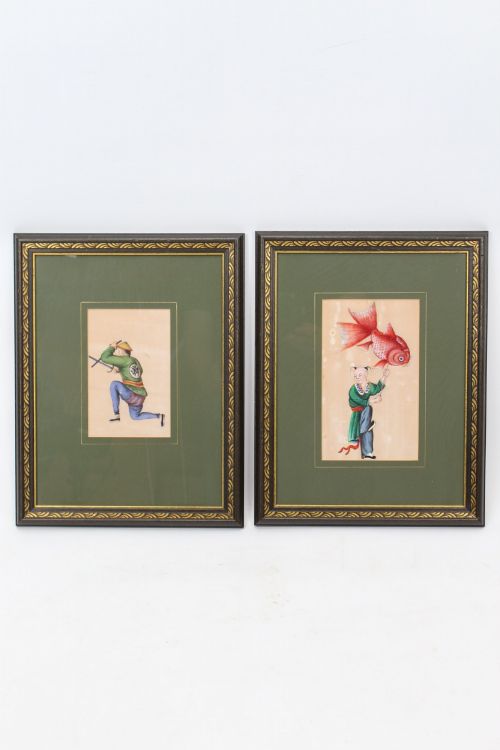


Chinese Pith Paper Artwork
Chinese pith paper artwork brings delicate botanical and figural scenes into your home on a rare, organic medium created from plant stems.
Chinese Pith Paper Artwork
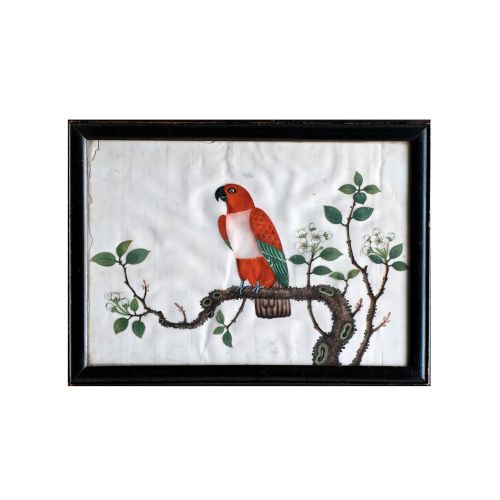
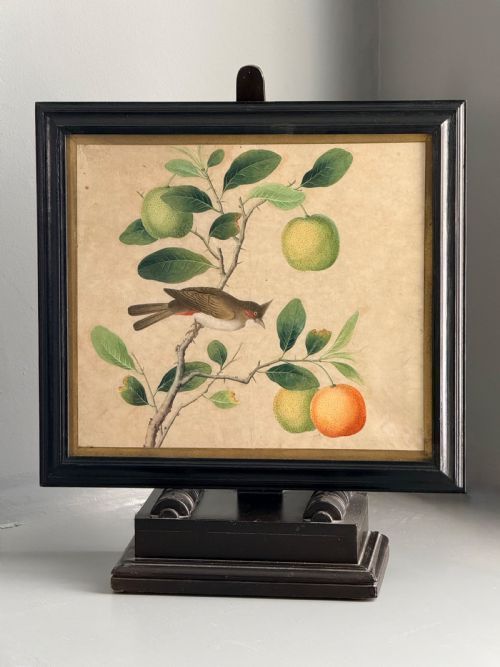
Chinese pith paper artwork captures vibrant scenes from the Qing dynasty and later periods on a fragile, cushion-like plant material often mistaken for rice paper. You will most frequently encounter framed 19th Century examples on this page, presented either singly or in sets.
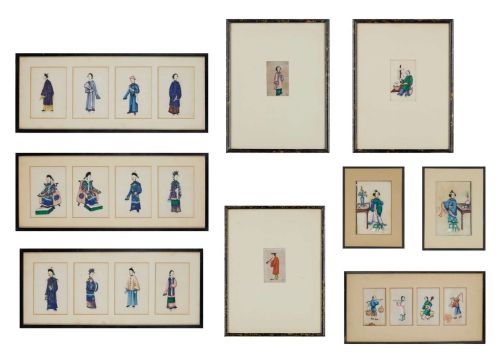
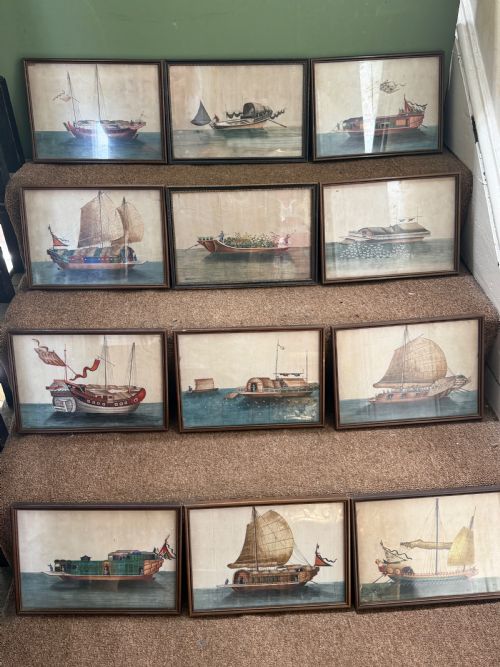
The subjects range from botanical studies and butterflies to bustling maritime scenes of junks and detailed figural compositions. These works formed part of the trade in Chinese export art destined for Western collectors during the 18th Century, 19th Century, and Edwardian eras.
Makers produced these paintings primarily for export, using specialised formats like wall art and framed paintings that highlight the unique texture of the support. Surviving groups often retain their original serial nature, appearing as sets of twelve or twenty-one related panels.
How they were made
Artists painted directly onto prepared sheets of pith paper using opaque gouache and watercolour pigments. The cellular structure of the pith absorbs the paint readily, creating a velvety depth of colour that standard paper cannot replicate.
Makers framed these fragile paintings behind glass to protect the delicate surface from moisture and physical damage. Many examples feature ebonised wood frames that contrast sharply with the bright pigments of the gouache.
Chinese Pith Paper Artwork Retail Price Guide 2026
Typical asking prices for chinese pith paper artwork among the pieces listed under this phrase on Sellingantiques today, from the lower quarter to the upper quarter. They describe what is for sale here now, not the wider market.
Early Western collectors initially believed this spongy plant material was woven from rice stalks, sticking the misnomer rice paper to the medium for centuries.
What varies in quality
The precision of the brushwork and the vibrancy of the gouache pigments set finer examples apart from simpler decorative pieces. Finer paintings capture intricate details in insect wings, floral petals, and the rigging of ships.
Condition plays a central role in quality, as the organic pith paper is naturally prone to cracking and fading over time. Complete sets that survive with intact pigments and original framing command greater interest than isolated, damaged fragments.
The Chinese Pith Paper Artwork Glossary
- Pith paper
- A delicate, spongy material sliced from the stem of the Tetrapanax papyrifer plant. It possesses a characteristic velvety texture and a slight cushion when pressed.
- Gouache
- An opaque watercolour paint composed of pigment, water, and a binding agent such as gum arabic. It provides the saturated, luminous colours seen in these export paintings.
- Qing dynasty
- The final imperial dynasty of China, ruling from the mid-17th century until the early 20th century. Most export paintings on pith originate from the later decades of this period.
- Chinese export
- Goods manufactured in China specifically for Western markets and collectors. These works often blend traditional Eastern subjects with formats suited to European interiors.
- Ebonised wood
- Timber treated with a finish to imitate expensive ebony wood. It is commonly found on the frames housing 19th Century pith paper paintings.
Chinese Pith Paper Artwork: Frequently Asked Questions
How should I display them?
These artworks must remain behind protective glass and away from direct sunlight to prevent the fragile pith from degrading.
Keep them in rooms with stable humidity and temperature to protect both the paper support and the gouache pigments.
Are they made of rice paper?
They are frequently misidentified as rice paper due to historical misnomers, but the material is actually plant pith.
Under magnification, the porous, spongy internal structure distinguishes true pith paper from standard vegetable papers.
Why do they come in sets?
Export artists in the 19th Century often produced sequential groups depicting trades, flora, fauna, or maritime transport for foreign buyers.
These series were compiled into albums or framed together as decorative sets to showcase a broad narrative of Chinese life.