


19th Century Export Artwork
These 19th century export artwork pieces are historic paintings and panels made for Western markets, offering a fascinating window into cross-cultural trade.
19th Century Export Artwork
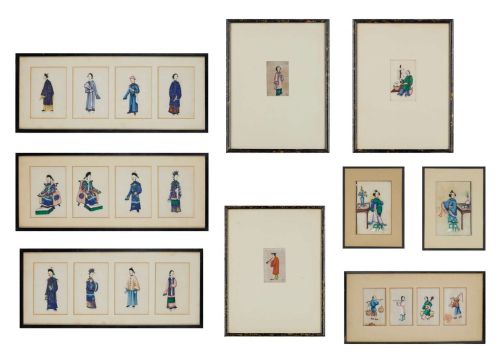
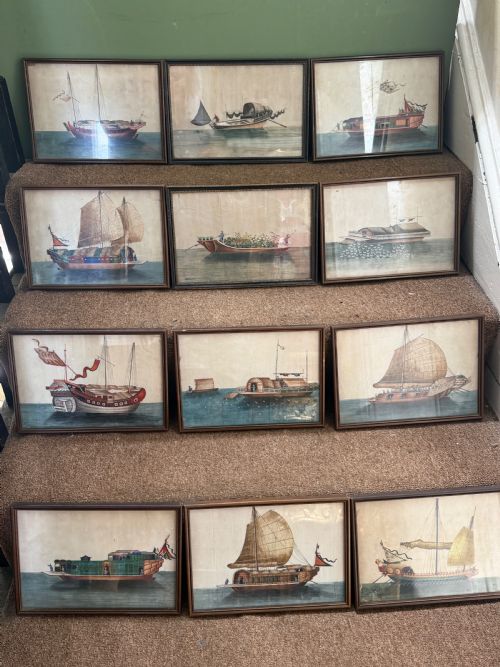
When you search for 19th century export artwork, you are looking at visual pieces created in China specifically for Western buyers and foreign markets. The selection on this page leans heavily toward framed paintings, wall art, and decorative panels produced during the Qing dynasty. These items captured maritime scenes, local flora, and traditional figures for foreign homes.
The most common versions you will meet here include delicate pith paper paintings and gouache watercolours depicting junks, butterflies, and figures. Alongside these delicate works on paper, you also find reverse painted mirror-glass pictures and oil paintings depicting steamships and schooners. Lacquer panels in the style of earlier export work also appear among the wall art.
Many of these works arrived in Britain via maritime trade, commissioned by merchants and sea captains who travelled to the East. They bridge the gap between traditional Chinese craftsmanship and European interior tastes of the Victorian era. Their survival in framed sets offers a remarkably intact record of nineteenth-century trade art.
How they were made
Artisans created these works using distinct materials native to the region, most notably pith paper, which is often misidentified as rice paper. Pith comes from the spongy cellular interior of the Tetrapanax papyrifer plant, sliced into sheets that absorb brilliant pigments and gouache with a velvet-like texture. Painters applied bright mineral colours to these delicate surfaces to depict flora, fauna, and figurative groupings.
Other pieces utilise reverse painting techniques on glass, where artists painted directly onto the rear surface so the image appears correct when viewed through the front. Oil paintings on canvas recorded specific vessels like schooners and steamships for maritime patrons. Wood and lacquer provided the sturdy bases for framed panels and decorative wall art.
Butterflies and insects flutter across several delicate pith paintings, captured by artists who clearly delighted in natural history.
What varies in quality
The finesse of the brushwork and the vibrancy of the pigment determine the distinction between ordinary commercial output and superior artistic execution. Finer pith paintings display meticulous detail in the rendering of insect wings, floral petals, and human expressions. Softer, less defined lines and muted tones often indicate more hurried workshop production for the souvenir trade.
Condition plays a vital role in valuation, particularly for delicate organic supports like pith paper that easily suffer from dampness and fading. Complete sets of paintings that retain their original framing and uniform pigment preservation command greater appreciation than scattered individual sheets. The complexity of the subject matter, such as detailed maritime rigging in oil or multi-figure figural compositions, elevates the visual interest.
The 19th Century Export Artwork Glossary
- Pith paper
- A delicate painting surface made from the spongy inner pith of the Tetrapanax papyrifer plant. It possesses a unique velvety texture that catches watercolour and gouache pigments brilliantly.
- Gouache
- An opaque water-based paint consisting of pigment, water, and a binding agent such as gum arabic. It was widely used by Chinese artists to create vivid export paintings.
- Reverse painted mirror-glass
- A technique where an artist paints directly onto the back of a glass panel. When viewed from the unpainted side, the reflective mirror background illuminates the composition.
- Junk
- A traditional Chinese sailing ship with battened sails, frequently featured as a subject in maritime export paintings and watercolours.
19th Century Export Artwork: Frequently Asked Questions
What is pith paper?
Pith paper is a delicate, spongy material harvested from the stem of a specific Asian shrub rather than pressed rice. Artisans sliced it into thin sheets to paint vibrant botanical and figurative scenes.
Because of its fragile nature, surviving examples are usually preserved behind glass to prevent crumbling and fading over time.
Who bought these paintings?
These artworks were primarily purchased by Western merchants, diplomats, and sea captains trading in East Asian ports during the nineteenth century. They served as exotic souvenirs and records of distant voyages to display in European homes.
Many pieces document specific vessels or local industries intended to satisfy Western curiosity about Qing dynasty life.
How should I hang them?
Export artworks on paper require careful framing away from direct sunlight to protect the fragile gouache pigments from fading. Maintaining stable room humidity prevents the organic pith paper from warping or degrading.
Grouping sets of paintings together, as they were often originally compiled, creates a striking historical display on a wall.
Are these works Chinese or British?
The pieces listed here were created by Chinese artists and workshops, specifically tailored in style and subject matter for the export market. Anglo-Chinese works also reflect the crossover between British maritime patronage and Eastern craftsmanship.
They represent a direct artistic dialogue between Qing dynasty creators and Victorian collectors.